
Last updated October 31, 2026
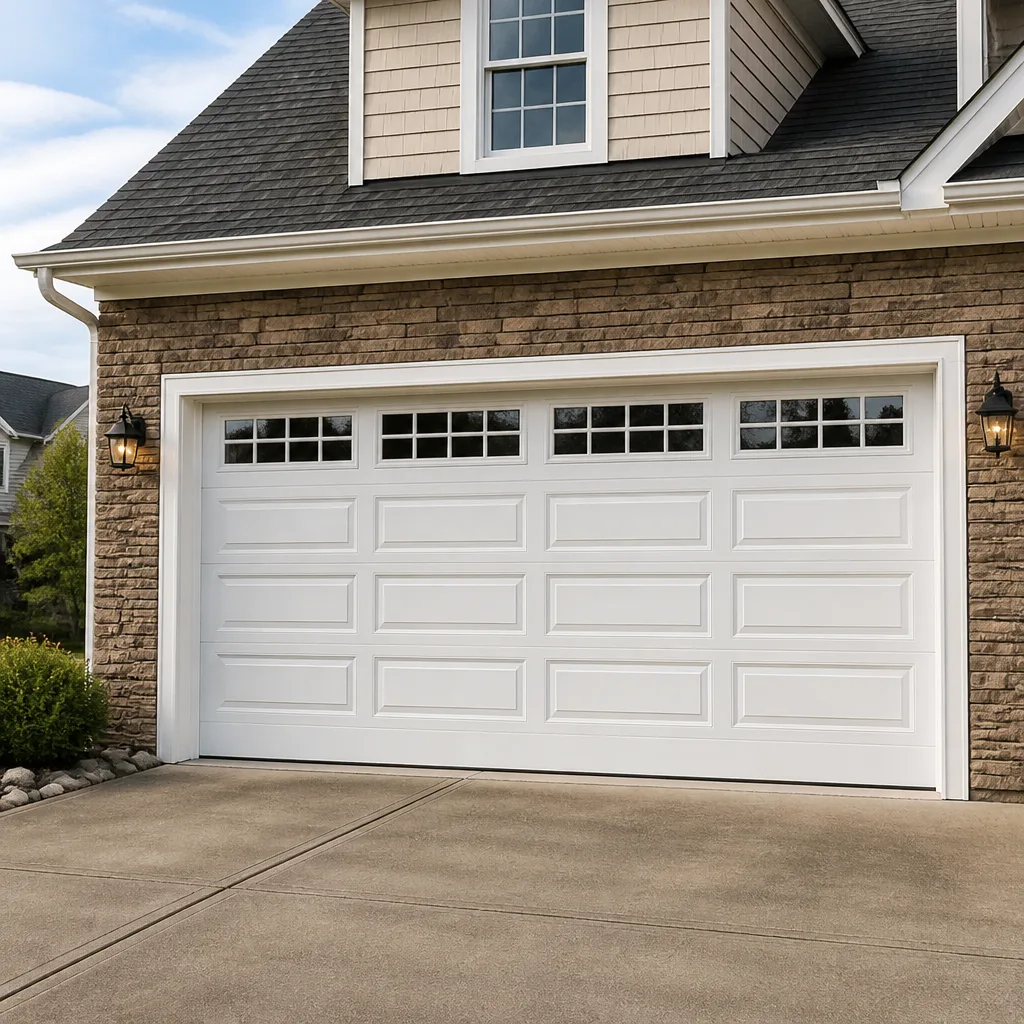 Raised-panel steel
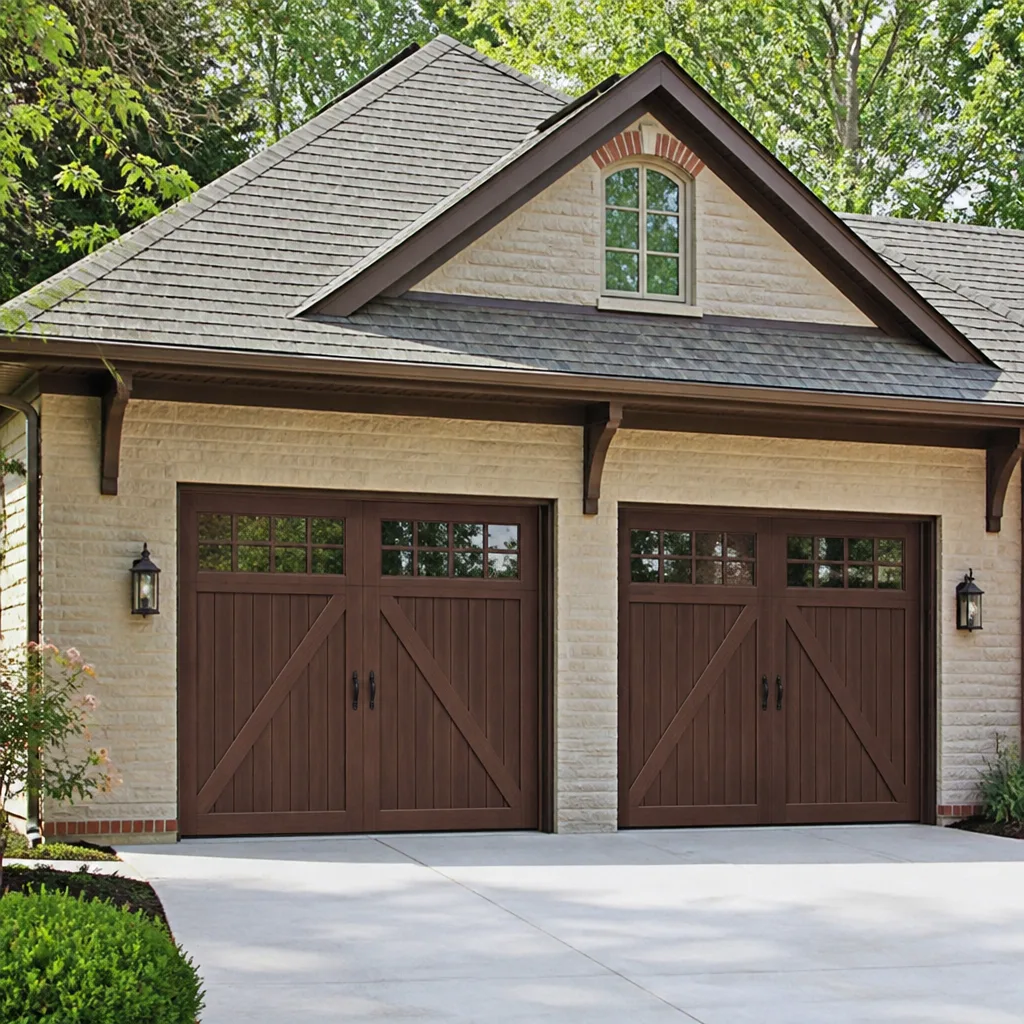 Carriage house
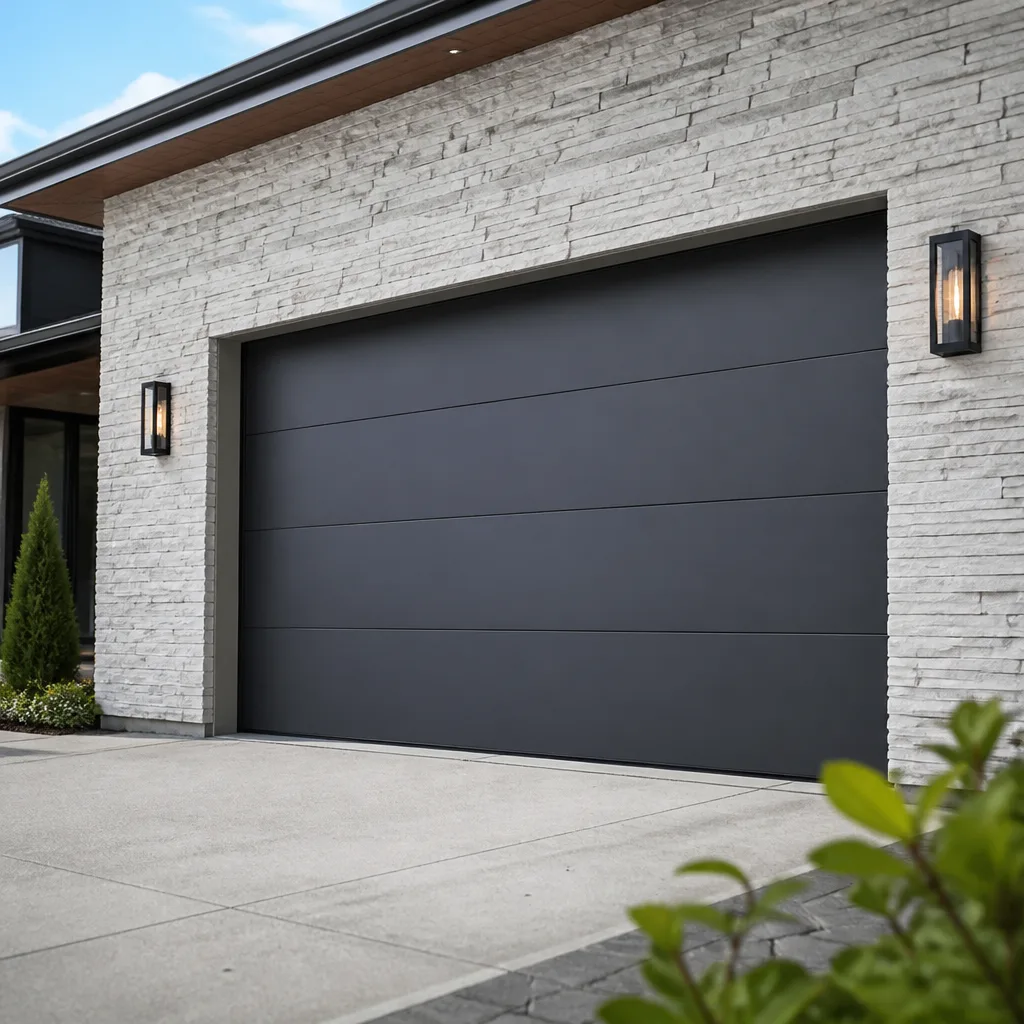 Modern flush
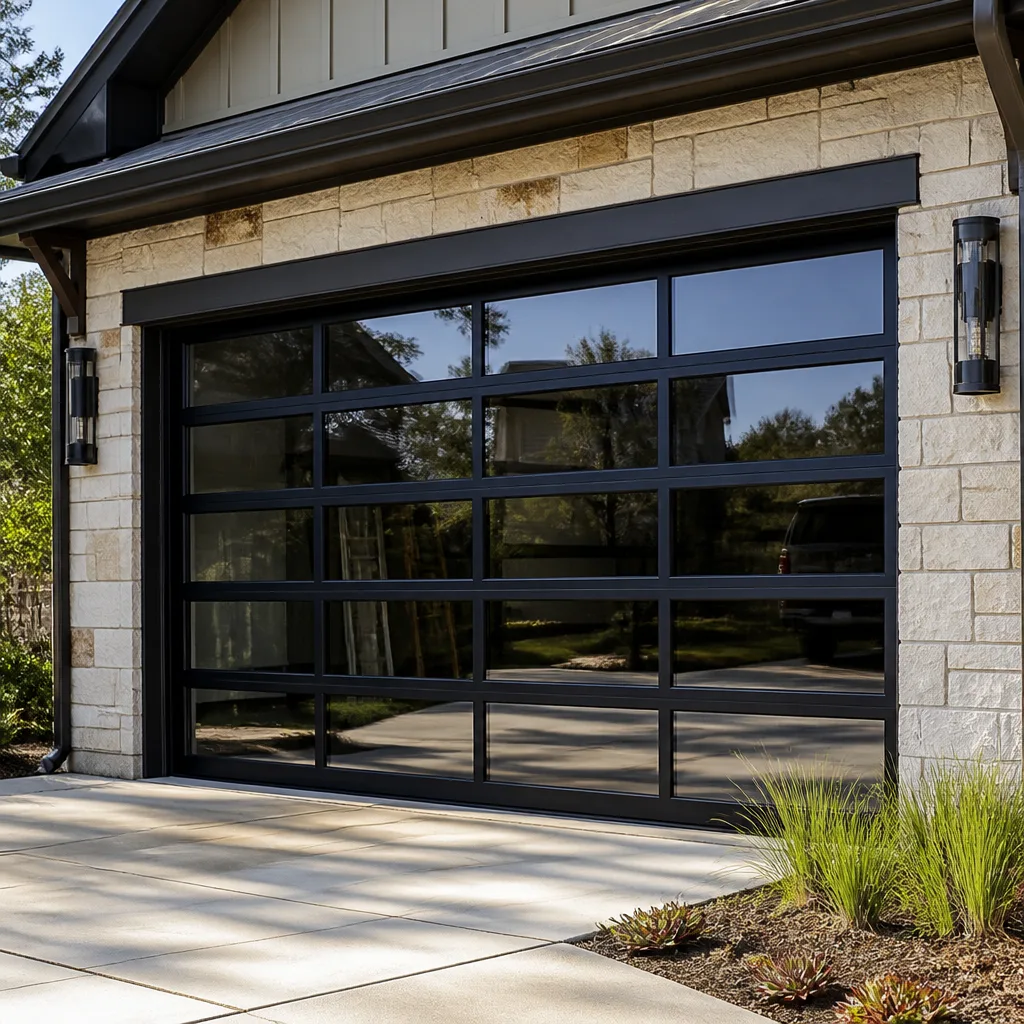 Full-view glass
 LiftMaster openers
 Chamberlain openers
Full 25-point door and opener safety check with every visit - springs, cables, rollers, tracks, and your LiftMaster or Chamberlain opener included
You get a price before we start. It does not change when the truck arrives.
Get your free estimateGarage Door Warning Signs: A Long Beach Homeowner’s Reference Guide
A garage door that’s “a little slow” or “kind of loud” is speaking a diagnostic language most homeowners don’t know how to read. Each ignored symptom has a failure timeline measured in weeks, not years. We’ve seen Long Beach homeowners go from hearing a faint pop to facing a completely dropped door panel in under a month, and the repair bill triples when that happens. This guide translates what your door is telling you, symptom by symptom, so you can act before a $150 fix becomes a $900 emergency call in the middle of your workday.
Quick Answer
The most common garage door warning signs in Long Beach are: grinding or squealing sounds during operation, a door that moves unevenly or dips on one side, an opener that reverses without cause or runs noticeably longer cycles, visible wear on springs and cables, and a door that feels heavier than it used to. Any of these symptoms means a component is already failing and needs attention within days or weeks, not months. Ignoring them leads to broken springs, snapped cables, or a door that falls off its track rather than sitting politely and waiting.
Styles & brands we work with
Table of Contents
- Sound Diagnosis: What Your Garage Door Is Saying
- Visual Inspection: Components to Check Monthly
- Opener Behavior Anomalies and What They Mean
- The Asymmetry Warning: Uneven Movement Is Not Cosmetic
- Urgency Triage: Schedule, Stop, or Monitor
- How Long Beach Conditions Accelerate Garage Door Wear
- What You Can Check vs. What Requires a Professional
Sound Diagnosis: What Your Garage Door Is Saying
Every garage door makes some noise. The question is whether the noise is routine or diagnostic. In our experience across Long Beach homes, from Naples Island to Bixby Knolls, four specific sounds repeat themselves as reliable warning signs, and each one points to a different mechanical failure.
Grinding from the Opener Unit
A grinding sound coming from the opener motor itself, not the door tracks, almost always means the drive gear inside the opener is stripping. On older Craftsman and Genie openers, the main gear is plastic and wears down after years of use. You’ll hear a metallic grinding or a whirring that sounds like the motor is working but nothing is moving smoothly. This is not a door problem. It’s an opener problem, and it will fail completely, usually within two to three weeks of the sound starting.
Squealing or Screeching from the Rollers
If the sound tracks along the sides of the door as it moves, you’re hearing the rollers. Metal rollers without bearings or worn nylon rollers squeal like a dry hinge. This is a lubrication or replacement issue, and it’s the least urgent sound on this list. But left unaddressed, worn rollers put lateral pressure on the track and can cause the door to bind or come off its rails.
A Sharp Pop or Bang During Operation
A popping sound, particularly when the door is opening, is usually a torsion spring beginning to lose cohesion. Springs are under enormous tension, and a pop means a coil has started to separate. This is an early warning that the spring is days or weeks from snapping entirely. When a spring does snap, it sounds like a gunshot in the garage. If you hear a pop and your door still works, you are on borrowed time.
A Slapping or Flapping Cable
Hearing something slapping against the track or the wall near the spring assembly means a cable has come loose from its drum. This often follows a broken spring or a spring that has lost tension unevenly. A loose cable means the lifting tension is now asymmetric, and the door can jam or drop. Stop using the door. This is a same-day repair scenario.
Here is the simple translation chart:
- Grinding from the opener head: drive gear failure. Schedule opener repair within a week.
- Squealing from the sides: worn or dry rollers. Lubricate or replace. Non-urgent but should not wait months.
- Pop during movement: torsion spring separating. Prepare for imminent spring replacement.
- Slapping from cables: cable off drum or broken spring. Stop using the door and call a professional same day.
Visual Inspection: Components to Check Monthly
You don’t need to be a technician to see warning signs. A monthly visual check takes five minutes and can catch failures before they happen. Long Beach’s salt air makes some of these indicators appear sooner than they would inland, especially on doors facing the ocean side of the city.
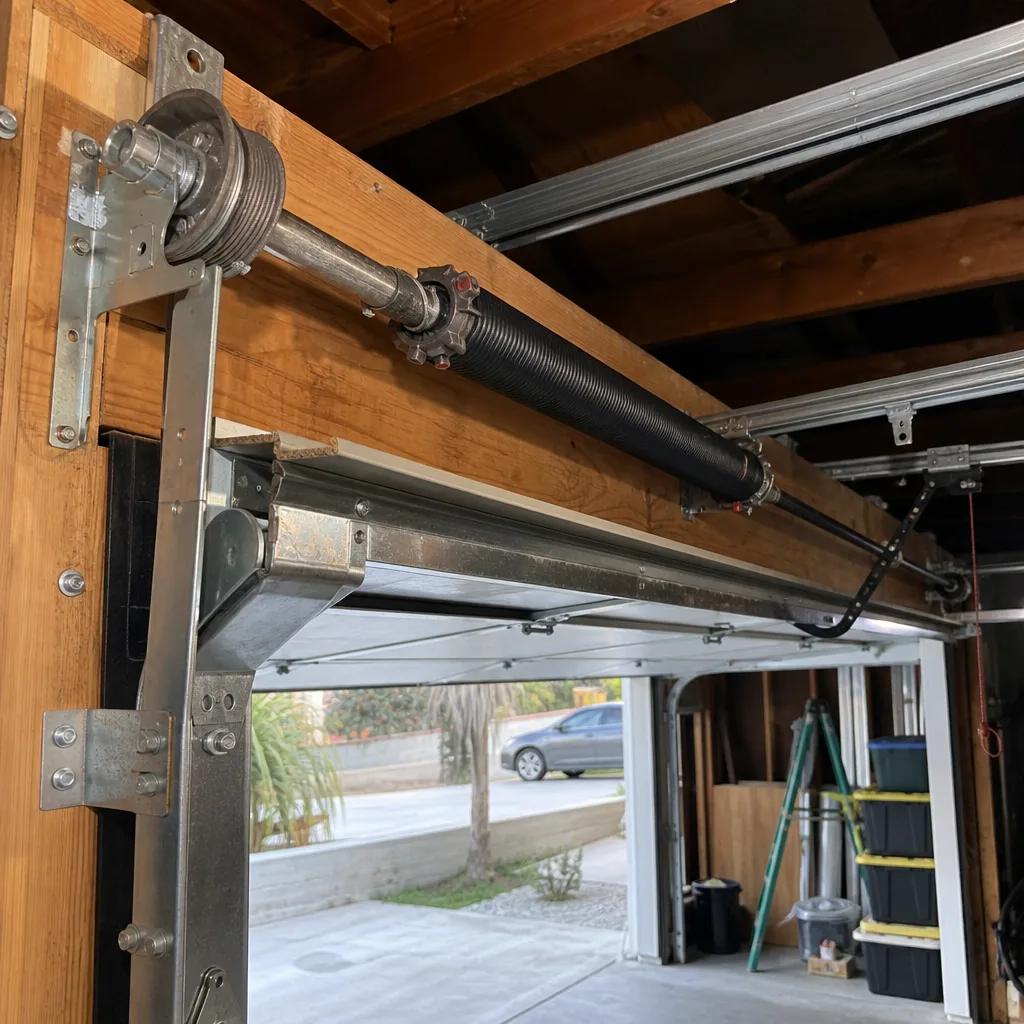
Torsion Springs: New, Worn, About to Fail, Failed
New spring: Tight coils with no gaps, uniform color, no rust. The coils sit flush against each other across the entire length of the spring.
Worn spring: You’ll see a visible gap forming between two coils somewhere along the length. Rust may be present. The spring looks slightly stretched at one end.
About to fail: A gap of a quarter inch or more has opened between coils. The rust has pitted the surface. You may see a slight realignment where one coil is no longer seated in the same plane as its neighbors.
Failed spring: An obvious break. The spring is in two pieces, often with a gap of several inches. If you see this, the door is not safe to lift. Call a Garage Door Repair in Long Beach specialist before touching anything.
Cables
Look at the lift cables on both sides of the door. They should be tight and wound evenly on their drums. Fraying looks like a fuzzy section or a few broken wire strands sticking out. Any fraying means the cable has lost a portion of its strength and will eventually snap, which happens without warning and can drop the door.
Track Alignment
Stand inside the garage with the door closed. The vertical tracks should be parallel to the walls, and the horizontal tracks should be level. Look for gaps where the track meets the wall brackets, bent sections, or bolts that have worked loose. Long Beach’s older homes, especially in neighborhoods like Belmont Heights and Rose Park, often have wooden door frames that settle and shift, which pulls tracks out of alignment incrementally.
Door Panels
Cracks in panels are not just cosmetic. A cracked panel has lost structural integrity, which means the door distributes weight unevenly. This puts stress on the hinges, the rollers, and ultimately the springs. On Amarr and Clopay steel doors, a small crack at the bottom of a panel often spreads upward within months due to the vibration of daily operation.
Opener Behavior Anomalies and What They Mean
Your opener has a small computer inside it, and that computer communicates through behavior. When the behavior changes, the machine is telling you something. Here are the four opener anomalies we see most frequently in Long Beach garages, and what each one indicates.
The Door Reverses Mid-Cycle for No Apparent Reason
If your door starts closing and then reverses back up with nothing in its path, the force sensitivity setting has drifted, or the safety sensors are misaligned. On LiftMaster and Chamberlain units, the force adjustment is automatic, but sensor misalignment is common when a broom, bike, or car bumper taps a sensor bracket. Check that both sensor lights are solid. If they’re blinking, the beam is broken. If the sensors are fine and the door still reverses, the logic board may be misfiring and needs an Garage Door Opener Repair in Long Beach diagnostic.
The Door Runs a Long Cycle
A complete open or close cycle on a properly functioning opener takes 12 to 15 seconds. If yours is running 20 or 25 seconds, listen to the motor. Is it slowing down at the top or bottom? That’s a travel limit issue, not a motor problem. The limits tell the opener where to stop. When they drift, the opener keeps pulling after the door is already fully open, which stresses both the motor and the door springs. On Wayne Dalton and Raynor doors with heavier panels, a misaligned limit can burn out a motor in under a year.
Remote Range Is Degrading
If you now have to be in your driveway before the remote works, and you used to open it from the street, look for three things. First, replace the remote battery. Second, check for LED bulbs installed in the opener or garage ceiling. Certain LED bulbs emit frequencies that interfere with opener remotes; this is a documented issue on Genie and Craftsman units. Third, check for new wireless devices installed near the garage, like a smart speaker or a mesh router. If none of these solve it, the opener’s receiver board may need replacement.
The Opener Runs but the Door Does Not Move
This is the classic broken spring scenario. The opener motor works fine, but the spring that balances the door’s weight has snapped, so the opener is trying to lift dead weight and either can’t or does so with a terrible straining sound. If you hear the opener running and the door is not moving, stop pressing the remote. Every press burns out the opener’s drive gear a little more. The spring must be replaced first, and then the opener should be checked for damage.
The Asymmetry Warning: Uneven Movement Is Not Cosmetic
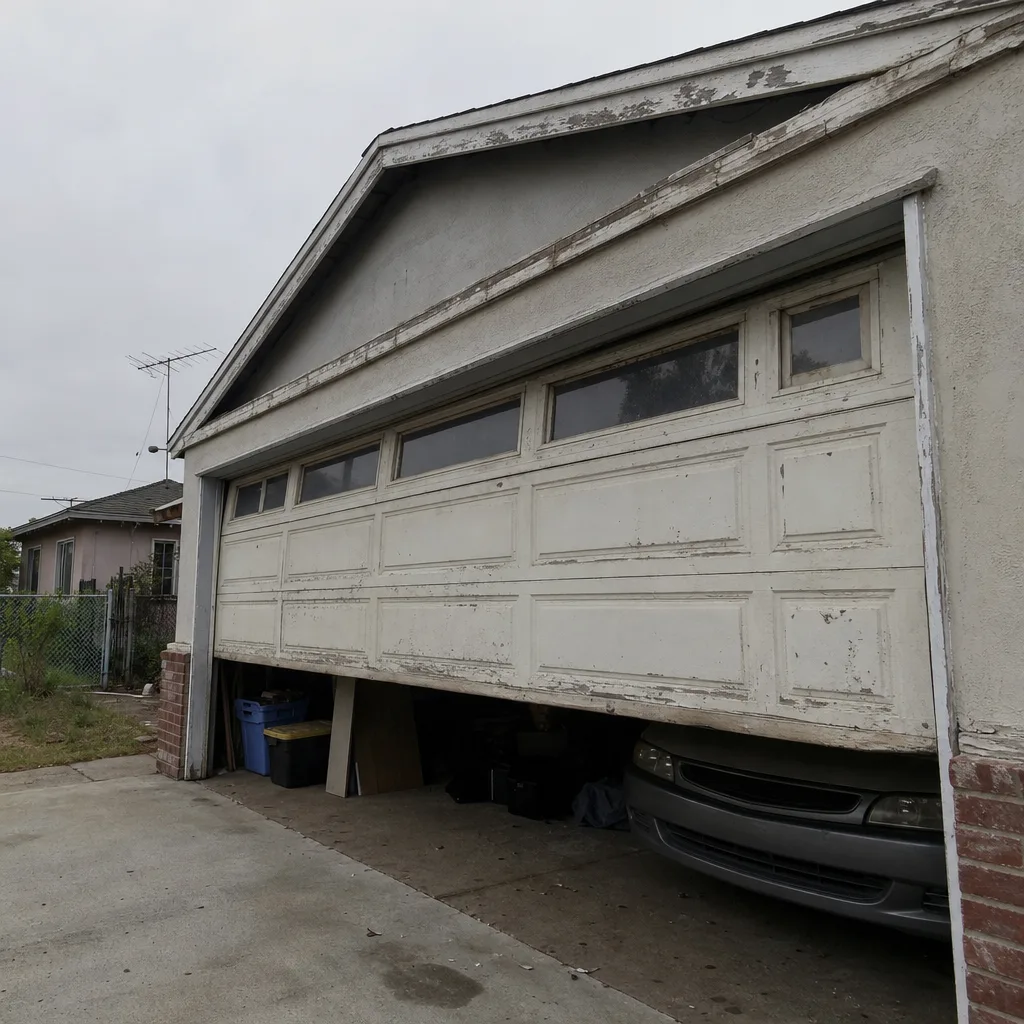
A garage door that moves unevenly, where one side leads and the other lags, is the most overlooked warning sign in home maintenance. Homeowners see a slight tilt and assume it’s a minor character quirk. It is not. Uneven movement means the lifting force is no longer symmetric, and that asymmetry is actively damaging every component in the system.
How to Spot It from the Inside
Stand inside the garage with the door halfway open. Look at the bottom edge of the door compared to the floor. If the gap on the left side is different from the gap on the right, the door is moving unevenly. Now look at the lift cables. One will be slack while the other is tight. The slack cable is the problem side.
What Causes It
Uneven movement has three mechanical causes, in order of frequency:
- One spring has failed or lost tension. Torsion systems fail together, but extension spring systems on older doors can fail one at a time. When one spring breaks, the other is doing all the work.
- A cable has slipped off its drum. This often follows a spring failure or a door that was forced manually.
- A roller has broken or come out of the track. The door loses its guide on one side and cants as it moves.
Why This Is a Safety Issue
An uneven door puts torsional stress on the remaining spring, which shortens its life dramatically. It also stresses the hinges on the lagging side, which can cause hinge bolts to tear out of the panel. And it puts the opener’s rail under lateral load, which the rail was never designed to handle. If the remaining spring snaps while the door is partially open, the door can drop. A falling garage door panel weighs 150 to 250 pounds depending on the material. Clopay and Amarr steel doors with insulation run on the heavier end of that range.
Urgency Triage: Schedule, Stop, or Monitor
Not every symptom is an emergency, and knowing the difference saves you money. Here is the triage system we use when Long Beach homeowners call us describing what they’re seeing or hearing.
Stop Using the Door Now
- A snapped spring. The door is now unbalanced and dangerous to lift manually.
- A cable that has come off the drum or is visibly frayed.
- The door has come off one of its tracks.
- The door drops when closing rather than descending smoothly.
These conditions mean the door is not supporting its own weight safely. Leave the door in place, don’t try to open or close it, and call a professional immediately. In our experience, Long Beach homeowners who call about one of these conditions same day get a much smaller repair bill than those who wait.
Schedule Within the Week
- A popping sound from the springs that started recently.
- A grinding opener drive gear.
- Uneven door movement that is just beginning to show.
- Remote range that has degraded noticeably.
These are failures in progress. The component has not failed yet, but the failure is now accelerating. Scheduling now keeps the repair small.
Safe to Monitor
- Squealing rollers that quiet down after lubrication.
- A door that is slightly noisier in winter than in summer.
- Cosmetic rust on the door panels without structural pitting.
- Weather stripping that is starting to crack but still seals.
These are maintenance items, not failures. Put them on your calendar for a monthly check and watch for changes.
How Long Beach Conditions Accelerate Garage Door Wear
Long Beach is not a harsh climate for garage doors, but it has specific conditions that change failure patterns compared to inland areas. Understanding these helps you know what to watch for.
Salt Air and Metal Components
Homes within a mile or two of the coast, in neighborhoods like Belmont Shore, Naples, and the Peninsula, have measurable salt content in the air. Salt accelerates rust on exposed metal: springs, cables, hinges, and the bottom brackets that anchor the cables. A torsion spring that might last 10 years in Lakewood or Cerritos can show rust pitting in 7 years on the ocean side of Long Beach. Cables are the most vulnerable component because they’re thin and under constant tension. Salt-induced rust on a cable reduces its breaking strength long before there’s any visible rust on the spring.
Coastal Fog and Roller Bearings
The marine layer that rolls through Long Beach most evenings brings moisture into garages that aren’t fully sealed. That moisture settles on roller bearings and hinge pins, washing out the factory grease and accelerating wear. Steel rollers with ball bearings that are sealed hold up fine. Open-bearing rollers rust, and then they grind.
Older Garage Framing and Track Settlement
Many Long Beach homes were built before 1980, and the wood framing around the garage opening has been through decades of moisture cycles. The header above the door can sag slightly, or the side jambs can twist. This shifts the track alignment even when nothing is wrong with the door itself. If you live in a pre-1980 home in Long Beach and your door has started binding or scraping, have the track alignment checked before assuming the door needs replacement. A Garage Door Installation in Long Beach specialist can tell you whether the track can be re-shimmed or the framing needs attention.
What You Can Check vs. What Requires a Professional
There is a line between homeowner maintenance and dangerous work, and it matters. Garage door springs hold enough tension to seriously injure or kill a person, and cables around drums are not a place for a YouTube tutorial. Here is a clear division.
What You Can Safely Do
- Monthly visual inspection. Look at springs, cables, tracks, rollers, and panels. You’re looking for visible changes, not fixing anything.
- Lubricate rollers and hinges. Use a garage door lubricant on the roller bearings, hinge pins, and the spring. Do not use WD-40 as a long-term solution; it’s a degreaser and will strip the existing lubrication.
- Tighten visible loose bolts on hinges and track brackets. If a bolt is loose and you can reach it without touching a spring or a cable under tension, snug it up.
- Keep the photo-eye sensors clean. Wipe the lens with a dry cloth once a month. Long Beach dust and sea spray can build up a film.
- Test the auto-reverse safety feature. Place a roll of paper towels under the closing door. The door should reverse when it touches the roll. Do this once a month.
What Requires a Trained Professional
- Any work on torsion springs. These springs are wound under hundreds of pounds of tension. A spring that releases during a DIY repair attempt can cause severe injury. Even professionals treat a wound spring with respect.
- Cable replacement or re-seating. Cables work with the springs. The tension is the same dangerous tension.
- Track realignment. The track holds the door’s weight path. Bending it back by hand changes the door’s geometry and can cause the door to derail.
- Opener logic board replacement or wiring. Opener electrical work involves line voltage and motor capacitors. This is not outlet-level electrical work.
- Door panel replacement. Panels are heavy and interconnected. Replacing one requires partially disassembling the door system.
Viking Garage Door Repair works on the door you have, not just the brands we prefer. We’re factory-familiar with LiftMaster, Chamberlain, Genie, Clopay, Amarr, Wayne Dalton, Craftsman, and Raynor, and we treat every door as if it’s the only one we’ll see that day. Garage doors are all we do, which means our Viking Garage Door Repair home team has seen the failure modes most generalists miss.
Common Mistakes to Avoid
- Lubricating a broken spring. If the spring has snapped, oil does nothing. The spring needs replacement. Lubricant on a broken spring is the garage door equivalent of putting a bandage on a broken arm.
- Pulling the emergency release cord while the door is open. If the spring has failed and you pull the release, the door will slam down with nothing to catch it. This happens in Long Beach garages every year, and it’s always an expensive surprise.
- Replacing the opener when the spring is the problem. A burned-out opener is often a symptom, not the root cause. The spring failed first, and then the opener burned itself out trying to lift dead weight. If you replace the opener without replacing the spring, you’ll replace the opener again.
- Ignoring a “little noise” for months. Noise is the first signal. Every month of ignoring a grinding opener or a popping spring adds to the final repair cost.
- Doing your own spring work after watching a tutorial. There are videos online showing spring replacement, and they make it look possible. What they don’t show is what happens when the winding bar slips. The hospital bill is not worth the savings.
- Delaying cable replacement because the door “still works.” A frayed cable that still works is a cable that is about to not work. And when it fails, it fails without warning, often while the door is moving.
See the difference
 Before
 After
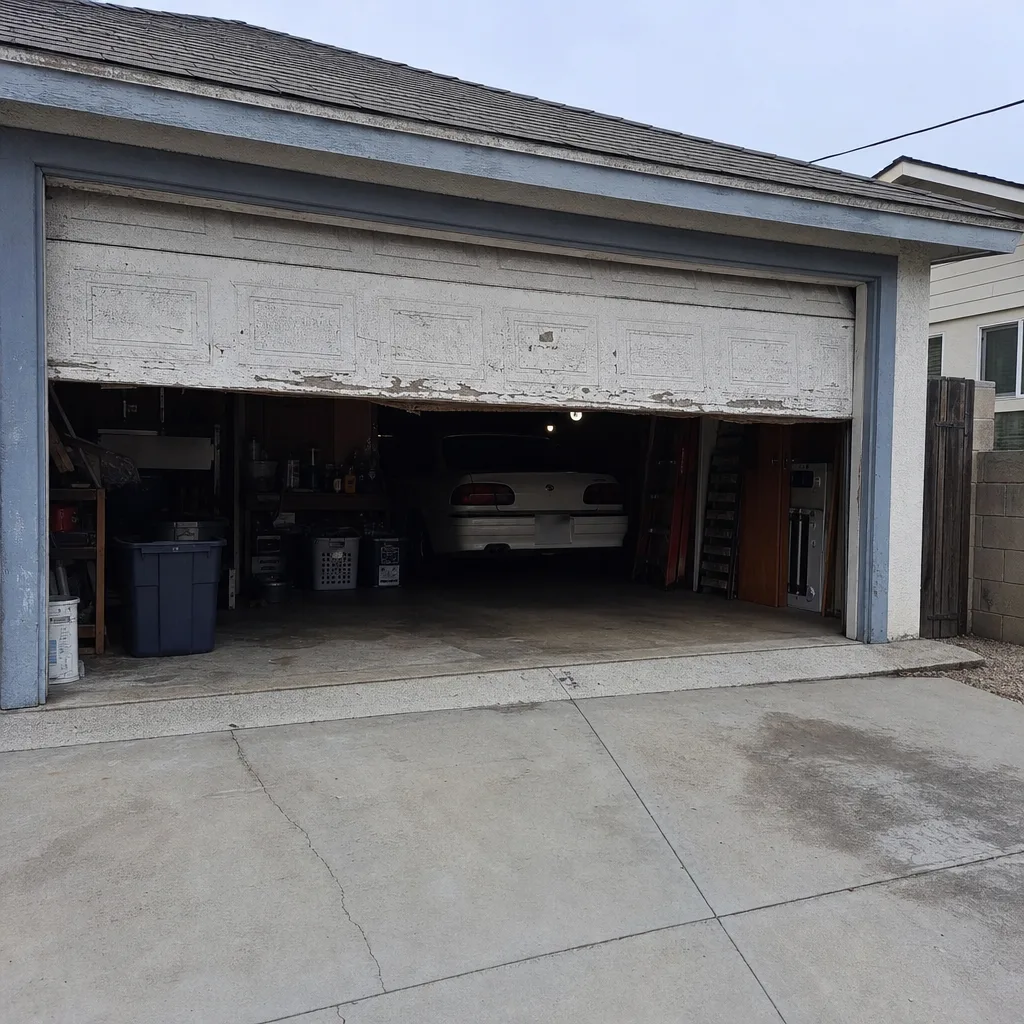 Before
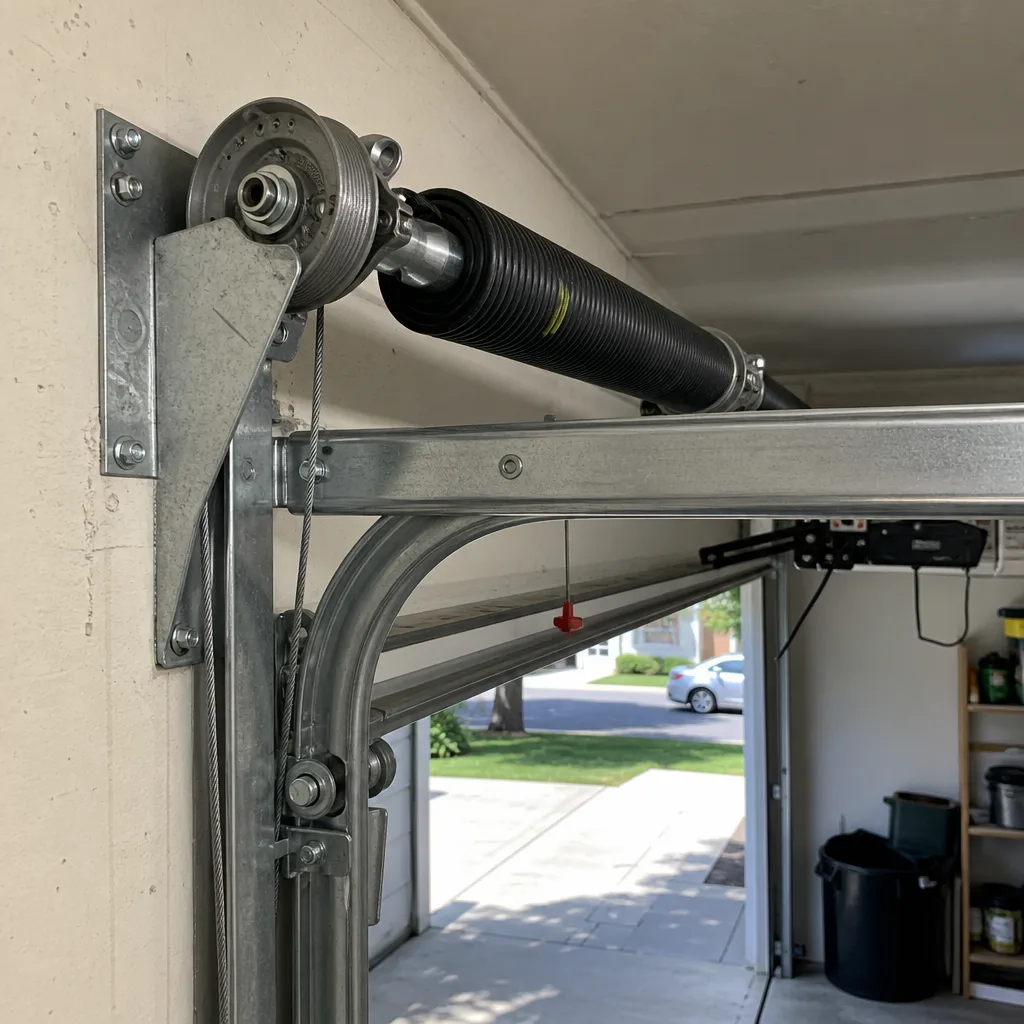 After
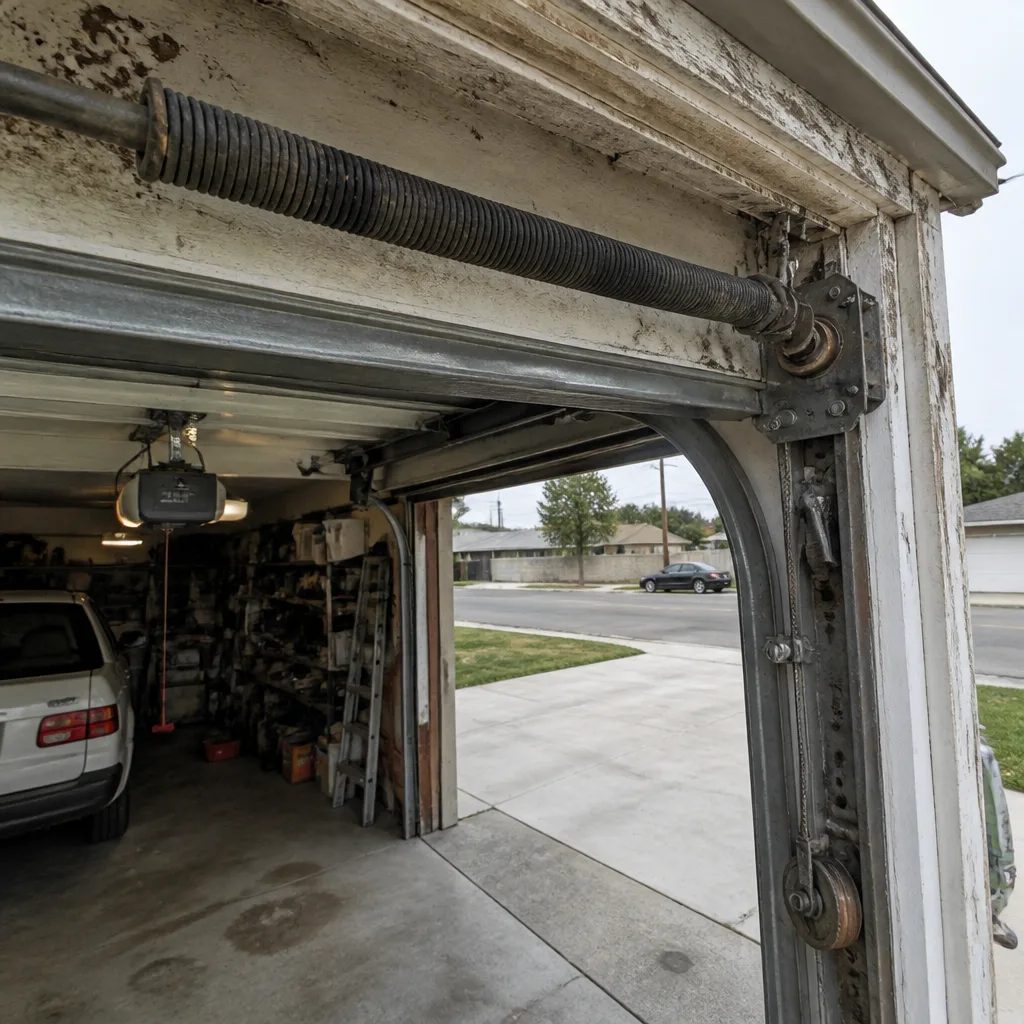 Before
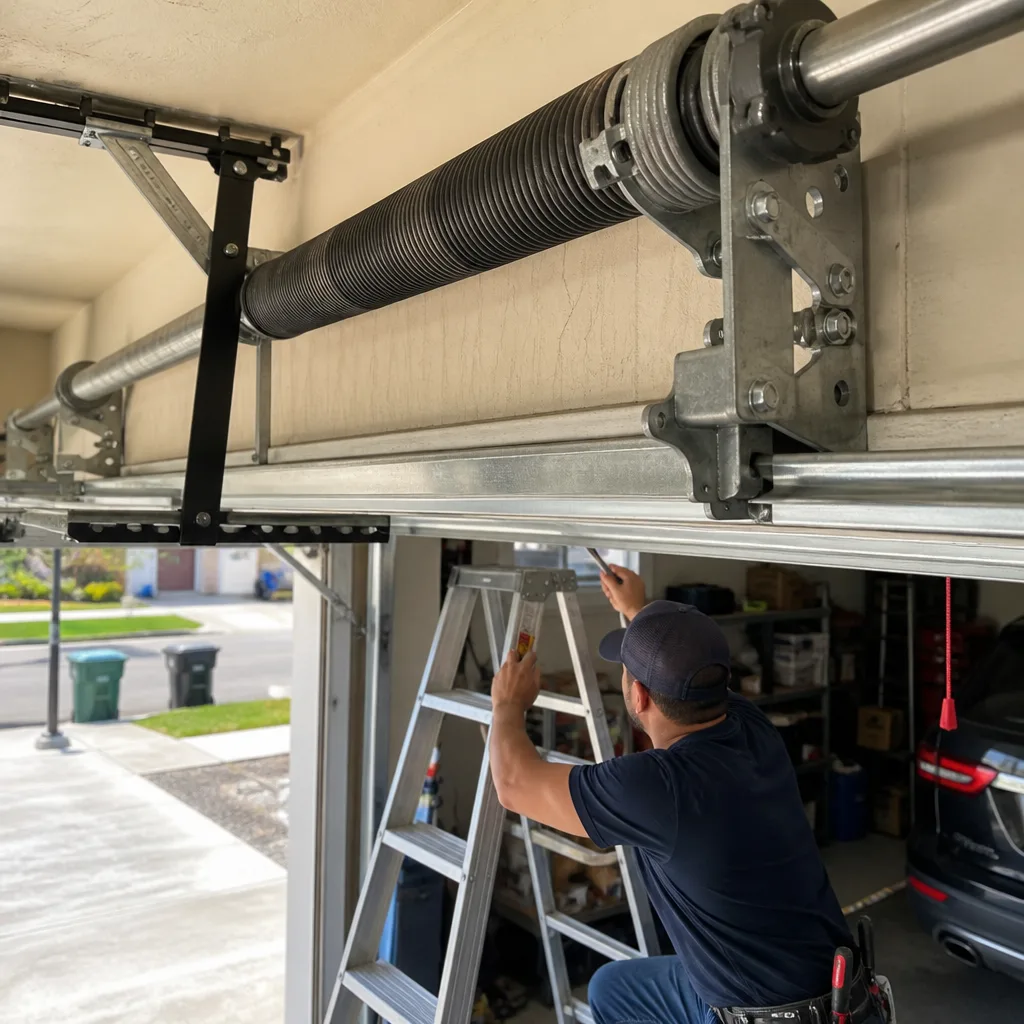 After
When to Call a Professional
If you have a snapped spring, a door off its track, a frayed cable, or a door that is dropping rather than lowering smoothly, call a professional before using the door again. If you have a grinding opener, a popping spring, or uneven movement that is getting worse, call before the failure completes. The pattern we see most often in Long Beach is this: a homeowner notices something small, waits because the door still opens, and then the door fails on a morning when there’s a car inside and a schedule to keep. The $150 repair is now a $900 emergency call, plus a day of disruption. Viking Garage Door Repair offers free estimates in Long Beach. Call (855) 341-7943 and describe what you’re seeing or hearing. We’ll tell you honestly whether it’s urgent, whether it can wait a week, and what it will cost before any work begins.
Frequently Asked Questions
Garage door repair in Long Beach typically ranges from $150 to $900 depending on the component. Replacing a worn roller set runs on the lower end, while a full torsion spring replacement and cable re-seating lands higher. The final number depends on the door’s brand, weight, and which components have already failed. Call (855) 341-7943 for an exact quote. Estimates are free, and the price is quoted and agreed before any work starts.
For most repair scenarios, yes. A snapped spring, a cable off the drum, or an opener failure can usually be addressed the day you call. We carry parts for the eight most common garage door brands in Long Beach on the trucks, which means the fix happens in one visit rather than two. Call (855) 341-7943 and describe the problem for a realistic same-day answer.
No. The price we quote is the price you pay. If we find additional damage during the inspection, we stop work and show you what we found before anything changes. You approve any additional work before it begins, and you’re never billed for something you didn’t agree to. That’s the standard for Garage Door Repair in Long Beach when you work with a specialist.
Yes. Our trucks are stocked with springs, cables, rollers, hinges, and opener parts for LiftMaster, Chamberlain, Genie, Clopay, Amarr, Wayne Dalton, Craftsman, and Raynor systems. This is why a repair call usually gets finished in one visit instead of requiring a second appointment after parts are ordered.
Once a year is sufficient for most Long Beach homes. If you live within a mile of the coast, where salt air accelerates spring and cable corrosion, twice a year is better. A professional inspection catches a separating spring or a fraying cable before either one fails, and it costs far less than an emergency repair.
Colder temperatures cause metal parts to contract, which tightens the fit between tracks, rollers, and hinges. If your door is louder in Long Beach’s winter months but quiets down in summer, the issue is usually dry rollers and hinges that need lubrication, or a door that is slightly out of alignment and only binds when cold. If the noise is a sharp pop or a bang, that’s a spring problem regardless of the season and needs immediate attention.
We work on the door you have, not just the brands we prefer. Our technicians are trained and certified on LiftMaster, Chamberlain, Genie, Clopay, Amarr, Wayne Dalton, Craftsman, and Raynor equipment, so your door’s brand isn’t a problem for us. It’s our specialty. If you have an opener question, reach out for an Garage Door Opener Repair in Long Beach estimate.
The Bottom Line
Your garage door gives you early warnings, and those warnings are consistent and legible once you know what to listen for and what to look at. A grinding opener is a drive gear on its way out. A popping spring is days from breaking. A door that tilts as it moves is a safety problem, not a quirk. Long Beach’s coastal conditions accelerate spring and cable wear, which makes the monthly check more valuable, not less. When a symptom appears, triage it honestly, and if it’s in the stop-using category, don’t push your luck. One call to (855) 341-7943 covers repair, opener work, or a full new door, and the estimate is free.
Written by the team at Viking Garage Door Repair, serving Long Beach since 2015.