Last updated October 31, 2026
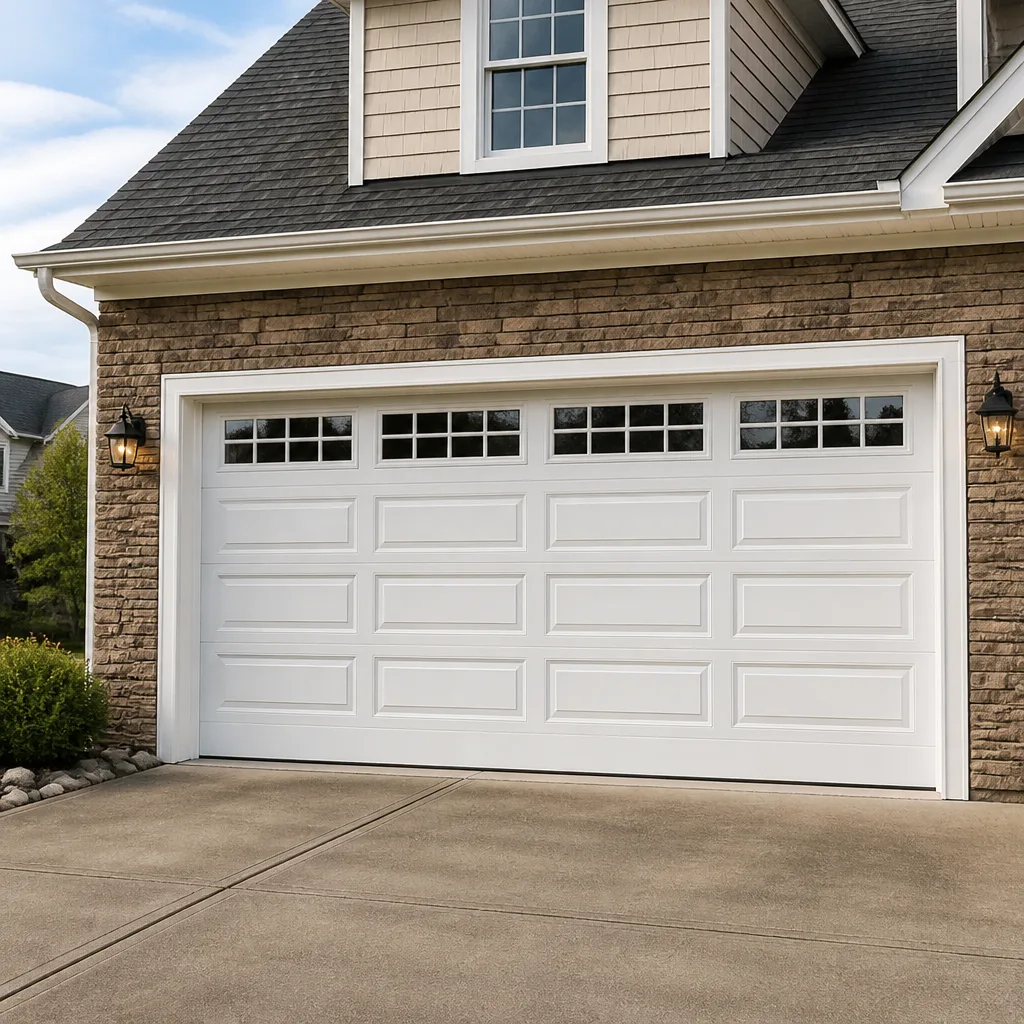 Raised-panel steel
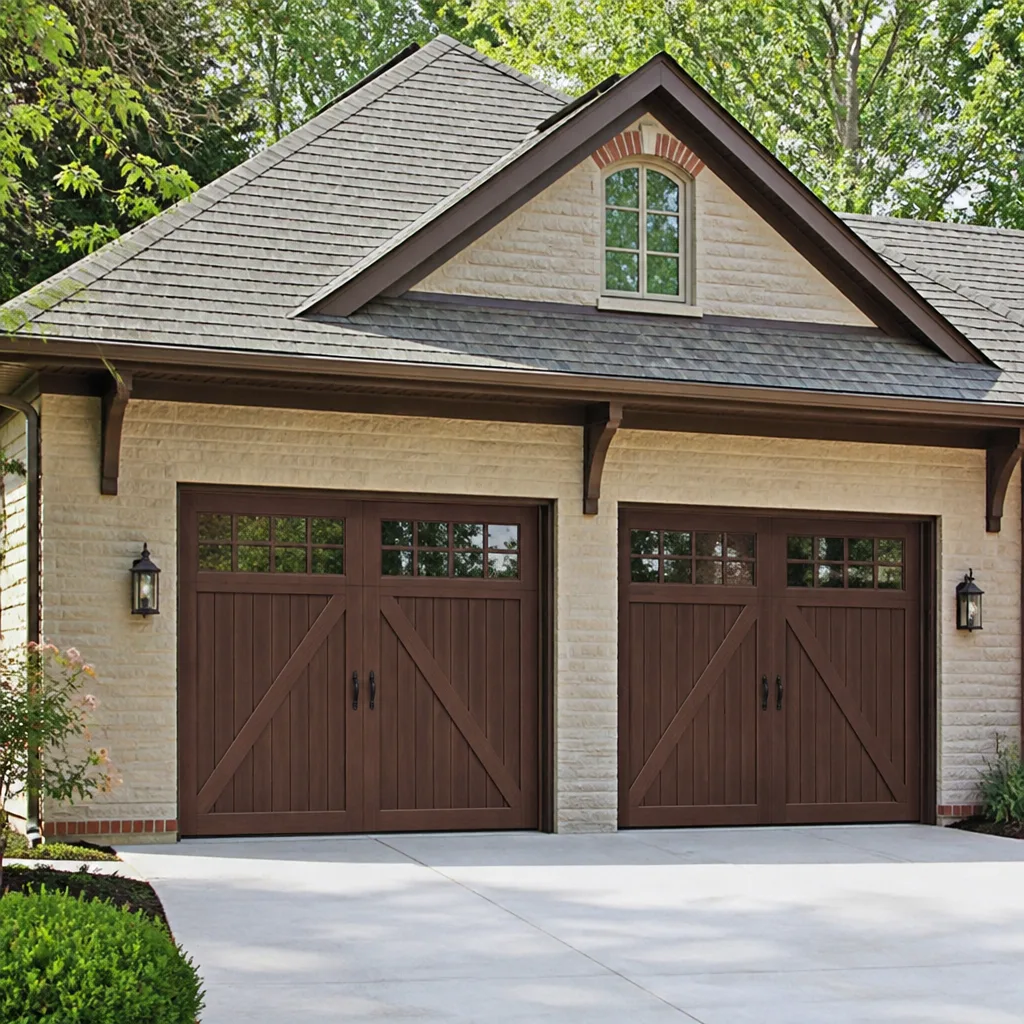 Carriage house
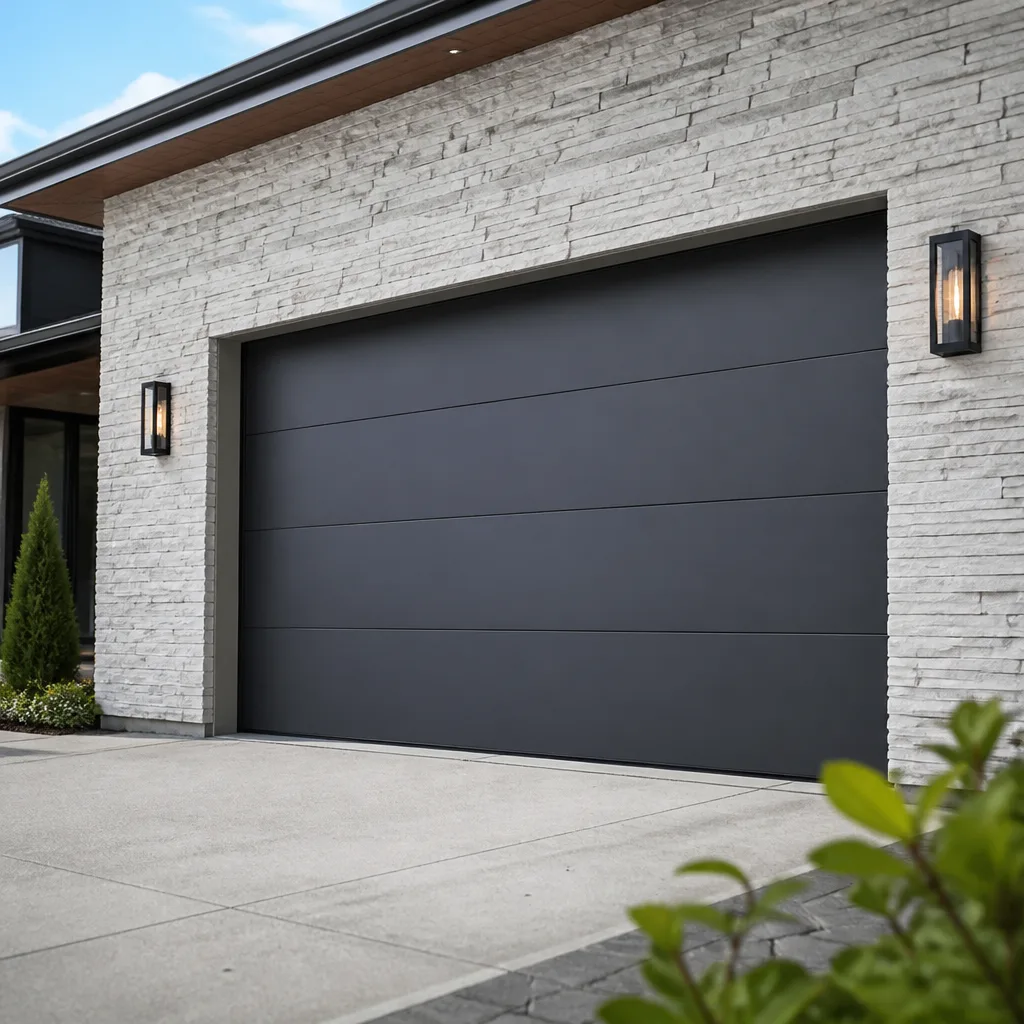 Modern flush
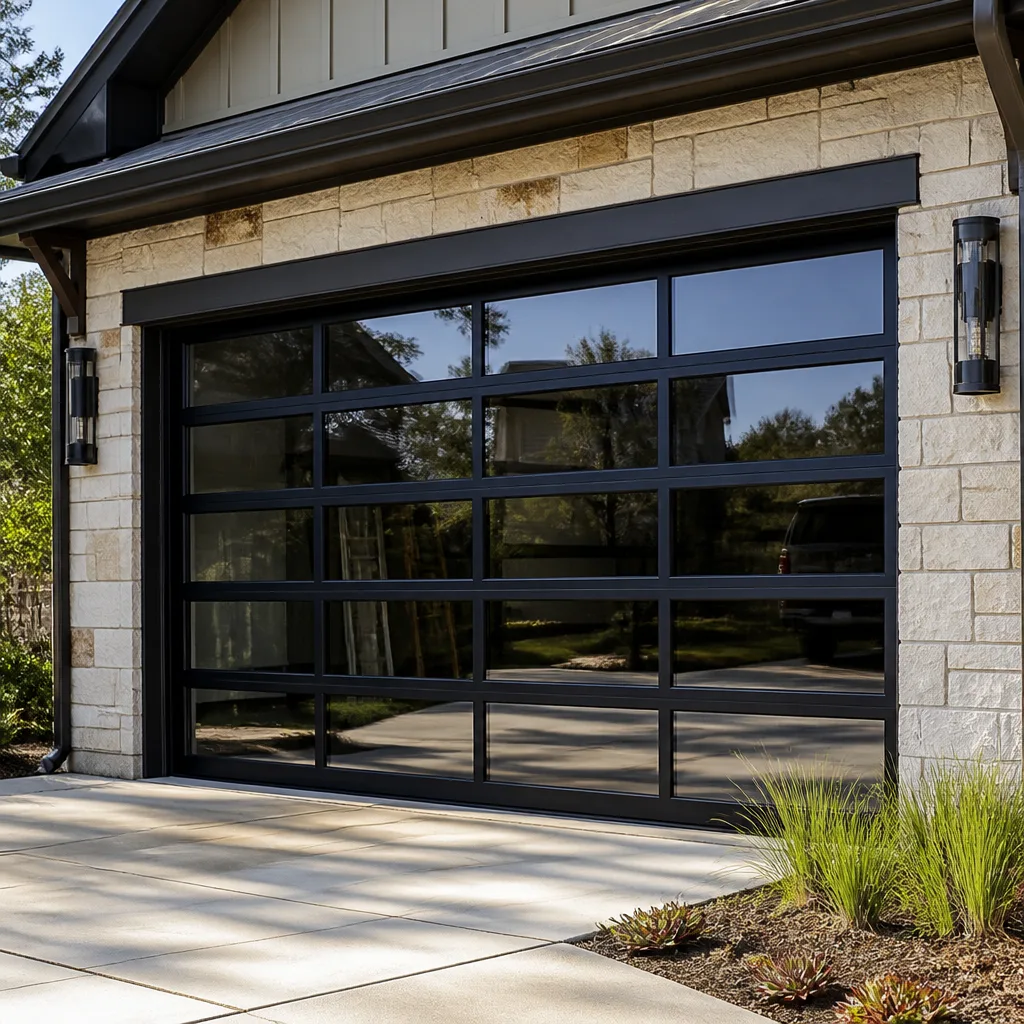 Full-view glass
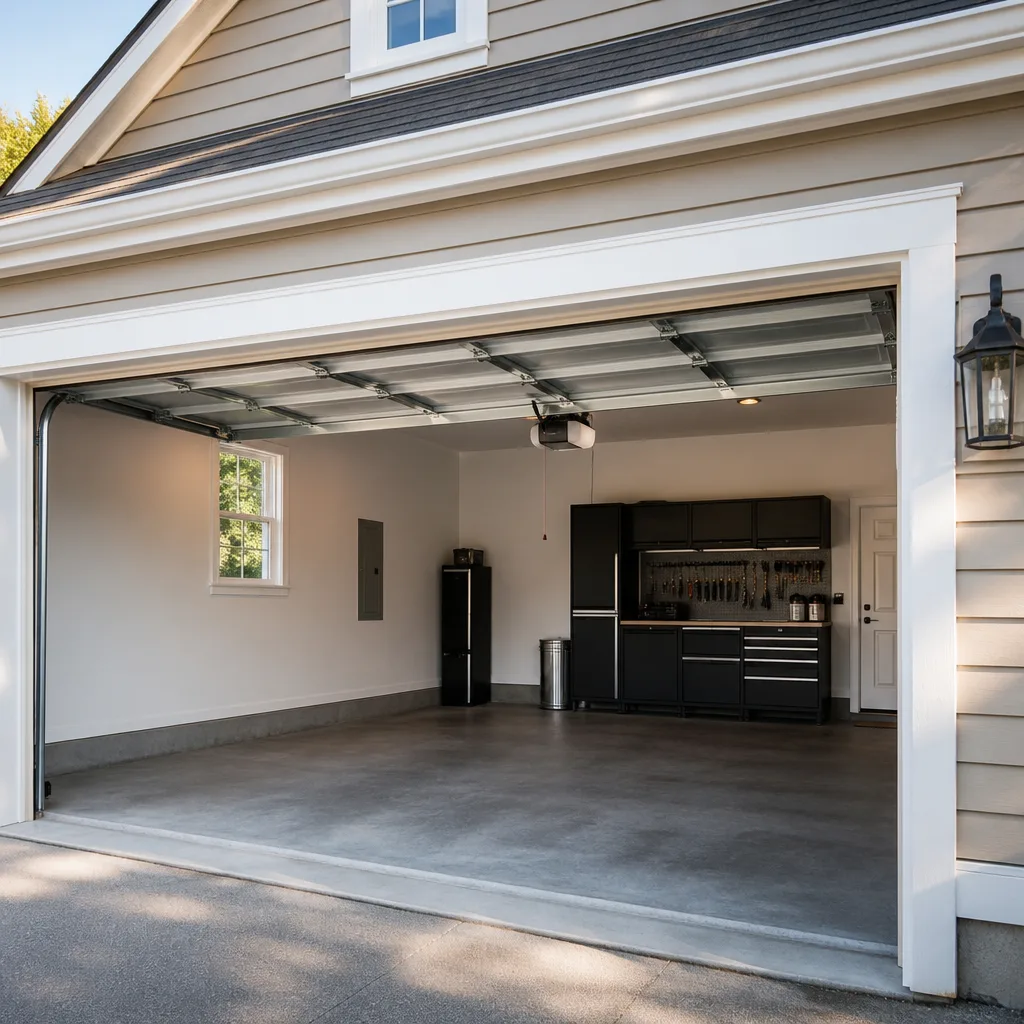 LiftMaster openers
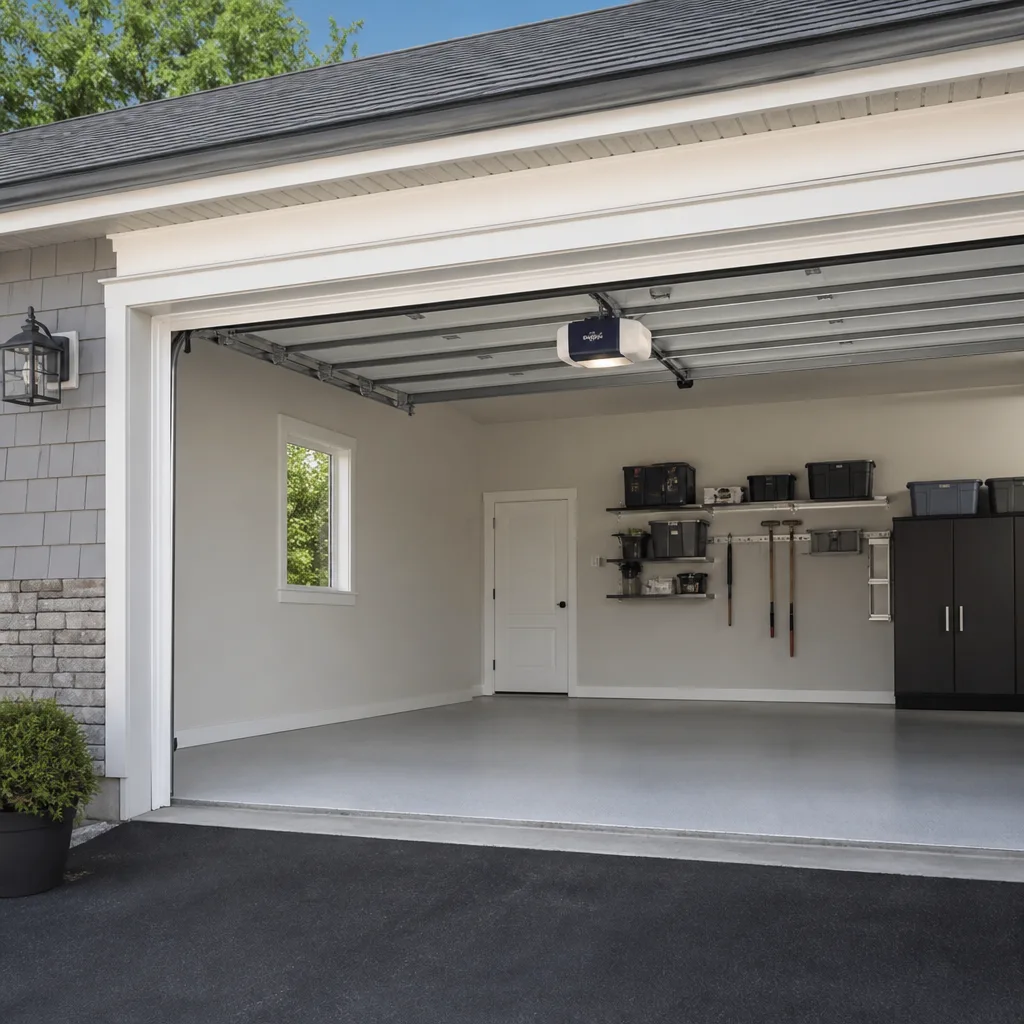 Chamberlain openers
Full 25-point door and opener safety check with every visit - springs, cables, rollers, tracks, and your LiftMaster or Chamberlain opener included
You get a price before we start. It does not change when the truck arrives.
Get your free estimateThe Complete Garage Door Repair Guide for Long Beach Homeowners
Most garage door guides read like they were written for Phoenix or Atlanta. Long Beach is neither. We work on doors a block from the water in Belmont Shore and Naples, and we see the same pattern on nearly every one: torsion springs that corrode 30 to 40% faster than inland wear models predict, cables that fray from salt mist before they snap, and tracks that develop a rust bloom at the roller contact points. This guide maps Long Beach’s coastal climate directly to your door’s components, so you know what fails, when it fails, and what’s actually safe to touch yourself. For more guides & resources, see our blog.
Quick Answer
Garage Door Repair services in Long Beach are shaped by one thing more than any other: salt air. Most repair calls we run in this city are for corroded torsion springs, salt-frayed lift cables, rust-affected rollers and tracks, and misaligned safety sensors. Many of these issues are predictable by neighborhood and age of door, and several can be prevented with seasonal maintenance. The repair you need depends on the component, its exposure to marine air, and its age. This guide breaks down every major system on a garage door, what coastal air does to it, and when to call a specialist serving Long Beach.
Styles & brands we work with
Table of Contents
- How the Long Beach Climate Affects Garage Doors
- Garage Door Spring Repair in Long Beach
- Cables, Drums, and Tracks: What Salt Air Does
- Garage Door Opener Issues in Long Beach
- Rollers, Hinges, and Panels: Coastal Wear Patterns
- Brand-Specific Knowledge for Long Beach Homes
- What to Document Before Calling a Technician
- Common Mistakes to Avoid
- When to Call a Professional
- Frequently Asked Questions
How the Long Beach Climate Affects Garage Doors
Long Beach sits inside a marine air corridor. Morning overcast, afternoon sun, evening fog, repeat. That cycle loads salt, moisture, and temperature swings onto your garage door every single day. The result is a failure pattern that is specific to this city, and it is different from what a door in Riverside or Temecula would experience.
The three primary climate forces working on a Long Beach garage door are:
- Salt aerosol deposition. If you live west of Redondo Avenue, especially in Belmont Shore, Naples, the Peninsula, or Downtown, the ocean breeze carries fine salt particles that settle on metal surfaces. Salt accelerates galvanic corrosion on torsion springs, lift cables, and hardware brackets.
- Marine layer humidity. Long Beach averages high relative humidity in the morning through most of the year. Moisture combines with salt to create an electrolyte that attacks steel and uncoated fasteners.
- Temperature cycling. A door face that bakes in afternoon sun and then cools rapidly in evening fog expands and contracts. Over years, this weakens panel seams and loosens hinge screws.
What does this translate to, practically? A spring that might last 12,000 cycles in a dry inland climate often gives Long Beach homeowners 7,000 to 9,000 cycles. That’s a real difference in replacement timeline. We regularly see seven-year-old springs in Naples that look like they are fifteen. Your garage door’s brand isn’t a problem for us; it’s our specialty. But the climate is the great equalizer. Every brand rusts faster here, unless the door is serviced for coastal conditions.
Garage Door Spring Repair in Long Beach
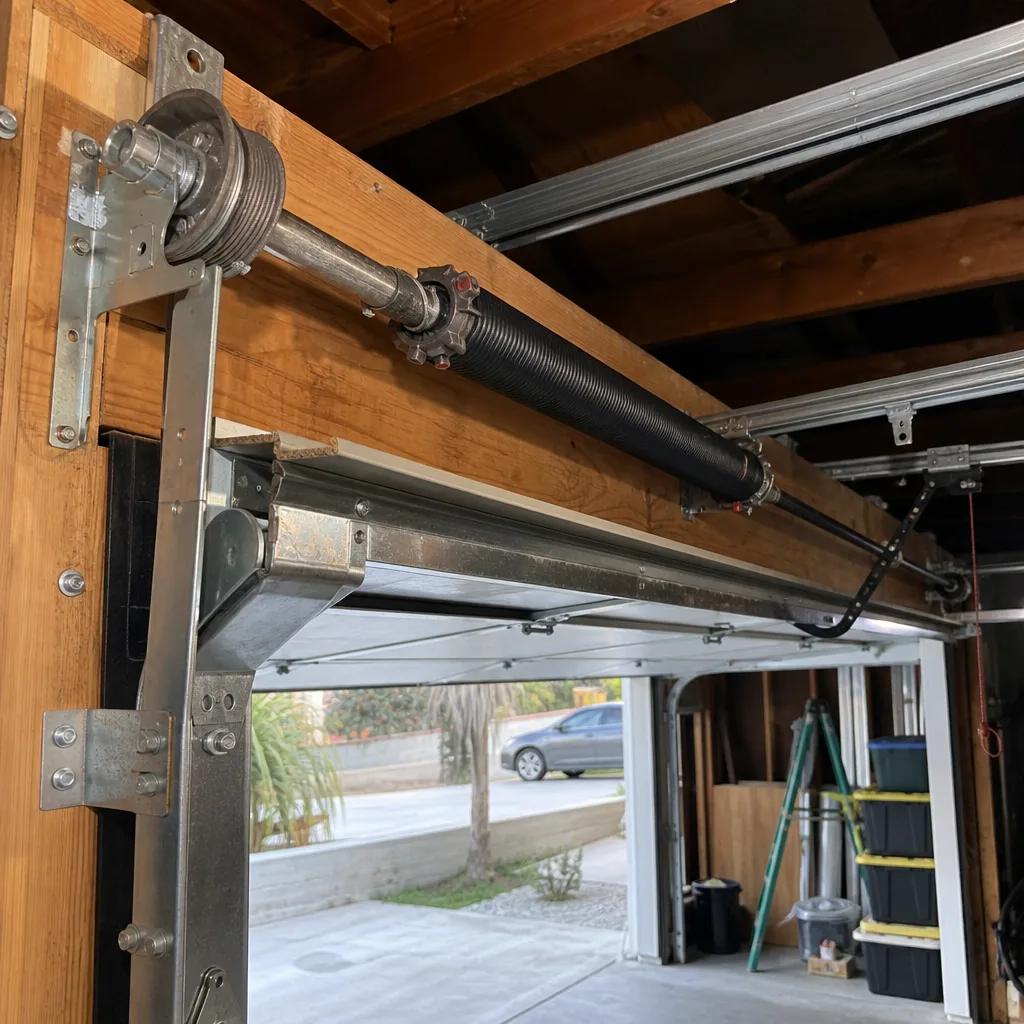
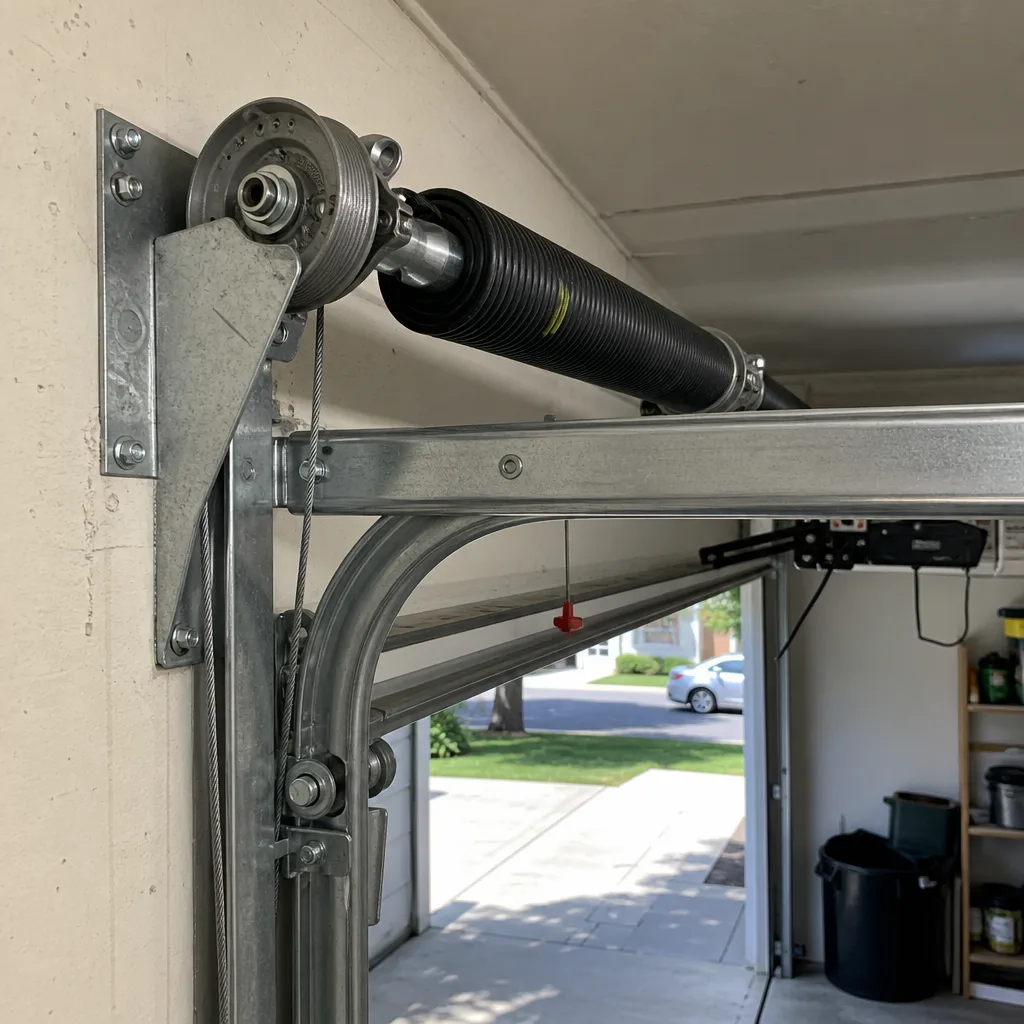
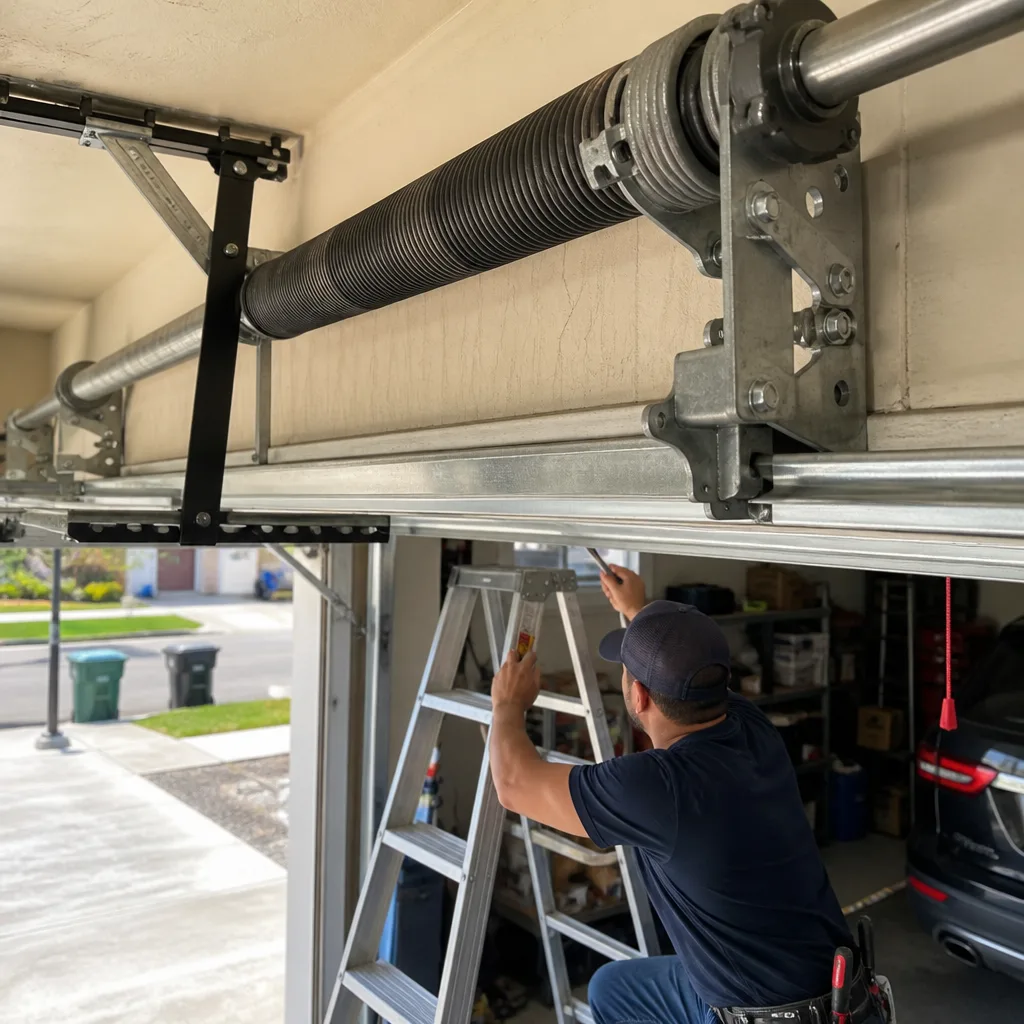
Garage door spring repair in Long Beach begins with identifying which type of spring your door uses. Most homes in Long Beach built after 1980 have torsion springs, mounted horizontally on a shaft above the door opening. Older homes and some detached garages still run extension springs, mounted on cables along the horizontal track on either side.
Torsion Springs
Torsion springs do the heavy lifting. They store mechanical energy under high tension, and in Long Beach, they also accumulate salt. The most common failure point we see is rust pitting where the spring coils touch each other. When the door opens and closes, the coils compress and release; that micro-friction rubs away the galvanized coating, and salt air accelerates the breakdown from there.
When a torsion spring goes, it sounds like a gunshot in your garage. The door stops working immediately. If the spring broke while the door was open, the door can slam down, which is dangerous. Here is what to do:
- Do not pull the red emergency release cord until you have checked whether the door is supported. If the spring is broken, the door is dead weight.
- If the door has fallen, keep hands and feet clear. A door can weigh 150 to 250 pounds.
- Call a specialist. Torsion spring replacement involves winding and unwinding high-tension coils with steel bars. This is not a YouTube project. A mistake can send a winding bar through a wall, or through you.
Torsion spring replacement in Long Beach typically costs between $180 and $340, depending on the spring size, cycle rating, and whether you choose a factory-match part or an upgraded higher-cycle spring. Some doors use two springs; both should usually be replaced together because they have worn at the same rate. We work on the door you have, not just the brands we prefer. In our experience, a door with one new spring and one old spring is a door that revisits the problem in a year.
For a deeper look at spring repair specifics, see our Garage Door Repair in Long Beach page.
Cables, Drums, and Tracks: What Salt Air Does
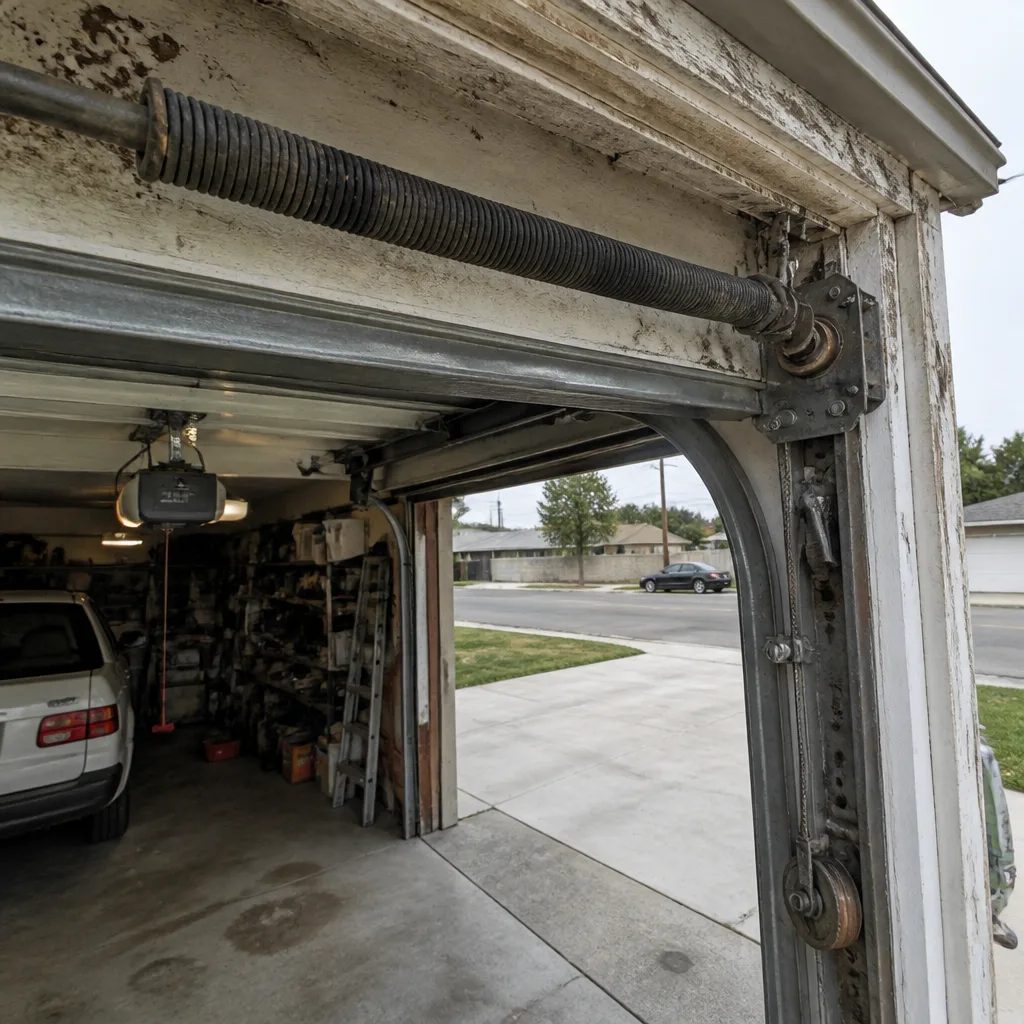
Lift cables are the most visually obvious place to spot coastal damage. Inland cables tend to show wear as a single frayed strand near the drum. In Long Beach, cables on seaward-facing garages often show generalized surface rust along their entire length before any single strand fails. That matters because a uniformly weakened cable can snap without warning.
We tell Long Beach homeowners to inspect their cables twice a year. Run your eyes along the cable while the door is closed. You are looking for:
- Rust blooms or dull brown patches along the braid
- Frayed strands that splay outward from the main bundle
- Kinks or flattening where the cable rides the drum
- A cable that sits slack against the door when closed, rather than taut
A cable that shows any of these signs should be replaced before it breaks. A cable failure with the door open is a serious safety hazard: one side of the door drops, the door torques, and rollers can jump the track.
Drums and tracks in Long Beach share the same corrosion profile. Track rust often starts where the roller sits at rest, because that contact point traps moisture. In waterfront neighborhoods, we see vertical track sections on the seaward side of the garage corrode before the opposite side. The garage creates a microclimate inside: still air, salt carried in with vehicles, and moisture from a concrete slab that never fully dries in the marine layer. That combo is rough on steel.
Track rust does not always require full track replacement. Light surface rust can be addressed with a wire brush and rust converter if the structural integrity is intact. Deep pitting that changes the track profile or causes the rollers to bind does require replacement. A specialist can tell the difference in five minutes.
Garage Door Opener Issues in Long Beach
Garage door openers in Long Beach have two distinct failure modes: mechanical and environmental. The mechanical issues are universal: failed capacitors, stripped gears, worn logic boards. The environmental issue is specific to coastal homes: corrosion on the low-voltage wiring connections and the safety sensor terminals.
The safety sensors are the two small units mounted on either side of the door opening, about six inches off the ground. They face each other and send an infrared beam across the doorway. If that beam is interrupted, the opener refuses to close the door. In Long Beach, especially in garages with sea-facing door openings, the sensor terminals corrode. The coating fails, the copper oxidizes, and the connection becomes intermittent. The symptom is a door that closes halfway, then reverses, or an opener that blinks a diagnostic code and does nothing.
Before you call for opener repair, do this:
- Check that nothing is blocking the sensor beam: boxes, bikes, a rake leaning against the wall.
- Check the wiring to each sensor. If the wire is cracked or green at the terminal, that is corrosion.
- Check the opener’s diagnostic LED on the motor unit. Consult your owner’s manual to read the blink pattern.
If the issue is mechanical, the two dominant smart-home-compatible opener lines in Long Beach homes are LiftMaster and Chamberlain. We see both every week, plus a steady population of legacy Craftsman and Genie openers. Many of those legacy units are 15 to 25 years old, and they are reaching the point where gear replacement is cost-effective but a new logic board is not. A specialist can diagnose that in one visit and tell you honestly whether to repair or replace. For specifics on opener diagnostics and repair, see Garage Door Opener Repair in Long Beach.
Rollers, Hinges, and Panels: Coastal Wear Patterns
Rollers are the quiet failure. Most Long Beach homeowners never think about them until the door starts sounding like a shopping cart with a bad wheel. There are three common roller types:
- Plastic rollers (no ball bearings) – Original equipment on many budget doors. They wear fast and are loud. In Long Beach, plastic rollers often crack at the wheel due to temperature cycling.
- Steel rollers with ball bearings – Better, but the bearing races corrode in salt air. A seized bearing means the wheel stops spinning and grinds the track.
- Nylon rollers with sealed bearings – The standard upgrade we recommend for coastal homes. The nylon wheel is quiet, and a sealed bearing resists salt intrusion better than an open cage.
Hinges are more straightforward. The center hinges, mounted on each panel, carry the most load and are the first to loosen. Salt air attacks the screw threads, and thermal cycling works them loose over time. A loose hinge changes the geometry of the door as it articulates; that stresses panels and can cause the door to bind on one side. Periodically retightening hinge screws with the door closed is a genuinely safe maintenance task for a homeowner.
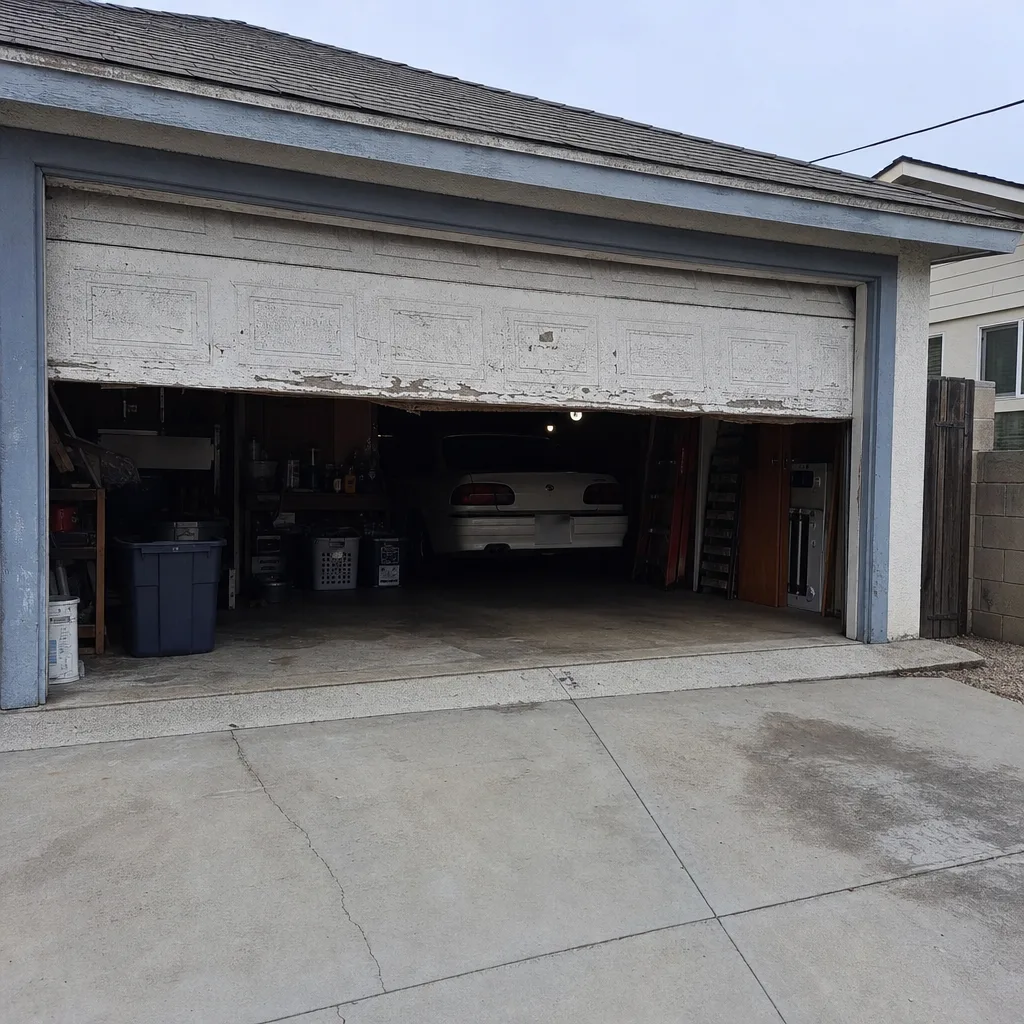
Panels in Long Beach fail in two ways that inland guides don’t discuss. The first is sun exposure: the west-facing panel face on a detached garage bakes every afternoon, and the paint film breaks down faster than the house-side panels. The second is salt water staining on the bottom panel, particularly on homes near the water where a wet vehicle is parked inside the garage. That moisture evaporates and leaves salt behind, which sits on the bottom panel edge and accelerates rust-through. A bottom seal in good condition helps, but it does not solve the problem completely.
For homeowners weighing a repair against a new door, we walk through the math honestly: if the panel damage is confined to one section, a panel replacement may make sense. If the door is 15-plus years old, the springs are original, and the panels are rusting at the bottom, a new door often costs less than five years of patching. Our Garage Door Installation in Long Beach page explains what a new door involves.
Brand-Specific Knowledge for Long Beach Homes
Long Beach garages run the full brand spectrum, but there are patterns in what fails on each. We service eight of the most widely installed garage door and opener brands: LiftMaster, Chamberlain, Genie, Clopay, Amarr, Wayne Dalton, Craftsman, and Raynor. Each has quirks. That is the brand-specific knowledge that separates a specialist from a generalist.
Wayne Dalton doors, especially the TorqueMaster series, hide their torsion springs inside a steel tube rather than exposing them on a shaft. This is a design that confuses the distinction between torsion and extension if you are not familiar with Wayne Dalton hardware. The spring still carries the same deadly tension; homeowners sometimes mistake the tube system for being “safer” because the spring isn’t visible. It is not safer. It is just hidden. Wayne Dalton also uses a proprietary cone and drum setup on some models, which means a replacement spring has to be the right fitment, not a generic part.
Amarr doors are common in Long Beach tract developments from the 1990s and 2000s. Many Amarr installs use a spring system matched to the original door weight, and the rated cycle count is printed on the spring hardware. When Amarr doors fail in Long Beach, it is frequently the torsion spring dying right at or before its rated cycles because coastal corrosion has shaved a few thousand cycles off the spec.
Craftsman is the legacy opener we see most in older Long Beach homes. Those units are often paired with a door that has been replaced at least once. The Craftsman opener may still work fine, even when the door and spring are tired. Or the reverse: the opener logic board has died, and the door itself is in fine shape. We replace what actually needs replacing; we do not bundle a whole system just because one component failed.
Raynor doors appear in a number of commercial and higher-end residential applications in Long Beach. Raynor’s heavy-gauge hardware holds up well to coastal conditions, but the door’s weight means the spring and opener are working harder than they would on a lighter residential panel. That weight load accelerates the consequences of salt degradation on the spring.
Your garage door’s brand isn’t a problem for us. But knowing which brand is on the job helps us arrive with the right parts and diagnose faster. When you call, have the brand name and model, if possible, from the label on the door or opener.
What to Document Before Calling a Technician
The difference between a good repair visit and a bad one often comes down to what the homeowner describes on the phone. A specific description gets you an accurate quote and a technician who arrives with the right parts. A vague description gets you a diagnostic visit and a second trip. Here is what to capture before you call:
- Take a photo of the manufacturer label. On the door, the label is usually on the inside edge of the top or bottom panel. On the opener, it is on the back of the motor housing. This gives us the brand, model, and sometimes the serial number.
- Photograph the broken component. A broken spring, a snapped cable, a track that is out of alignment. Do not get close enough to put your hands near anything under tension. A photo from three feet away is all we need.
- Write down when the failure happened. Did it fail on open, on close, or while parked? Did it make a noise? A loud bang is a spring. A metallic grinding followed by the door stopping is likely a cable or roller failure.
- Note what the door does now. Does it not move at all? Move a few inches and stop? Open but not close? The behavior narrows the diagnosis.
- Check the opener’s lights. If the opener is unresponsive, note whether the unit has power and whether the LED diagnostic light is blinking, and if so, how many times.
This documentation takes ten minutes and saves the technician diagnostic time on site. It also gives you a clearer picture when the quote is given, because the quote reflects the actual job, not a hypothetical. We quote before we start work, every time. The price you agree to is the price you pay.
Common Mistakes to Avoid
- Lubricating a loud door with WD-40. WD-40 is a water displacer, not a lubricant for garage door rollers and hinges. It provides temporary quiet, strips the existing lubricant film, and then the door is louder than before. Use a silicone-based garage door lubricant on metal parts, and do not lubricate plastic rollers at all.
- Keeping using a door after a spring breaks and someone “fixes it” with the opener. If you disconnect the door and run the opener, or if someone reconnects the door and forces it, you are asking the opener’s gear to lift 200 pounds without mechanical assistance. The door gets bent, the opener gear strips, and the damage multiplies.
- Assuming a rusted cable is still safe because it hasn’t snapped yet. A cable with uniform rust along its length is not on a countdown; it’s unpredictable. The tensile strength is already compromised, and the failure is abrupt.
- Ignoring a door that reverses on its own. This is usually the safety sensor system doing its job. Some Long Beach homeowners disable the sensors after a few false trips, which removes a key safety feature. A door that suddenly reverses is a door telling you something is wrong.
- Waiting until a track is visibly bent before addressing rust. Track rust starts small. If you catch it at the surface level, a cleanup may extend the track’s life by years. If you wait until the door binds, you are replacing track sections.
- Replacing only one spring on a two-spring door. The springs wear and corrode at the same rate. A new spring paired with an old one throws off balance and makes the door work unevenly.
- Attempting a torsion spring repair with improvised tools. Screwdrivers are not winding bars. Every year, emergency rooms see garage door spring injuries. This is the single most dangerous component in your house, and it deserves a trained professional with proper tools.
When to Call a Professional
A torsion spring repairs, cable replacements, track replacements, opener diagnosis and repair, panel replacement, and any task that involves adjusting the door’s balance should be handled by a trained technician. See DIY vs Professional Garage Door: The Long Beach Homeowner’s Decision Guide for a full breakdown of what to handle yourself versus what to leave to the pros. These systems carry high forces, and the consequences of a mistake are serious injury or further damage to the door. For a broken spring, a frayed cable, or an opener that is not responding, do not attempt the work yourself. A professional will diagnose the actual problem, fix it correctly, and make sure the door is safe to operate again.
Viking Garage Door Repair offers free estimates in Long Beach. Call (855) 341-7943 to schedule a service visit. We arrive, diagnose, and quote before any work begins. Garage doors are all we do, which means we do them right. Our Garage Door Repair in Long Beach page covers the repair process in detail, and our Viking Garage Door Repair home page has the full scope of our services.
Frequently Asked Questions
Garage door spring replacement in Long Beach typically costs between $180 and $340, depending on the spring size, cycle rating, and whether one or two springs are replaced. Coastal corrosion may shorten the practical lifespan to roughly 7,000 to 9,000 cycles, which means many Long Beach doors need replacement more often than inland doors. Call (855) 341-7943 for an exact quote; estimates are free.
Yes, in most cases we can schedule a repair for the same day you call, particularly for a broken spring or snapped cable that leaves the door inoperable. The exact availability depends on the time of day and our current schedule. Call us as soon as you notice the problem and we will get you on the calendar.
No, the price you are quoted is the price you pay. We quote before any work starts, and we do not change the number once we are on site unless you approve an additional repair. Our estimates are free, and the quote is specific to what the technician finds.
We are certified to service eight of the most installed brands on the market: LiftMaster, Chamberlain, Genie, Clopay, Amarr, Wayne Dalton, Craftsman, and Raynor. We work on the door you have, not just a preferred brand. Brand-specific knowledge means we arrive with the right parts and diagnose faster.
In a coastal climate, we recommend lubrication and a visual inspection twice a year, ideally in spring and fall. Coastal air accelerates spring, cable, and hardware corrosion, so catching surface rust and dry bearings early extends the life of every component. A specialist can do the inspection in one visit, and the price is modest compared to the cost of ignored wear.
Some maintenance tasks are genuinely homeowner-safe: lubricating hinges and metal rollers with a silicone spray, tightening hinge screws, keeping the safety sensors free of debris, and testing the door’s balance. What is not safe is any work on torsion springs, extension springs, lift cables, or cable drums. Those components are under high tension and require proper tools and training.
The Bottom Line
Long Beach garage doors fail differently than doors in Riverside or Temecula. Salt air corrodes springs and cables, marine layer humidity attacks hardware, and the coastal temperature cycle stresses panels and hinges. The repair you need is shaped by which component is affected, how old the door is, and how close you live to the water. The best thing you can do is catch problems early and call a specialist before a small issue becomes a dangerous one. We work on the door you have, not just the brands we prefer. One call covers it: repair, opener, or a full new door. Call (855) 341-7943 for a free estimate.
Written by the team at Viking Garage Door Repair, serving Long Beach since 2015.
See the difference
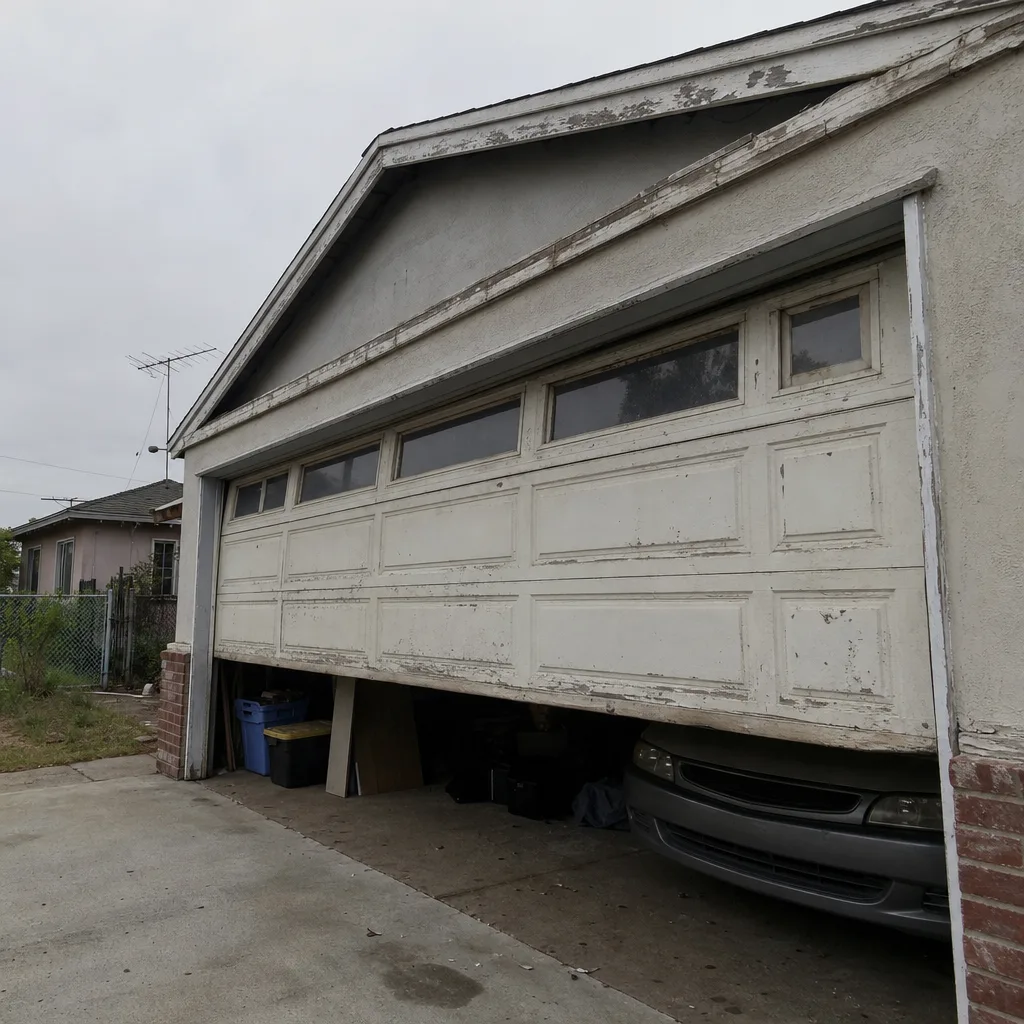 Before
 After
 Before
 After
 Before
 After