Last updated October 31, 2026
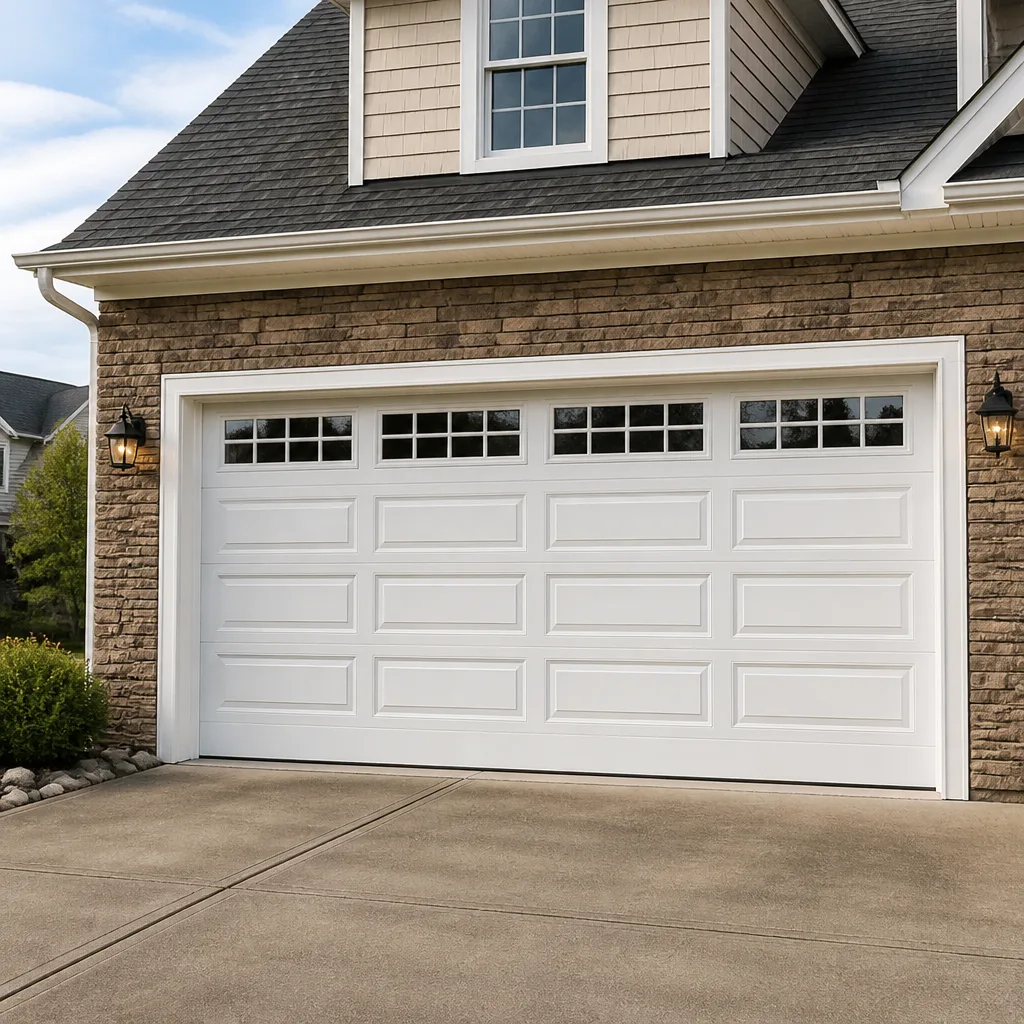 Raised-panel steel
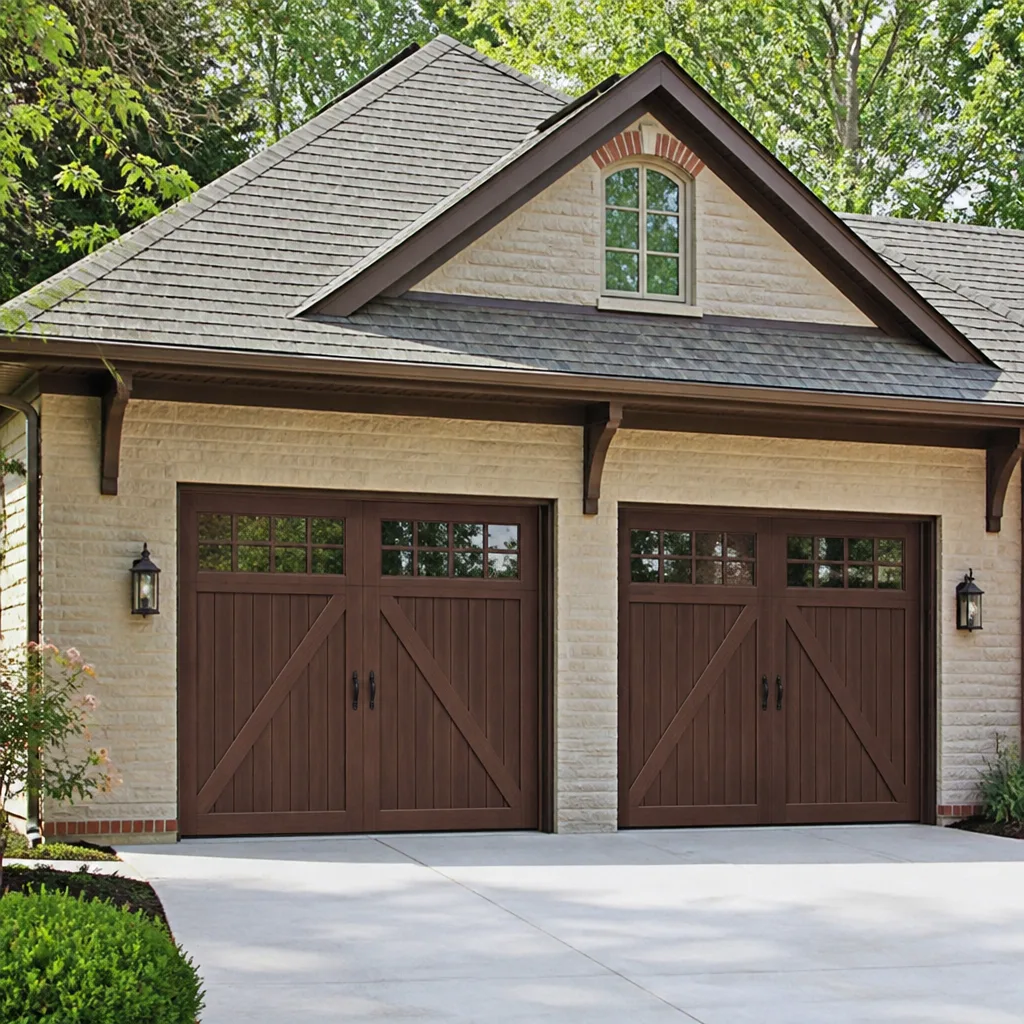 Carriage house
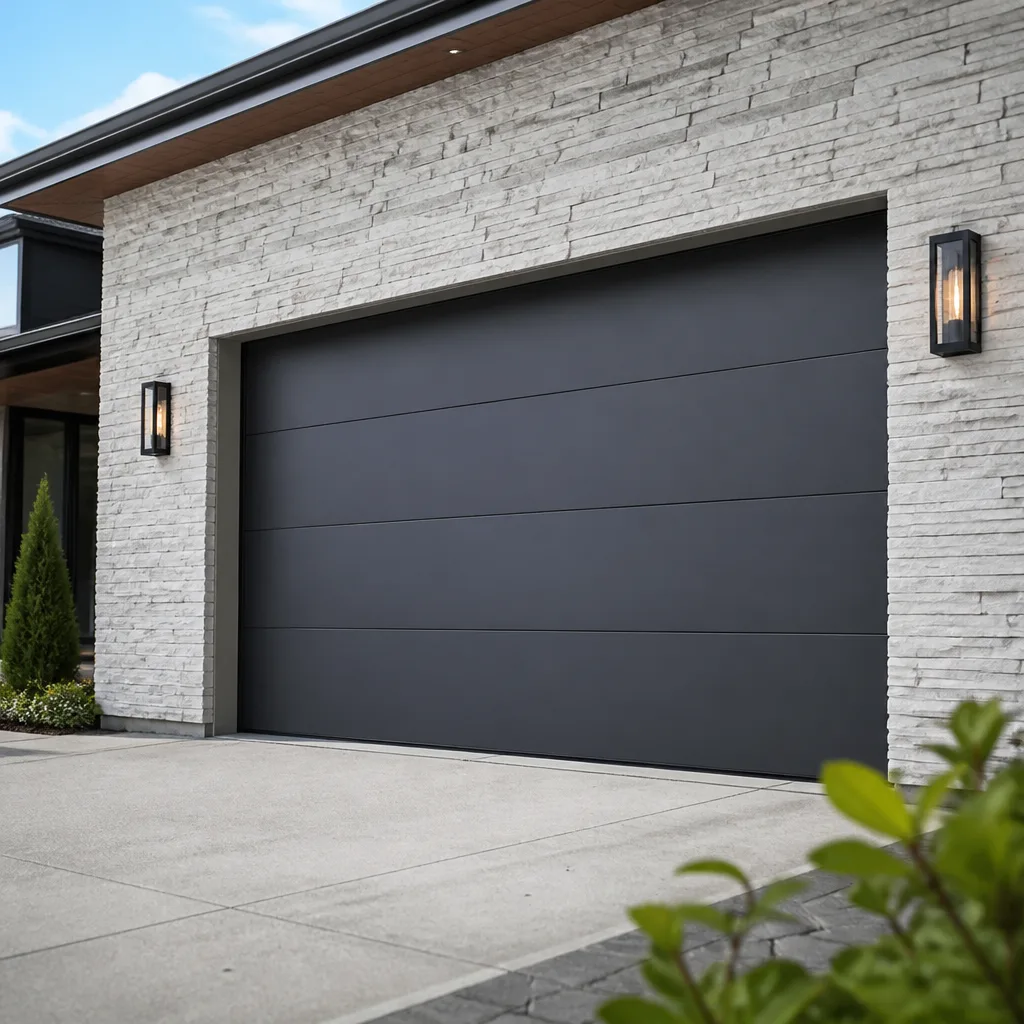 Modern flush
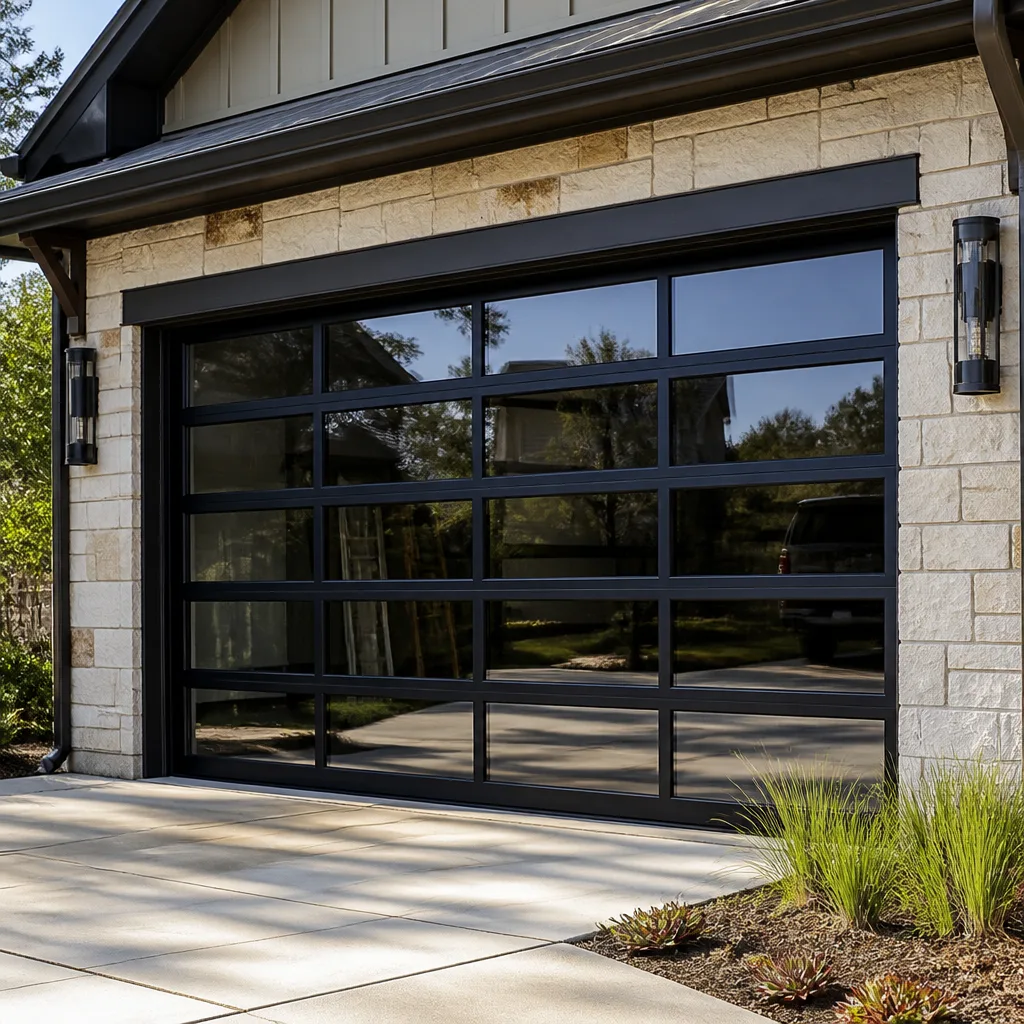 Full-view glass
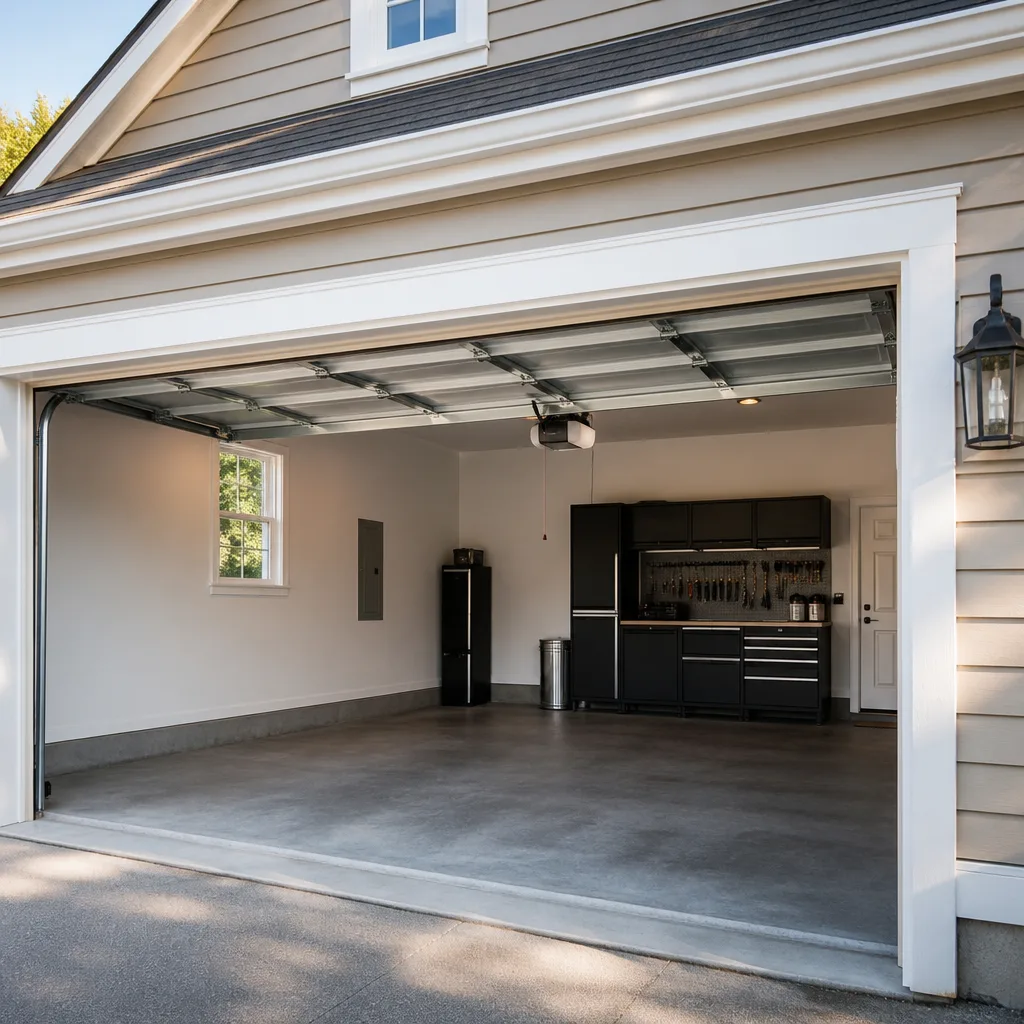 LiftMaster openers
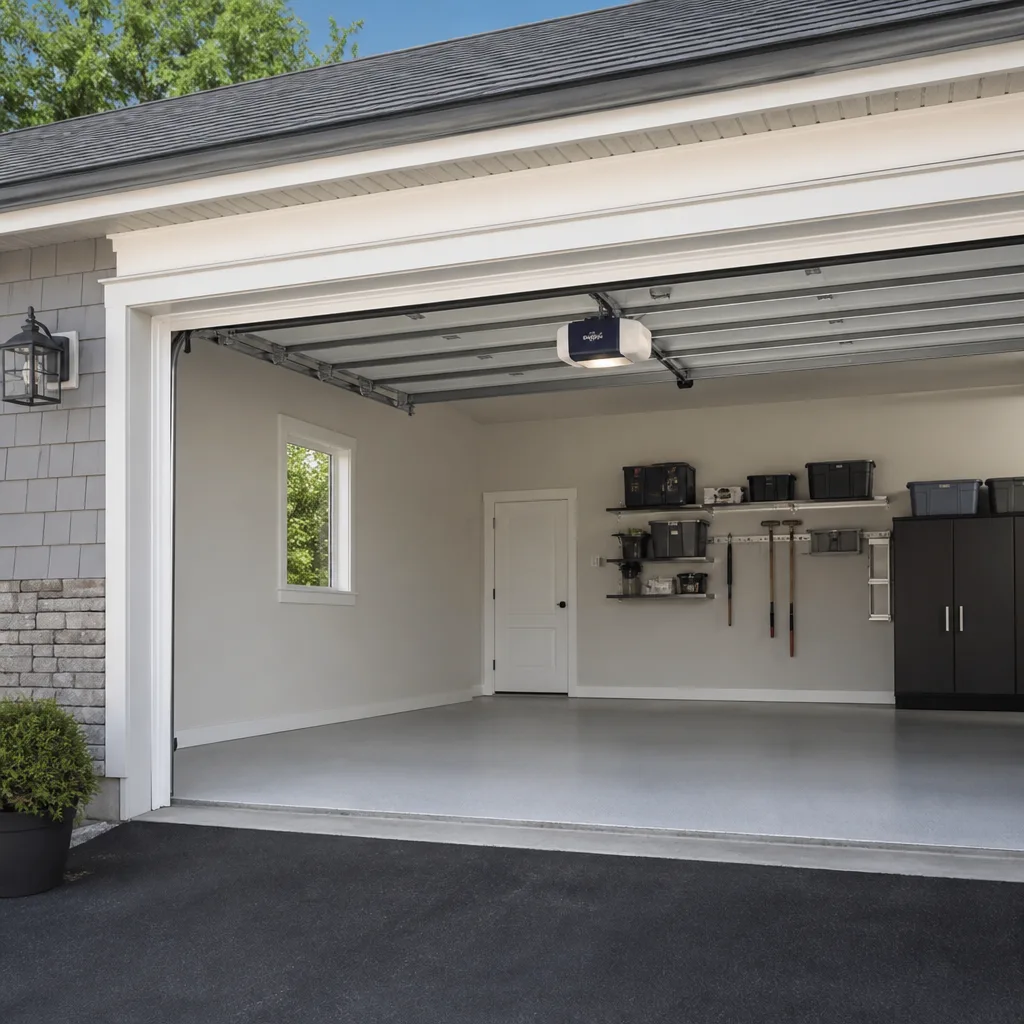 Chamberlain openers
Full 25-point door and opener safety check with every visit - springs, cables, rollers, tracks, and your LiftMaster or Chamberlain opener included
You get a price before we start. It does not change when the truck arrives.
Get your free estimateThe Complete Guide to Garage Door in Long Beach
Most Long Beach homeowners don’t realize their garage door is the largest moving part of their home until it fails at 7 a.m. on a workday. By then, you’re late, your car is trapped, and you’re about to make a rushed decision you’ll regret. Here’s what nobody tells you: the garage door that’s perfect for a house in Belmont Shore is often the wrong door for a house near Signal Hill, even though they’re fifteen minutes apart. This guide walks through every decision a Long Beach homeowner actually faces, from materials that survive salt air to HOA rules that dictate what you can install, and when a repair makes more sense than a replacement.
Quick Answer
The right garage door for your Long Beach home depends on where you live, what your HOA requires, and the age and condition of your current system. Coastal neighborhoods like Naples and Belmont Shore need corrosion-resistant hardware and reinforced panels that inland homes don’t require, while many Long Beach HOAs restrict colors, materials, and even window styles. Repairs typically make financial sense when the door is under 15 years old and the issue is isolated to one component; replacements win when the door is older, dented, sagging, or failing in multiple areas at once.
Styles & brands we work with
Table of Contents
- How Long Beach Microclimates Change Your Door Choices
- The Three Tiers of Garage Door Companies in Long Beach
- HOA Rules That Constrain Long Beach Garage Doors
- Repair or Replace: How to Decide in Long Beach
- Brand Availability and Parts Stocking in Long Beach
- What Garage Door Services Actually Cost in Long Beach
- Material and Finish Choices for Coastal Long Beach
- Opener Technology: What Long Beach Homes Actually Need
How Long Beach Microclimates Change Your Door Choices
Long Beach isn’t one climate. It’s at least three. The difference matters more than most homeowners realize when they’re picking a garage door. We’ve seen doors in Naples corrode within eight years while the identical model in Los Altos looks nearly new at fifteen.
Belmont Shore, Naples, and the Peninsula sit directly on the ocean. Morning marine layer settles in, and salt spray carries on the prevailing breeze. Steel doors with standard galvanization will rust at the bottom panel edges and around the hardware within five to seven years. The fix isn’t complicated: choose marine-grade hardware, powder-coated tracks, and either a fiberglass or a higher-zinc steel panel. Aluminum frames hold up well, but only when paired with stainless steel fasteners. The cheap galvanized hinges that come standard on many builder-grade doors will fail first.
Downtown Long Beach and the areas around Alamitos Beach get less direct salt but still contend with morning moisture and the harbor’s effect on air quality. Steel doors with standard finishes work here, but you’ll want to rinse the exterior twice a year and keep the bottom weather seal in good shape. The bigger issue downtown is clearance: many older homes and condo buildings in the area have low-headroom garages, which means standard track systems won’t fit. That changes the entire conversation about what you can install.
Inland toward Signal Hill, Bixby Knolls, and Lakewood, the air is drier and hotter. Salt corrosion drops down the priority list. Heat becomes the focus. Dark-colored steel doors absorb significant heat in summer, and if your garage is uninsulated, that heat transfers into living spaces above it. Insulated doors with a polyurethane core make a noticeable difference in these neighborhoods, both for temperature control and noise dampening. The same door that’s adequate in Belmont Shore may be uncomfortably warm by July in Signal Hill.
The Three Tiers of Garage Door Companies in Long Beach
When your door breaks, you’ll find three distinct types of companies operating in Long Beach, and they’re not remotely the same. Understanding the difference before you need one saves you money and prevents repeat failures.
- Generalist home service companies. These are the big names that also do plumbing, HVAC, and electrical. They’ll send a technician who fixes garage doors occasionally. The problem is depth: a technician who fixes doors twice a week doesn’t have the diagnostic pattern recognition that comes from seeing fifty broken springs a month. They’re more likely to replace parts unnecessarily because they don’t know the quirks of specific brands. In Long Beach, these companies often sub out door work entirely, adding a markup without adding expertise.
- National door chains. These brands advertise heavily and answer quickly. What you’re getting is a franchise or corporate location with standardized pricing and procedure. The techs are usually trained on the chain’s preferred brands, which may or may not match what’s on your house. Parts run through centralized distribution, so if you have a less common door, expect waiting time for components to ship in. They do fine on straightforward jobs; they struggle with older homes, custom setups, and the low-headroom situations common in older Long Beach neighborhoods.
- Independent door specialists. This is the narrowest category and what Viking Garage Door Repair home falls into. A specialist works on garage doors exclusively. In our experience with Long Beach homes, that depth translates into faster diagnostics and fewer wrong guesses. When you open a Clopay door and find Wayne Dalton parts inside because a previous contractor mixed components, a specialist recognizes the mismatch immediately. A generalist sees a door that doesn’t quite work and starts replacing things.
The practical takeaway: for odd noises, intermittent problems, or anything involving a specific brand’s electronics, the specialist tier is where you get accurate answers. For a simple broken spring on a standard door, any competent company can handle it. The question is whether you want to pay generalist prices for specialist-level certainty.
HOA Rules That Constrain Long Beach Garage Doors
If you live in a neighborhood governed by an HOA, and much of Long Beach is, your garage door options are already narrower than you think. The common restrictions aren’t always written down in one place, and some HOAs enforce rules that predate current material technology.
Here’s what we see most often across Long Beach HOAs:
- Color matching. Many HOAs in areas like Bixby Knolls and the neighborhoods east of Redondo maintain a palette of three to five approved door colors. If your door is dented and you want to replace it, you can’t just pick any finish. You’ll need the HOA’s written approval before ordering, which adds time to the project.
- Material restrictions. Some older HOAs in Long Beach still specify wood doors, which is problematic near the coast. Wood doors require consistent repainting and sealing to survive salt air, and many homeowners end up fighting their HOA to allow a wood-look steel or composite door instead. Most boards will approve the composite once they see it, but someone has to make the case.
- Window constraints. Garage door windows change the architectural front elevation, and HOAs care about that. Whether you can add windows, what pattern they need to be, and even whether they can be tinted are common approval points. In Naples and Belmont Shore, where architecture is tighter, expect the most scrutiny.
- Installation timing. Some HOAs restrict work hours and require a pre-approved contractor list. If you’re planning a full installation, check your CC&Rs before you schedule. We’ve seen installation days pushed because the HOA didn’t recognize the contractor name on the form.
The smart sequence is: HOA approval first, then order the door, then schedule installation. Doing it backwards leaves a brand-new door sitting in a warehouse while the board reviews paperwork.
Repair or Replace: How to Decide in Long Beach
This is the decision every homeowner eventually faces, and the honest answer depends on your door’s age, condition, and the specific failure. For a deeper look at this choice, see our DIY vs Professional Garage Door: The Long Beach Homeowner’s Decision Guide. Here’s the framework we use when Long Beach homeowners ask us whether to fix what’s there or start fresh.
When Repair Makes Financial Sense
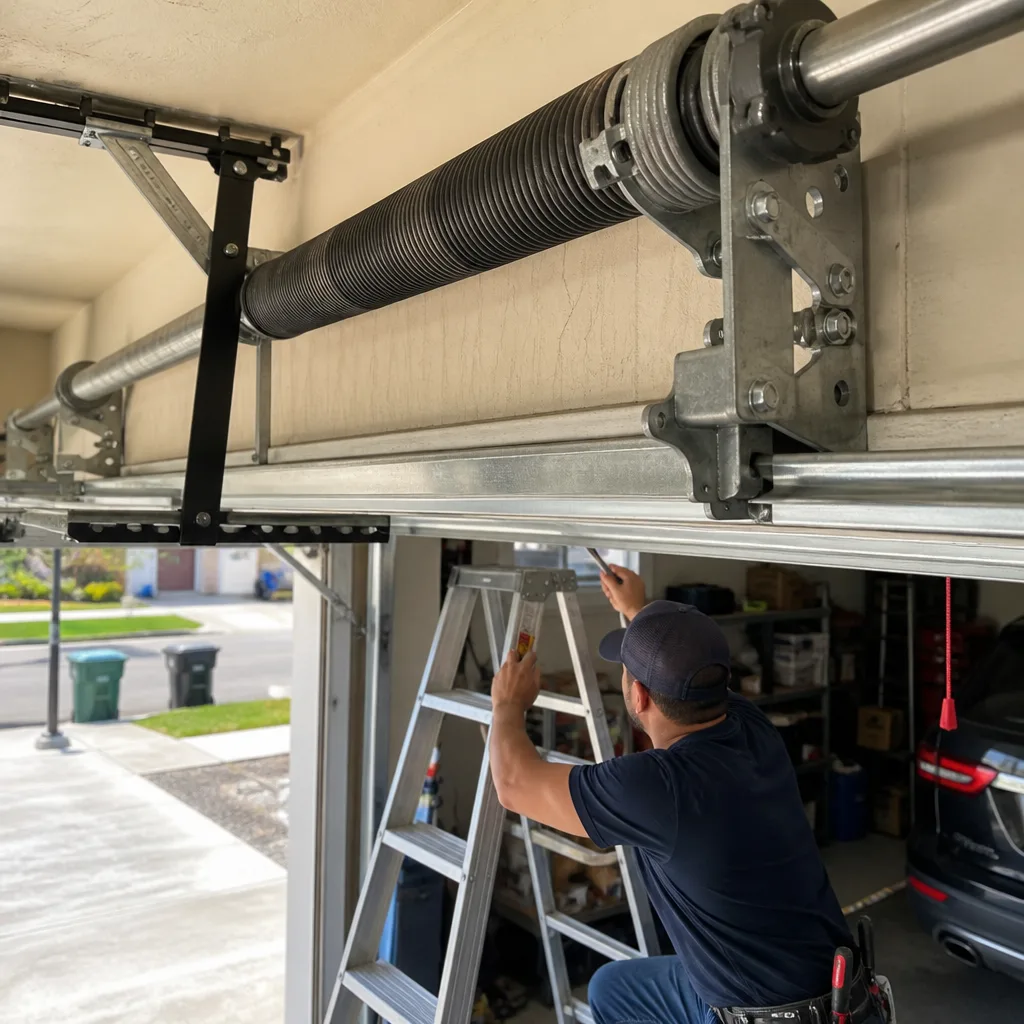
If your door is under 15 years old and the panels are structurally sound, repair is almost always the right call. A broken spring, a worn roller, a failing opener, or a bent track are component-level problems. Replacing the component restores the door to working condition for a small fraction of the cost of a new one. In Long Beach, a standard torsion spring replacement on a typical double door is a routine same-day job, and a competent specialist carries the springs on the truck. These doors often have another five to ten years of life left.
When Replacement Is the Smarter Long-Term Move
Replacement wins when the door has multiple problems or when the cost of repairs approaches 50 percent of the cost of a new door. Dented or rusted panels, a sagging frame, warped sections from heat exposure, or a door that’s already had two major repairs in the past three years are all signals that you’re paying to extend the life of a declining asset. The same logic applies to doors that were installed before modern safety features became standard. If your door doesn’t have an auto-reverse function with photoelectric sensors, replacing it isn’t just about appearance. It’s about safety.
One more local factor: if you’re planning to sell your Long Beach home, a new garage door is consistently one of the highest-return curb-appeal investments. Buyers in this market notice an aging door, especially in neighborhoods where street-facing garages dominate the front elevation. For a home near the water, a clean, corrosion-free door signals that the property has been maintained. Garage Door Installation in Long Beach may cost more than a repair today, but it can add meaningfully to both your asking price and your speed of sale.
Brand Availability and Parts Stocking in Long Beach
Here’s something competitors rarely explain: not all garage door brands are equal in Long Beach, and the difference is parts availability. When your door breaks, the question isn’t just “who makes it” but “can the repair part be sourced locally today, or does it need to ship from a regional warehouse?”
In practice, LiftMaster and Chamberlain components are the easiest to find in Long Beach. They share a parts ecosystem and are widely stocked by local suppliers. Genie openers and parts are also common, though some legacy Genie models require specific replacement boards that may need ordering. Clopay doors are popular in coastal Southern California and have a strong regional distribution presence, which means panels and hardware for recent models are typically accessible within a day or two. Wayne Dalton has a solid presence as well, though some of its torque-master spring systems require specialized tools that not every repair company carries.
Amarr, Raynor, and Craftsman sit slightly behind in terms of local stocking. Amarr and Raynor parts generally ship from regional warehouses, adding a few days to a repair. Craftsman openers, especially older chain-drive units, are common enough that most electrical components are on hand at local suppliers, but mechanical parts for Craftsman doors specifically sometimes require cross-referencing to find compatible alternatives.
What this means for you: before you buy a house in Long Beach or consider a pre-owned door, check what brand is installed and ask a specialist how parts access looks for that model. A door with poor parts availability isn’t a problem until it is, and then it’s a problem that takes longer and costs more to solve. Garage Door Repair in Long Beach works on all eight major brands, but we’re honest with homeowners when a door’s parts reality makes replacement smarter than continuous patching.
What Garage Door Services Actually Cost in Long Beach
Let’s talk straight numbers. For a complete Garage Door Cost Breakdown: The Long Beach Homeowner’s Reference for 2026, Long Beach garage door pricing varies by neighborhood, door type, and urgency, but here’s what you should expect based on current local market rates:
- Broken torsion spring replacement: $250 to $450 for a standard single or double door, depending on spring size and cycle rating. Salt-air corrosion shortens spring life, so coastal homes tend to need replacement sooner than inland homes.
- Cable replacement: $180 to $320. If the cable snapped because the drum or spring failed, expect those components to add to the cost.
- Roller replacement (full set): $150 to $250 including labor. Nylon rollers with sealed bearings last significantly longer in Long Beach’s humid coastal air than steel equivalents.
- Opener motor replacement: $350 to $700 installed, depending on whether you choose a chain, belt, or screw drive and whether you need smart-home integration. Garage Door Opener Repair in Long Beach is always worth checking before you commit to full replacement, since many opener issues are resolved with a gear kit or logic board rather than a new motor.
- Full door replacement (installed): $1,800 to $5,500 for a standard double door, depending on material, insulation level, and whether you’re adding windows or upgraded hardware. Custom sizes and low-headroom configurations push higher.
- Service call / diagnostic fee: $75 to $125 in most of Long Beach, often waived if you proceed with the repair.
Every reputable company in Long Beach quotes the full price before any work starts. You should always know the exact cost, including all parts and labor, before a technician touches anything. If a company won’t give you a firm number upfront, find another one.
Material and Finish Choices for Coastal Long Beach
Your material choice matters more in Long Beach than it does in Pasadena or Irvine, because salt air and humidity exact a toll. Here’s what each major material does in a coastal environment, based on what we’ve observed across thousands of doors in the area.
Steel. The most common choice for good reason: it’s affordable, durable, and available in the widest range of styles. Standard steel with a polyester finish holds up fine inland but develops rust at edges and hardware points within six to eight years near the ocean. If you’re within two miles of the water, choose steel with a higher-zinc galvanization layer and glass-reinforced polymer edge caps. Ask about the zinc weight of the substrate. The cheap doors never even list it, and that’s the door that rusts.
Fiberglass. Excellent choice for the Belmont Shore, Naples, and Peninsula areas. Fiberglass doesn’t rust and won’t corrode like steel. The panels can be finished to look like wood without the maintenance. The tradeoff is impact resistance: fiberglass cracks more easily than steel if a car bumper or a basketball hits it hard enough. For ocean-adjacent homes where the garage faces the street, it’s a strong contender.
Aluminum. Common on modern and custom homes. Bare aluminum holds up well to salt, but the fasteners and hardware used with it often don’t. If you choose aluminum, insist on stainless steel hinges and brackets. The frame might last decades, but a steel hinge on an aluminum door will fail via galvanic corrosion much faster than you’d expect. Powder-coated aluminum with a wood-grain finish is a popular Long Beach look that outperforms real wood in this climate.
Wood. Beautiful, and a maintenance nightmare within a mile of the ocean. Wood doors in Naples and Belmont Shore require repainting or resealing every two to three years. Inland Long Beach, a well-maintained wood door can last twenty years. But near the salt, swelling, warping, and rot are constant pressures. Most homeowners who love the wood look end up choosing a wood-look steel or composite door instead. It gives you the curb appeal without the annual fight against the marine layer.
Opener Technology: What Long Beach Homes Actually Need
Garage door openers have changed more in the past decade than in the previous thirty years. Here’s what Long Beach homeowners should be looking at, and what’s overkill.
Smart-home integration. LiftMaster and Chamberlain both make openers that connect directly to your home Wi-Fi and work with MyQ, the most widely adopted homeowners’ app. This matters if you’ve ever driven away wondering whether the garage door closed. From your phone, you can check the door’s status, open it remotely for a delivery, or receive an alert when it opens unexpectedly. In a city where many residents commute to Los Angeles or Orange County, remote monitoring has genuine everyday value rather than being a gadget-bait feature.
Belt drive vs. chain drive. Here’s the plain truth: if your garage is attached to living space or has bedrooms above it, a belt drive is worth the extra money. Chain drives work fine and last a long time, but they’re louder. In the older Long Beach homes where the master bedroom sits directly over the garage, the difference between a chain drive and a belt drive at 6 a.m. is substantial. For detached garages, chain drives are perfectly adequate and save you money.
Battery backup. Long Beach doesn’t get the extreme heat waves of the inland valleys, but the grid here is older and localized outages happen. If you park your car in the garage and rely on it daily, a battery backup on the opener means you can still get your car out during a blackout. Given that California continues to experience public-safety power shutoffs in some areas, this is becoming standard rather than optional. For full planning guidance, see our Garage Door Emergency Preparedness Guide for Long Beach Homes.
The Genie legacy question. A significant number of Long Beach homes built in the 1990s and early 2000s have Genie openers, and many of them are still running. Genie’s newer models are solid, but the older chain-driven units have a known failure point in the clutch and gear assembly. If yours is over fifteen years old and starting to sound rough, the cost of replacing the assembly often approaches the cost of a new opener. That’s a repair-vs-replace conversation worth having with a specialist who knows the difference.
Three Common Long Beach Garage Door Scenarios
Here are three situations we see repeatedly in Long Beach homes, and how each one plays out.
Scenario one: The 7 a.m. spring failure in Belmont Shore. You hit the button, hear a loud snap, and the door doesn’t move. That’s a broken torsion spring, and it’s the most common failure in this city. Coastal humidity accelerates spring corrosion, which is why Belmont Shore springs fail more often than Signal Hill springs on doors of the same age. The right move is to call a specialist who carries springs on the truck. The wrong move is to keep pressing the opener button and trying to force the door up. That bends tracks and strips opener gears, turning a $300 repair into an $800 repair.
Scenario two: The HOA-approved color doesn’t match anything at the local supplier. You have a door in Bixby Knolls that’s dented beyond repair, and the HOA says the replacement must match the existing color within a tight tolerance. Local suppliers don’t have it. In this case, you need a company that can custom-order through a manufacturer’s color-match program, which generally adds two to three weeks to the project. Specialists deal with this process regularly and know which manufacturers offer the fastest color-match turnaround. Generalists often tell you the color doesn’t exist and suggest you fight the HOA, which is a battle you won’t win.
Scenario three: The opener runs, but the door moves five inches and stops. This is usually a broken tension system component – a spring, cable, or both – or a track obstruction. In an older Long Beach home, it could also be a door that’s been out of balance for months and finally overwhelmed the opener’s force settings. The diagnostic process is straightforward for a technician who sees this weekly. The homeowner who keeps trying the opener, hearing it strain, and trying again is causing incremental gear wear that will eventually kill the opener too. Stop. Call. The repair is always cheaper when the door hasn’t been forced repeatedly.
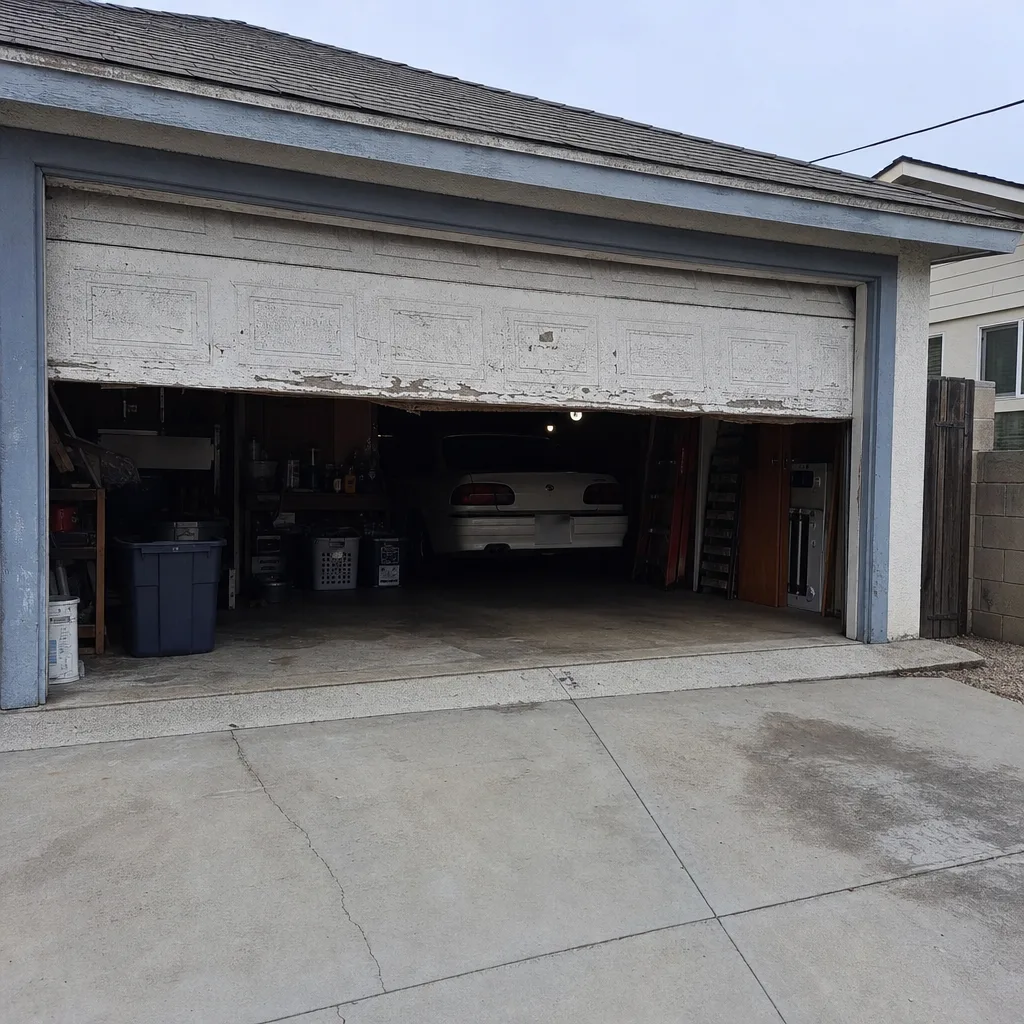
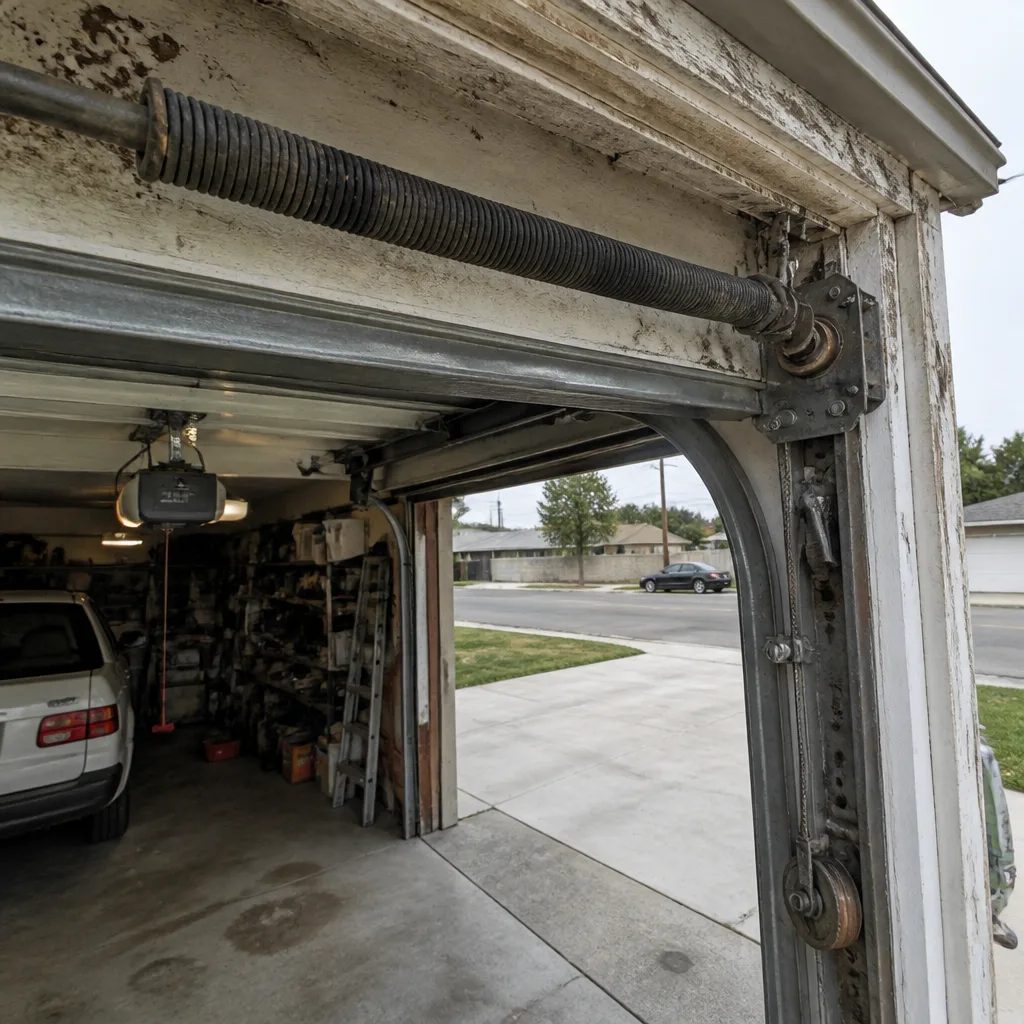
See the difference
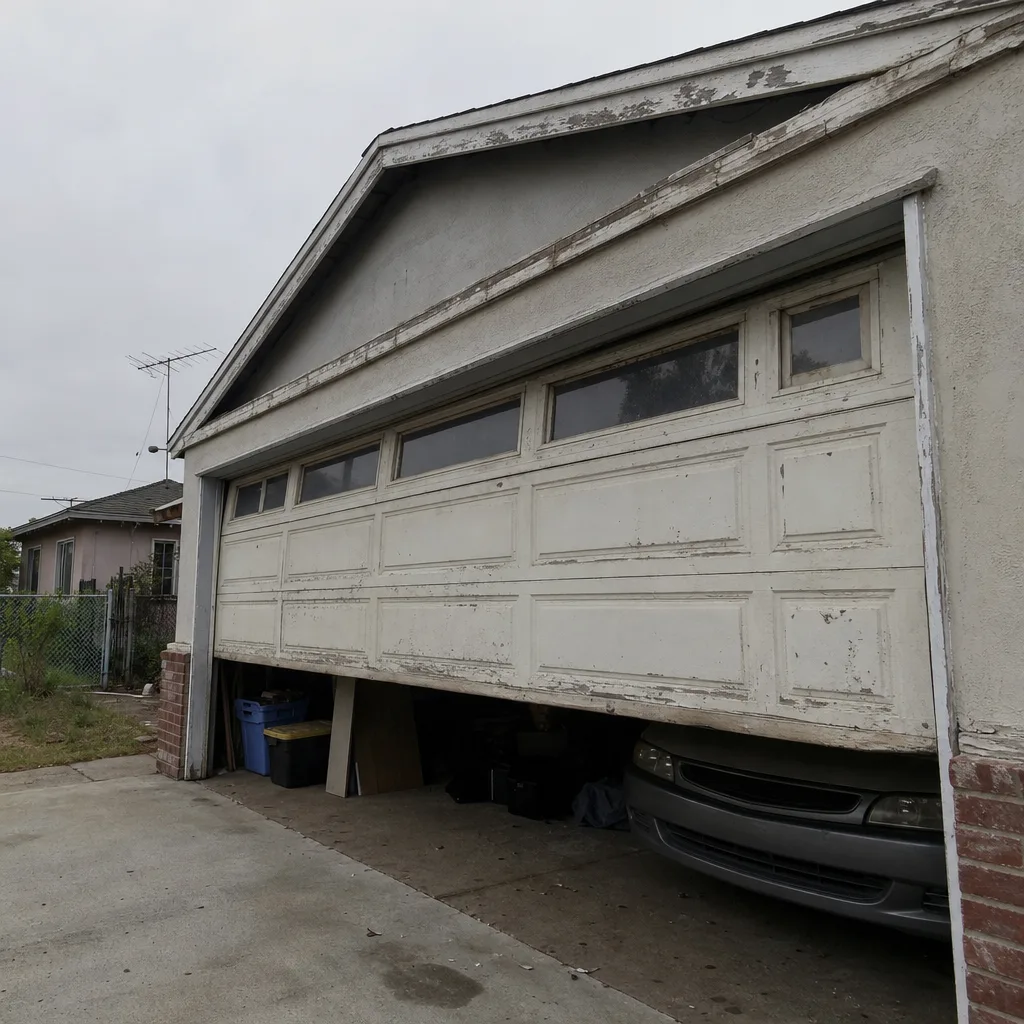 Before
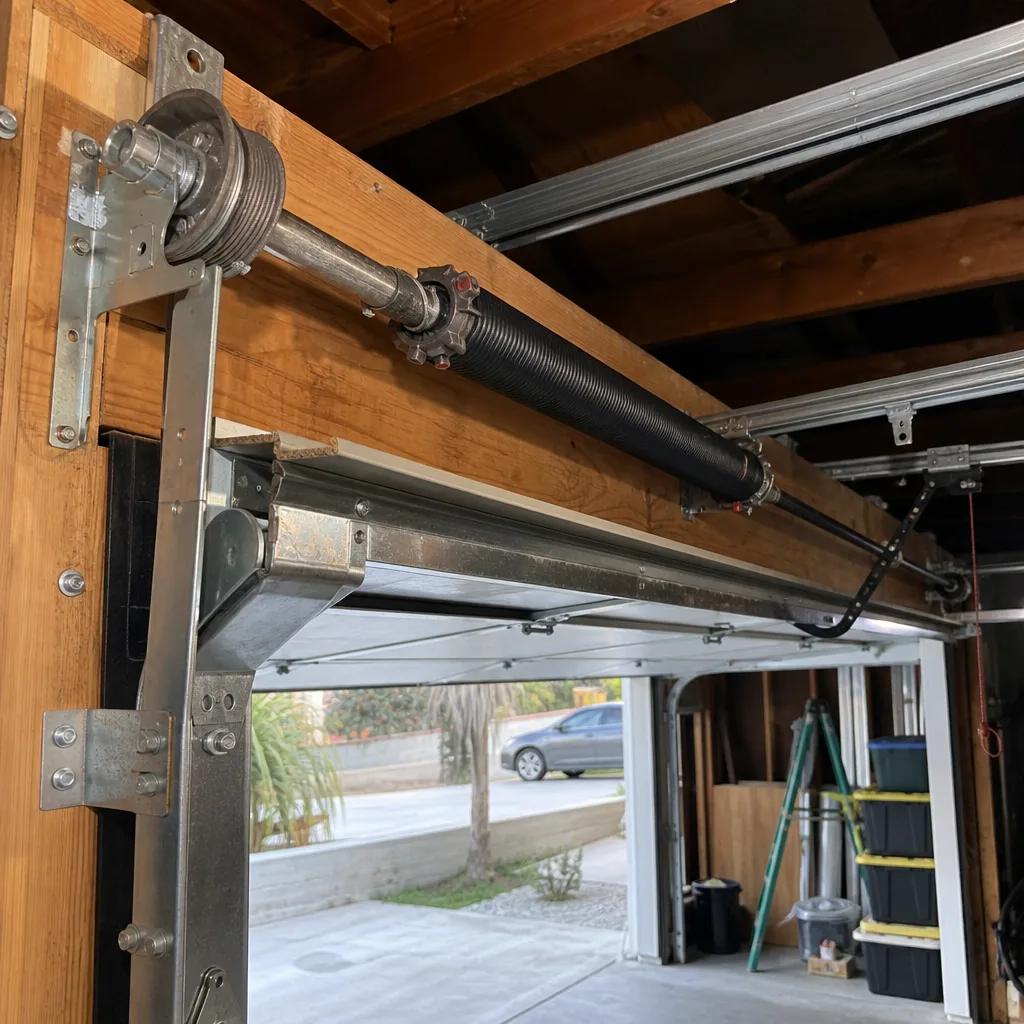 After
 Before
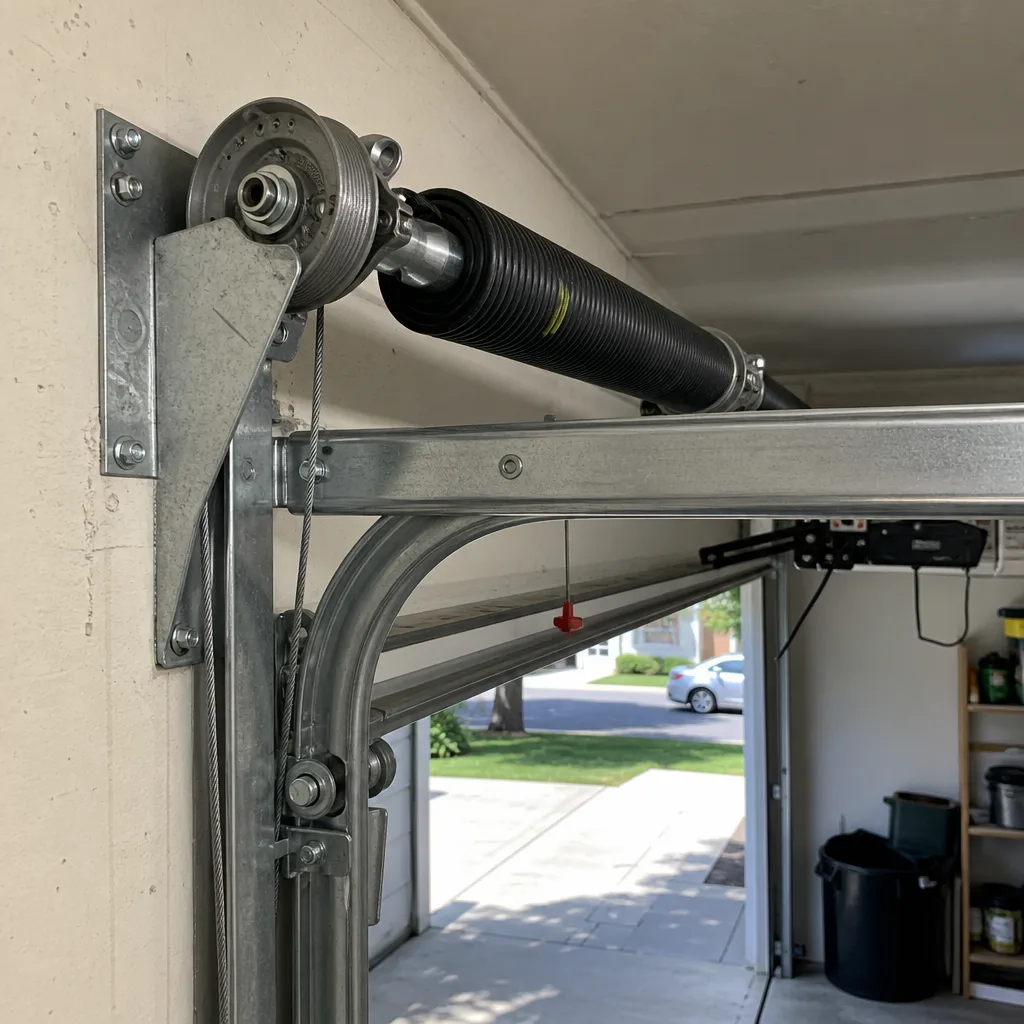 After
 Before
 After
Common Mistakes to Avoid
- Ignoring a slow or jerky door movement. A door that hesitates or moves unevenly is telling you something is wrong. In Long Beach, that something is often a weakening spring or failing roller. Addressing it early costs a fraction of the repair that follows the eventual failure.
- Lubricating without cleaning first. Spraying lubricant over dirt and grime turns the track into an abrasive paste that accelerates roller wear. Clean the tracks, then lubricate the moving parts with a silicone-based product. Never lubricate the track itself.
- Choosing the cheapest replacement door on a coastal home. The budget steel door that’s perfect for a house in Fresno will rust out in five years on the Long Beach peninsula. If you’re within two miles of the ocean, the door material, hardware, and finish all need to be coastal-appropriate.
- Forgetting the HOA approval step. Ordering a door that violates HOA restrictions means you either return it, live with a violation notice, or fight a board that has the power to fine you. Approval first, purchase second, installation third.
- Calling a generalist for a brand-specific problem. When your LiftMaster opener has a logic board issue or your Wayne Dalton spring system needs a specific tool, the generalist tech is going to guess, order parts, and hope. A specialist has seen the exact failure before and knows what it needs. Garage Door Repair in Long Beach should mean brand fluency, not just availability.
- Continuing to use a door after a snap or bang. A loud noise from a garage door typically means a spring or cable failure. Every subsequent opener activation adds damage. Stop using the door and call a professional. It’s the difference between a quick fix and a track-and-opener replacement.
- DIY-ing high-tension spring work. Torsion springs store incredible energy. The tools required and the proper winding technique are not something you pick up from a YouTube video. People are seriously injured every year in garage-spring accidents. This is one repair where professional help isn’t a preference, it’s a necessity.
When to Call a Professional
You need a garage door professional when you hear a snap or bang and the door stops working, when the door moves unevenly or begins descending on its own, when the opener runs without moving the door, or when the door is visibly sagging or showing rust at structural points. You also need one when the door slams shut rather than gliding down, when cables look frayed or loose, and when you’re considering a replacement that must meet HOA requirements. Any repair involving torsion springs or cables is a professional-only job, full stop. The energy stored in a wound spring can cause catastrophic injury if mishandled. Viking Garage Door Repair offers free estimates in Long Beach, call (855) 341-7943 for an honest assessment and a firm price.
Frequently Asked Questions
A torsion spring replacement in Long Beach typically runs between $250 and $450 including parts and labor for a standard residential door. Coastal homes near Belmont Shore and Naples may need higher-cycle springs that cost slightly more but last significantly longer in salt air. Call (855) 341-7943 for an exact quote, and we’ll give you a firm price before any work starts.
Yes. For common failures like broken springs, snapped cables, and many opener issues, same-day repair is standard across Long Beach. We carry the common parts for LiftMaster, Chamberlain, Genie, and Clopay systems on the truck, which means most repairs don’t require a return visit. More unusual parts may add a day or two if they need to ship from a regional warehouse.
No. The price we quote over the phone is the price you pay, assuming the door and components match what you’ve described. If your door has a less common system, such as a Wayne Dalton torque-master spring that many technicians aren’t equipped to handle, we’ll confirm that before starting and give you the complete cost upfront. No surprises.
If your home is part of an HOA, the association has the right to approve or deny garage door changes. The restrictions most commonly cover color, material, window style, and sometimes brand. You can replace a broken door with a similar one without much friction, but changing colors, adding windows, or switching from steel to wood will likely require written approval first.
A well-maintained steel garage door lasts fifteen to twenty years in Long Beach, though doors within two miles of the ocean tend to fail faster due to salt corrosion. Wood doors in coastal neighborhoods require more maintenance and often need replacement sooner if the upkeep lapses. Regular hardware replacement – springs, rollers, and cables – extends the functional life of any door significantly.
Yes, for the major brands installed in Long Beach. We stock springs, cables, rollers, hinges, and common electronic components for LiftMaster, Chamberlain, Genie, Clopay, Amarr, Wayne Dalton, Craftsman, and Raynor systems. If a part isn’t on the truck, we can typically source it through local suppliers same-day or next-day. Call (855) 341-7943 and tell us what you have installed; we’ll confirm parts availability before we arrive.
The Bottom Line
Your garage door in Long Beach is a system, not a purchase. The right decisions depend on your specific neighborhood’s climate, your HOA’s rules, your door’s age and brand, and whether you’re fixing a component or planning for the next fifteen years. Coastal homes need corrosion-conscious materials. HOA homes need approval-first planning. Older doors need honest repair-vs-replace evaluations. And every repair should come with a firm price before any work begins. When repairs are needed, choose a specialist who works on the door you have, not just the brands they prefer. For more guides & resources or service across Long Beach, call (855) 341-7943.
Written by the team at Viking Garage Door Repair, serving Long Beach since 2015.