
Last updated October 31, 2026
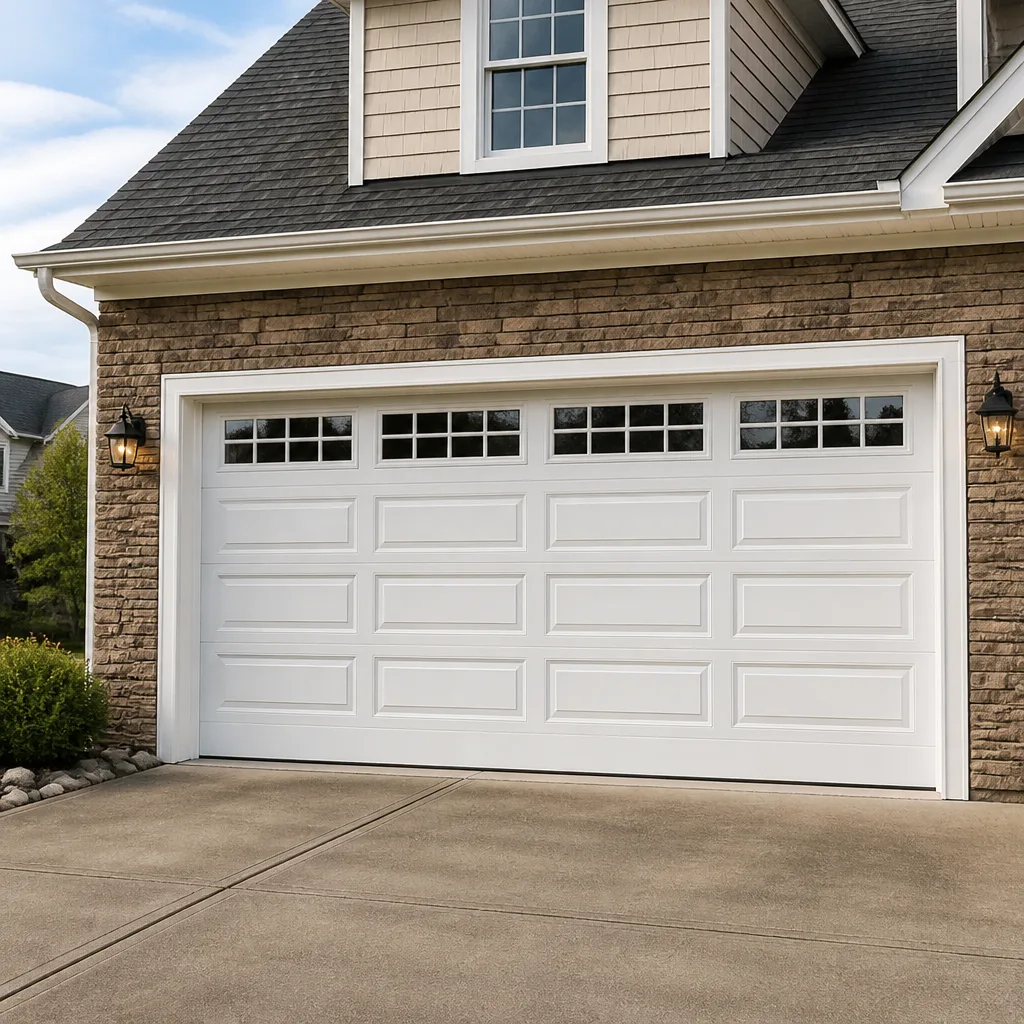 Raised-panel steel
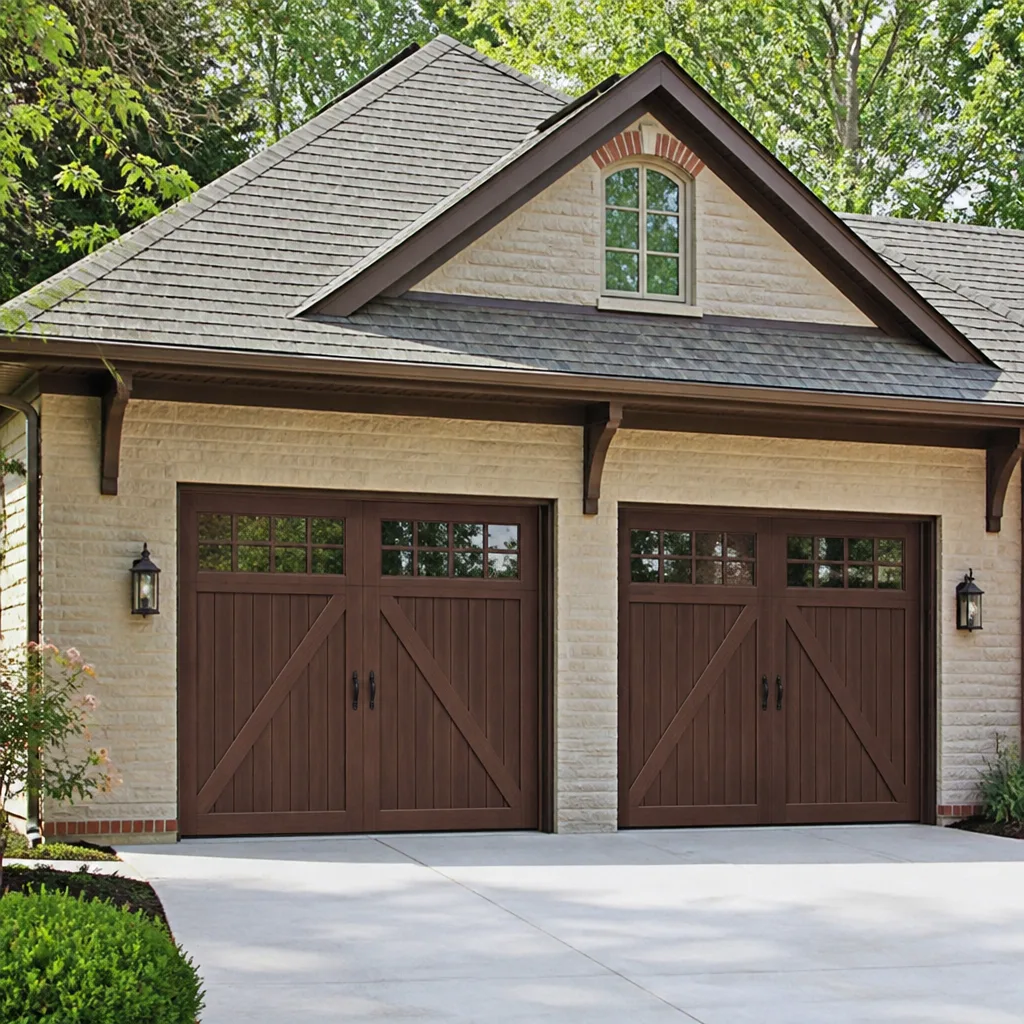 Carriage house
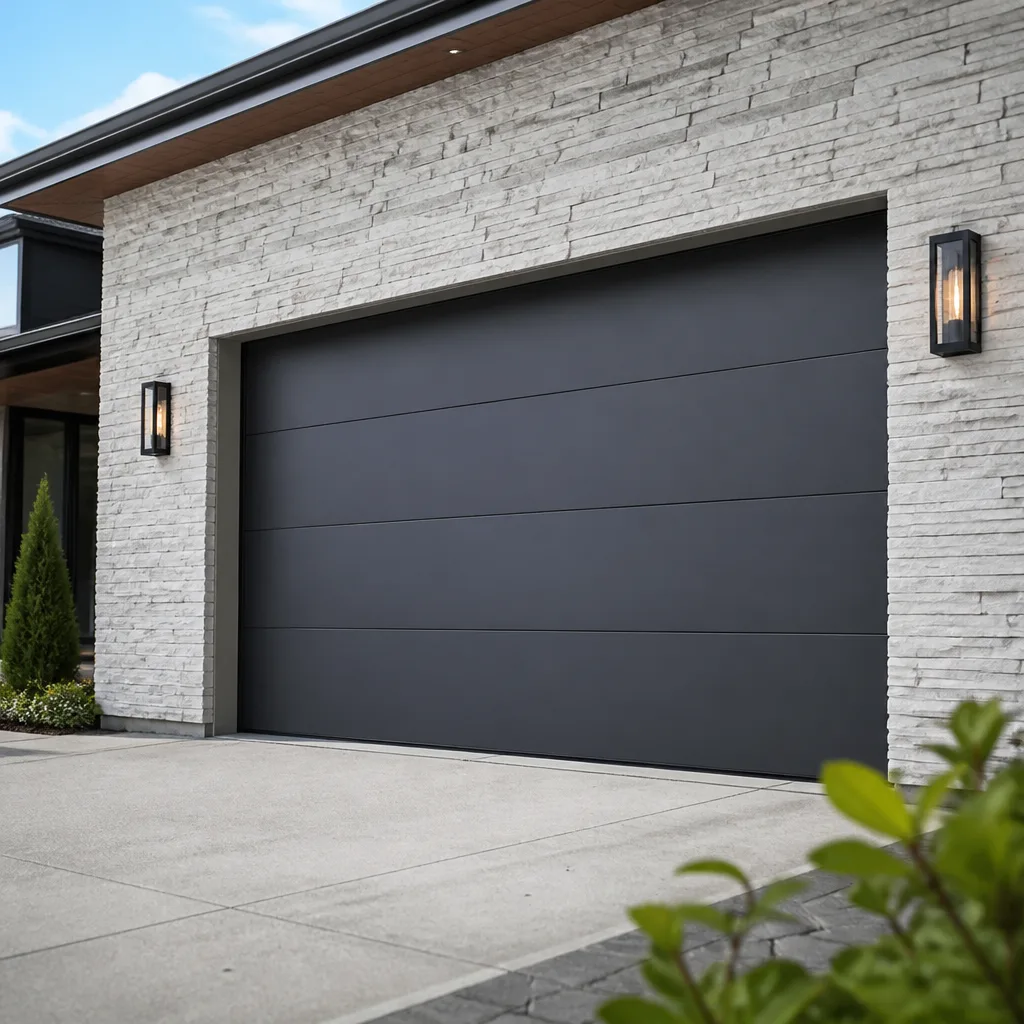 Modern flush
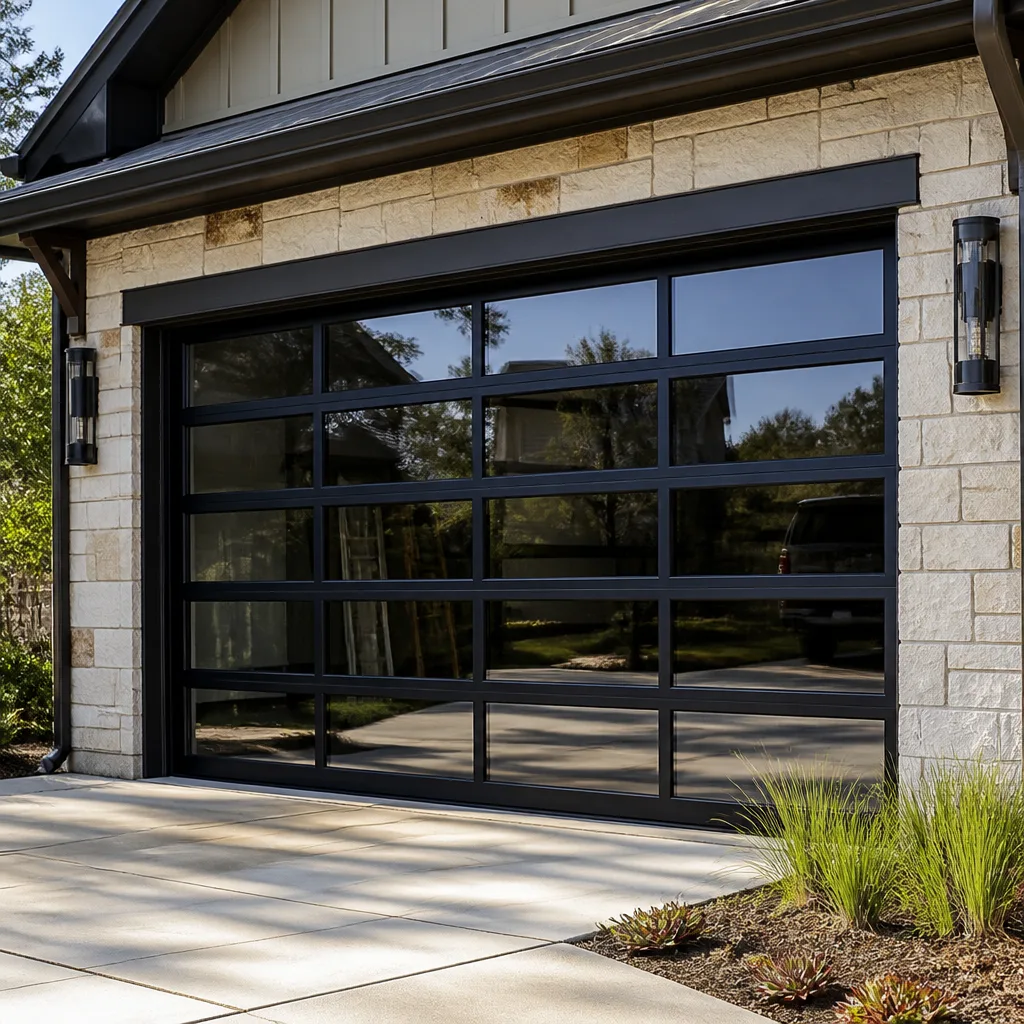 Full-view glass
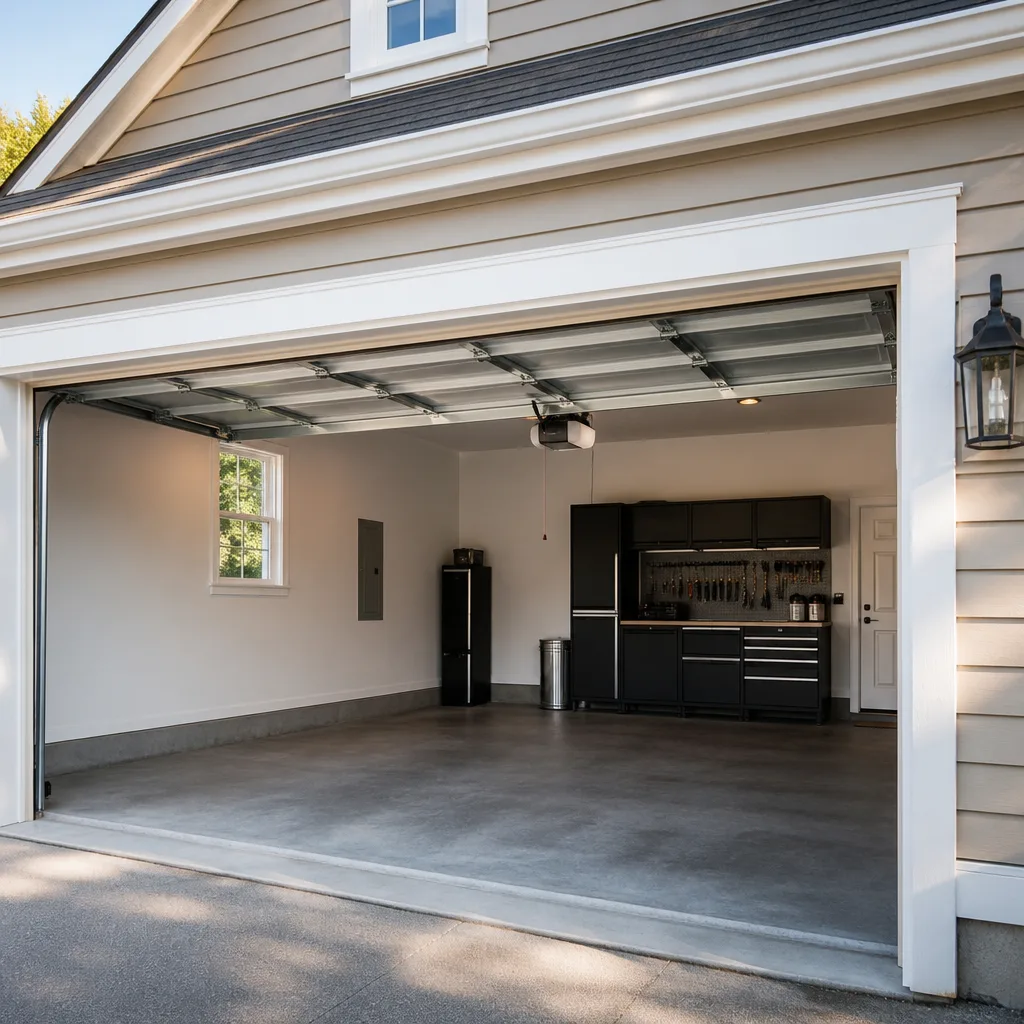 LiftMaster openers
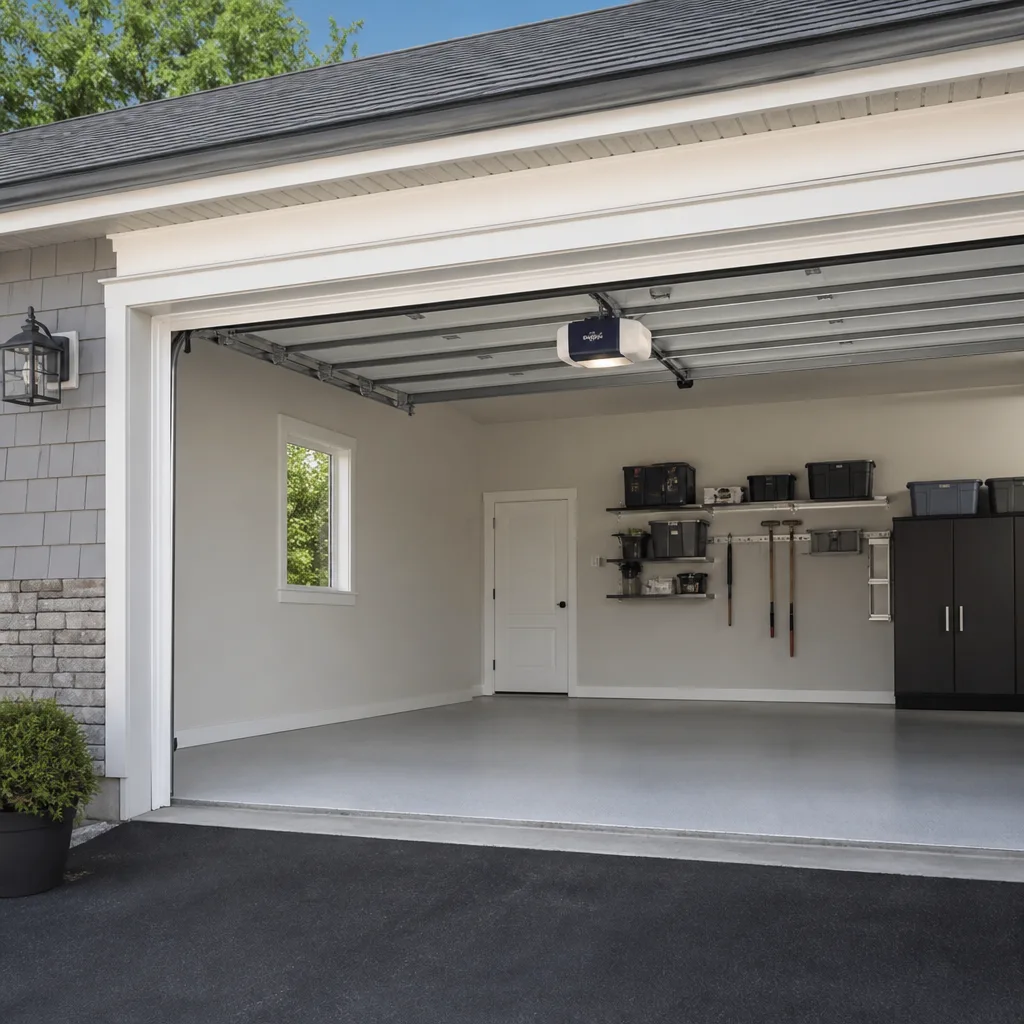 Chamberlain openers
Full 25-point door and opener safety check with every visit - springs, cables, rollers, tracks, and your LiftMaster or Chamberlain opener included
You get a price before we start. It does not change when the truck arrives.
Get your free estimateDIY vs Professional Garage Door: The Long Beach Homeowner’s Decision Guide
A torsion spring on a standard two-car garage door stores roughly 10,000 pounds of lifting force. When it snaps, it releases all of that energy in a fraction of a second. That’s the starting point for any honest conversation about doing your own garage door work in Long Beach. The city’s salt air accelerates rust on cables, spring coils, and bearing plates faster than nearly anywhere else in Southern California, which means garage door failures here don’t just happen more often – they happen with less warning. This guide will walk you through exactly which repair tasks you can tackle safely with basic hand tools, which ones should make you put down the wrench immediately, and how to make that call without getting burned. We’re going to be straight with you about what we’ve seen on thousands of Long Beach service calls, because a wrong DIY decision on a garage door isn’t a stripped screw or a scuffed floor. It’s a hospital visit or a door that comes off its tracks at 2 a.m. with your car trapped inside.
Styles & brands we work with
Quick Answer
DIY is genuinely appropriate for about 15% of garage door problems: weather seal replacement, photo-eye realignment, basic lubrication, and opener reprogramming. Everything involving torsion springs, cable drums, bottom bracket bolts, or panel realignment should be handled by a professional, because the mechanical force involved can break bones, sever tendons, or send the door crashing down without warning. On average, Long Beach homeowners who try spring or cable work themselves end up paying 2.5 to 3 times more than the original repair would have cost once you factor in the follow-up damage.
Table of Contents
- The Hard Never-DIY List (And the Mechanical Reason Why)
- The Legitimate DIY List for Long Beach Homeowners
- The Real Cost Savings: What DIY Actually Saves You in Long Beach
- The Warranty Trap Most DIY Comparisons Skip
- California Liability: What Happens When DIY Goes Wrong for Someone Else
- Why Long Beach Climate Demands Different Garage Door Care Than Inland CA
- You Already Tried the DIY: How to Own It Without Inflating the Bill
- Common Mistakes to Avoid
- When to Call a Professional
- Frequently Asked Questions
- The Bottom Line
The Hard Never-DIY List (And the Mechanical Reason Why)
We’re not going to treat this like a list of suggestions. These are mechanical systems where the margin for error is measured in millimeters and the penalty for error is measured in broken bones. If you remember nothing else from this guide, remember this section.
1. Torsion Spring Replacement
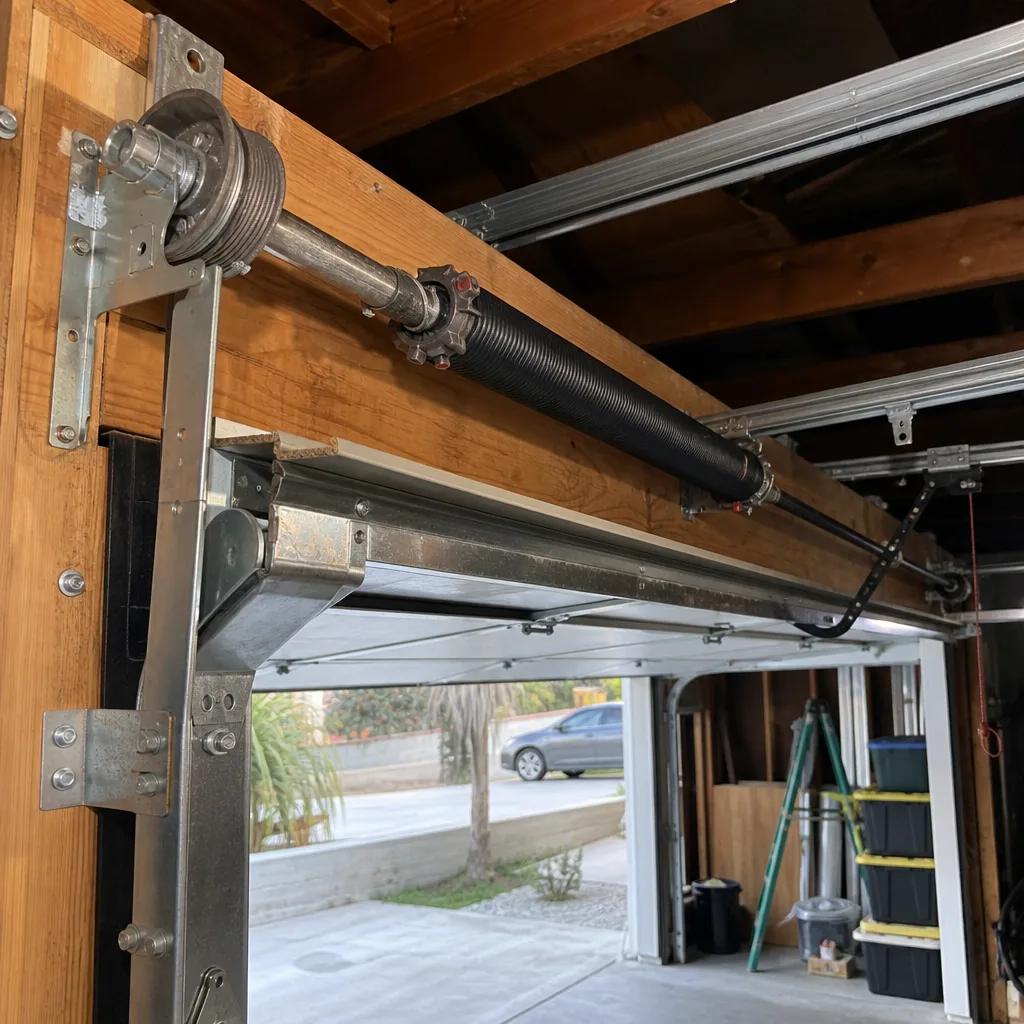
Torsion springs are mounted horizontally above the door opening. They’re wound tight enough to counterbalance the entire weight of the door, which on a typical Long Beach two-car garage is anywhere from 150 to 250 pounds. When you wind or unwind these springs with the standard metal winding bars, you’re manually managing thousands of pounds of stored torque. If the bar slips – and it slips fast – it becomes a projectile. We’ve seen the aftermath on Long Beach service calls: fractured wrists, severed tendons in hands, and one case where a homeowner lost three fingers to a single slip in the Bixby Knolls area. The tools sold at big-box hardware stores are consumer-grade and the YouTube tutorials compress out the critical safety details. Even experienced technicians approach torsion springs with full respect for what they can do. This is not a skill-and-patience job. It’s a physics-and-consequences job.
2. Anything Involving Cables
The two steel cables on either side of your door each carry about half the door’s weight at all times. They run through pulleys and wrap around the drum at the top. Here’s the thing most homeowners don’t realize: the cables are under tension even when the door is open. Cut the wrong one, or remove the wrong bolt while a cable is attached, and that cable whips across the garage with enough force to slice through skin and muscle. In Long Beach specifically, salt air corrosion makes cables fray from the inside out. A cable that looks fine on the surface can be holding on by a few strands. If you’re inspecting a cable and it snaps while you’re near it, you’re standing in the line of fire. We tell every Long Beach customer the same thing: if you see a cable that’s frayed, rusted, or off its drum, step away from the door and call someone who replaces cables every week. The Garage Door Repair in Long Beach service call is cheaper than an emergency room visit.
3. Bottom Bracket Bolts
This one surprises people because it’s just a bolt, right? Two bolts. How dangerous can two bolts be? The bottom brackets anchor the lifting cables to the bottom corners of the door. If you remove the wrong bolt while the cable is still under tension, you’ve just unleashed the full stored energy of the spring system into an unpinned cable. The door doesn’t just sit there. It moves. Violently. We’ve had Long Beach customers tell us they thought the door was supported by the track and removed the bracket bolts to replace a worn seal, only to have the door lurch sideways and pin them against the wall. The cable attachment at the bottom bracket is load-bearing. It is not decorative hardware. Leave it alone unless the system is fully de-tensioned by someone who knows how to do that safely.
4. Panel Realignment on a Door Still Under Spring Tension
A door that’s off its hinges or has a bent panel is fighting the spring system. If you try to muscle a panel back into place while the spring is still wound, you’re working against thousands of pounds of counterbalance force. The panel can snap back against you, or the door can derail entirely and drop. In Long Beach’s older neighborhoods like Belmont Heights and Rose Park, many garages still have single-panel swing-up doors from the 1950s and 60s. Those doors weigh as much as 300 pounds in some cases. They do not forgive amateur adjustments.
If you’re dealing with any of these four systems, the smartest thing you can do is not touch it. The second smartest is to Viking Garage Door Repair home page and get someone who’s trained on the exact brand you own.
The Legitimate DIY List for Long Beach Homeowners
Now let’s talk about what you actually can do yourself. These tasks take basic hand tools, common sense, and an afternoon at most. We’ll tell you exactly what to use and how to do it, because this is the stuff that genuinely maintains your door and saves you a service call.
1. Weather Seal Replacement
The rubber strip on the bottom of your door is called a bottom seal or astragal. It rots, cracks, flattens, and pulls away from the aluminum retainer over time. Long Beach’s marine layer and salt air mean this is a once-every-2-to-3-years replacement in our market, twice as often as inland cities like Riverside or San Bernardino. You’ll know it’s time when you can see daylight under the door, when you feel a draft, or when the seal has gone stiff and brittle. Replacement is genuinely simple: buy a universal seal from a hardware store, slide the old one out of the retainer channel, cut the new one to length with tin snips, and slide it in. The entire job takes 30 minutes and about $20 in materials. No spring touching, no cable involvement, no tools beyond the snips and maybe a flathead screwdriver. This is the single highest-value DIY maintenance task for Long Beach homes.
2. Photo-Eye Alignment
The two sensors on either side of the door’s base are safety devices that stop the door if something crosses the beam while it’s closing. When they’re out of alignment, your door won’t close without holding the wall button, and the opener blinks an error code. The fix is almost always simple: look at the small lights on each sensor. If one is off or both are blinking, one sensor has drifted out of position. Loosen the wing nut on the sensor bracket, adjust it slightly until both lights come on steady, tighten. You’re done. Five minutes. The only tricky part in Long Beach is that garage floors in older homes tend to settle unevenly, which means the sensor brackets drift out of alignment every few months. If you’re adjusting them more than once a season, the bracket itself may need re-anchoring, and that’s something a Garage Door Opener Repair in Long Beach specialist can fix permanently.
3. Lubrication and Basic Maintenance
Your garage door has moving metal parts that need lubrication to prevent rust and binding. The Long Beach-specific issue is the salt air. Bare metal surfaces here develop surface rust in weeks. The routine that works in our climate:
- Use a lithium-based garage door lubricant, not WD-40. WD-40 is a solvent and water displacer, not a lasting lubricant. It cleans, but it doesn’t protect.
- Lubricate the rollers, hinges, and bearing plates every 4 to 6 months. If your rollers are metal, these are the parts that need it most. If you have nylon rollers, the nylon doesn’t need lube, but the ball bearings inside do.
- Wipe down the spring coils with a light coat of lubricant to prevent surface rust from the marine air. Do not touch or adjust the spring. You’re just coating it, not touching its tension.
- Inspect for rust on the track and brackets. Light surface rust is normal in Long Beach. Deep pitting or flaking rust means the part is nearing failure, and that’s a replacement item, not a lube job.
4. Basic Opener Programming and Remote Pairing
If your remote stopped working but the wall button still opens the door, the problem is usually programming, not the opener itself. Reprogramming instructions are printed on the opener unit for almost every major brand, and most of the time it’s a sequence of pressing the Learn button and then the remote. Where people get stuck in Long Beach is with older openers that predate rolling-code technology, which is common in homes built before 1993. If your opener is a fixed-code unit, a random remote can sometimes be paired accidentally, or worse, if you’re in a dense neighborhood like Naples or Belmont Shore, nearby remotes can interfere. The fix is either replacing the remote with a matching brand and going through the programming sequence, or upgrading the opener to a modern rolling-code unit. If you’re not sure whether your opener is fixed-code or rolling-code, it’s usually marked on the opener itself, and a quick call to a specialist can save you the headache of buying the wrong remote.
The Real Cost Savings: What DIY Actually Saves You in Long Beach
Let’s talk numbers, because the DIY decision usually comes down to the math. Here’s a realistic Garage Door Cost Breakdown: The Long Beach Homeowner’s Reference for 2026 for the Long Beach market as of this year:
- DIY bottom seal replacement: $20-$35 in parts, 30-60 minutes. Professional cost: $100-$160. DIY savings: about $80-$125. Legitimate savings, low risk.
- DIY photo-eye alignment: $0 in parts, 5-10 minutes. Professional cost: $75-$140. DIY savings: about $75-$140. Legitimate savings, no risk.
- DIY lubrication: $8-$15 for a can of lithium lubricant, lasts a year. Professional maintenance service: $75-$120 per visit. DIY savings: about $60-$100 annually. Legitimate savings, low risk.
- DIY torsion spring replacement: $45-$80 for the spring itself, plus $30-$60 for winding bars, plus 2-4 hours of your time. Professional cost: $180-$320 installed. DIY savings: about $70-$180 on paper. But if the spring snaps mid-wind, the follow-up damage to the door, track, opener, and possibly your body pushes the real cost to $500-$2,500 or more. The risk-reward math is terrible.
- DIY cable replacement: $15-$30 for cables, plus 1-3 hours. Professional cost: $130-$220. DIY savings: about $100-$180 on paper. But cable failure during DIY installation commonly damages the panel edge, the bottom bracket, and sometimes the opener itself. Real cost after mistakes: $300-$900.
Here’s what the comparison guides on other websites skip: the cost of doing the job twice. We’ve lost count of how many Long Beach homes we’ve visited where a homeowner started a spring replacement, realized halfway through that something wasn’t right, and then needed a professional to undo the partial work and start over. That’s not a discounted repair. It’s a full-price repair plus a diagnostic fee to figure out what went wrong. And if you’re working on a door that has a Garage Door Installation in Long Beach warranty still in effect, doing the work yourself can void that coverage entirely. The parts are cheap. The knowledge and the risk management are what you’re actually paying for.
The Warranty Trap Most DIY Comparisons Skip
Here’s a fact that almost every “DIY vs Professional” article misses: when you mess with your garage door’s spring system, cable system, or opener yourself, you’re likely voiding the manufacturer’s warranty on the door and the opener. Most major brands, including Amarr and Wayne Dalton for door panels and LiftMaster and Chamberlain for openers, have explicit warranty language about unauthorized modifications and improper repair. If a panel cracks or an opener fails within the warranty window, and the manufacturer determines that a non-certified repair contributed to the failure, the claim gets denied. You’re now paying full retail for parts that should have cost you nothing.
In Long Beach, where the marine environment already increases wear rates, warranty coverage matters more than it does inland. A Wayne Dalton door in Naples with salt-air exposure has a higher chance of needing a warranty-covered part within the first few years. We’ve seen Amarr doors in Bixby Knolls with panel rust and seal rot that would have been covered under warranty, but the homeowner had already done a “quick fix” on the hardware that gave the manufacturer an easy out. When you’re deciding whether to tackle a repair yourself, check your warranty paperwork first. If the door is under 5 years old, or the opener is under 3, the DIY “savings” are probably false.
Viking Garage Door Repair works on all the brands we’re discussing, and we know the specific warranty terms of each. If you’re not sure whether a repair is covered, or whether doing it yourself will void the coverage, we’ll tell you straight. The call costs nothing.
California Liability: What Happens When DIY Goes Wrong for Someone Else
Let’s talk about a scenario every DIY guide skips, and it matters more in California than anywhere else in the U.S. You’re working on your garage door by yourself. You replace a spring. A month later, a friend visits, the spring gives out because it wasn’t wound correctly, and the friend gets hurt. What happens next has nothing to do with your intent and everything to do with your liability. For how to avoid this, see our Garage Door Emergency Preparedness Guide for Long Beach Homes.
In California, homeowners are responsible for maintaining their property to a reasonably safe standard. If you perform a repair that a reasonable person would hire a professional for, and that repair fails and injures someone, your homeowner’s insurance may deny the claim due to negligence. Before starting any work, check our Garage Door Permits, Codes & Inspections in CA: What You Need to Know. If you don’t have an umbrella policy, the injured friend’s medical bills come out of your pocket. And if the injured party is a tenant in a rental property you own, the liability exposure is even greater. The California Department of Insurance doesn’t care that you watched a tutorial and bought the right spring on Amazon. What matters is whether a licensed professional’s work would have failed the same way. The answer, in most cases, is no.
Then there’s the property insurance angle. If a DIY garage door repair fails and causes damage to your home – a collapsed door, a smashed car, water intrusion from a door that won’t close – your insurance adjuster will look at the repair history. If they determine the damage was caused by an unqualified repair, they can deny the property claim. Long Beach homes, particularly older ones in neighborhoods like Wrigley and North Long Beach, often have garages attached to the main living space. A door that falls off its tracks can take out a wall, a water heater, or a car. The repair bill is bad. The denied claim is worse.
We’re not telling you this to scare you out of doing the safe maintenance tasks. We’re telling you because the DIY comparison articles never discuss the liability tail. A $150 savings on a spring repair isn’t worth a denied insurance claim or an injured guest. Call a professional for the load-bearing stuff. That’s what the professionals are for.
Why Long Beach Climate Demands Different Garage Door Care Than Inland CA
Long Beach has a micro-climate problem when it comes to garage doors. The city’s proximity to the Pacific means persistent marine air, which is salt-laced and humid. That salt air settles on the metal parts of your garage door – the springs, the cables, the bearing plates, the track – and accelerates corrosion in ways that don’t happen in the hotter, drier air of the Inland Empire. Here’s what that means for your maintenance schedule and your DIY decision-making:
- Springs rust faster in Long Beach. A torsion spring that would last 10 years in Riverside might fail in 6 years along the coast. The rust weakens the coil at the stress points, and when it fails, it fails catastrophically. Inspect your springs every 3 to 4 months for surface rust. If you see pitting or flaking, that’s a replacement candidate, not a wait-and-see situation.
- Cables corrode from the inside out. Steel cable in salt air develops internal rust that you can’t see from the outside. The cable looks fine right up until it snaps under load. This is exactly the kind of hidden failure that makes DIY cable inspection unreliable. A professional checks for the early signs of internal corrosion, not just the surface condition.
- Seals and rubber parts dry out and shrink. The combination of salt air, sun exposure, and temperature swings causes the bottom seal to lose its flexibility. A stiff, shrunken seal lets in water during winter rainstorms, and water intrusion on a garage floor creates a slipping hazard and can damage whatever you’re storing. This is a maintenance task, not a repair, and it’s a great candidate for DIY – but it needs to be done more often in Long Beach than in the valleys.
- Opener electronics suffer from humidity. The motor and circuit board in your opener don’t love prolonged humidity. Capacitors in particular can degrade faster in coastal air. If your opener starts behaving erratically – opening halfway and stopping, or the logic board resetting – it’s often the first sign of moisture-driven electrical issues. Reprogramming can sometimes help, but the underlying issue may be component degradation that requires a specialist’s diagnostic eye.
The takeaway: garage doors in Long Beach fail in ways that don’t match the national DIY tutorials. For more guides & resources written specifically for coastal Southern California conditions, The tutorials tell you to inspect your cables visually. In our salt air, that’s not enough. The tutorials tell you springs last a decade. In our climate, that’s optimistic. When you’re reading generic DIY advice online, remember that the person who wrote it probably doesn’t live near the coast and has never seen what 5 years of marine air does to a Wayne Dalton spring or an Amarr panel.
You Already Tried the DIY: How to Own It Without Inflating the Bill
Okay, let’s talk about the uncomfortable version of this guide’s question. You already tried the DIY garage door repair. Maybe it was a spring, maybe it was a cable, maybe it was an opener that you took apart and couldn’t get back together. Now you need a professional, and you’re worried about three things: judgment, inflated pricing, and a lecture. We’re going to explain exactly how to handle this, because the people who are honest about their DIY attempts get better service and better prices. The people who try to hide it get the opposite.
1. Tell the Technician Everything Up Front
When you call for service, the dispatcher or tech is going to ask what the problem is. Be straight. “I tried to replace the spring myself, and I got the old one off but I can’t get the new one wound on.” Or “I removed the bottom bracket to replace the seal and now the door is crooked.” This isn’t embarrassing to a professional. It’s information. It tells us what we’re walking into, what tools we need, and how long the job will take. If you lie or downplay what you did, the tech discovers it on site anyway, and now there’s a trust problem that affects the whole interaction.
2. Expect a Diagnostic Fee, Not a Penalty
A professional service call starts with a diagnostic. That’s a flat fee to assess the situation and figure out what needs to be done. When you tell us up front that you already attempted the repair, the diagnostic is faster because we know where to look. The fee is the same whether you mangled it or not. What changes is the price of the actual repair, because a half-finished DIY job often requires correcting mistakes before the real work can begin. Unsprung springs need to be re-established, a door that’s off track needs to be rebalanced, stripped bolts need to be extracted. These are real labor items. But they’re not inflated. You’re paying for the time to undo the damage, not for a lecture.
3. Don’t Expect a Discount for the Work You Already Did
This is the most common point of friction. You spent three hours trying to replace a spring. You got the old one off. You think you should get credit for that labor. The reality is that removing a spring is the easy part. The preparation, the winding, the balancing, the safety setup – that’s where the skill and the time go. We’re not going to discount a spring replacement because you already took the old one off. We’re going to start the job from where you left it and do it right. If you want credit for the work you already did, the credit is that you learned where the problem is, and that information saves diagnostic time.
The bottom line: professionals have seen every DIY attempt, from the careful and competent to the genuinely frightening. The ones who tell us what happened get the best service. And if you’re not sure whether your DIY attempt is safe to leave alone overnight, call us. We’d rather help you secure the door than have it fail while you’re sleeping.
Common Mistakes to Avoid
- Using WD-40 instead of a lithium-based garage door lubricant. WD-40 is a solvent, not a lubricant. It strips away what little protection was there and accelerates rust on Long Beach’s already salt-exposed metal.
- Trusting a visual cable inspection. Salt air in the Long Beach area causes internal cable corrosion that’s invisible from the surface. You can’t see the failure coming just by looking.
- Buying a generic spring thinking it matches your existing one. Spring dimensions are specific to door weight and height. A mismatched spring makes the door either too heavy or too light, and the result is a door that jerks or an opener that burns out early.
- Working on the door with the opener still plugged in. Some DIYers disconnect the door from the opener but forget to unplug the unit itself. If the opener activates mid-repair, the moving parts can catch a hand or a tool.
- Trying to lift a door that’s stuck halfway open by brute force. A door that’s stuck is stuck for a mechanical reason – usually a broken spring or a derailed cable. Forcing it is how doors come off their tracks entirely and drop on people. If it won’t move easily, stop and call someone.
- Ignoring the garage door during Long Beach’s rainy season. Winter storms bring moisture into the track and roller system, accelerating corrosion. A quick lubrication and inspection in October or November saves you from a mid-January failure when you need the car out.
- Buying a new remote without checking your opener’s compatibility. Older Long Beach homes often have fixed-code openers, and not every remote talks to every opener. Match the remote to the opener’s brand and frequency, or you’ll be back at the hardware store.
When to Call a Professional
Call a garage door professional when the repair involves anything under spring tension, any cable or drum work, bottom bracket removal, or panel replacement. Call when the door is stuck in a half-open position and won’t move. Call when you hear a loud bang from the garage that sounds like a gunshot – that’s a torsion spring snapping, and the door is now unsafe. Call when your opener is making grinding noises or won’t stop at the correct positions. If you’re not sure whether your situation is safe, call anyway. Viking Garage Door Repair offers free estimates in Long Beach, and the garage doors are all we work on. Call (855) 341-7943.
Frequently Asked Questions
A torsion spring replacement in Long Beach typically costs between $180 and $340 installed, depending on whether you have a single or double spring system and the specific door weight. The parts themselves are only $45 to $80, but the labor, the winding tools, and the safety setup are what you’re actually paying for. Long Beach’s salt air means springs fail earlier here than inland, so if you’ve owned your door for 6 or 7 years, it’s worth checking the spring for rust and fatigue. Call (855) 341-7943 for an exact quote on your specific door – the estimate is free.
No, torsion spring replacement cannot be done safely by a homeowner without specialized training, because the spring stores thousands of pounds of mechanical force that releases instantly if a winding bar slips. The risk of bone fractures, deep lacerations, or a door falling out of its tracks is not a hypothetical; it’s the common outcome we’ve seen in Long Beach after DIY attempts gone wrong. It’s the one job where the DIY savings are nearly always dwarfed by the cost of the damage that follows.
Yes, in most cases manufacturer warranties on doors and openers are voided when a non-certified person performs repairs on the spring system, cables, or opener mechanics. Brands like Amarr, Wayne Dalton, and LiftMaster all include unauthorized-repair language in their warranty terms. If a warranty-covered part fails after you’ve done your own work, the manufacturer can deny the claim and you’ll pay full retail. Call us to check whether your specific repair would affect your warranty before you start.
In Long Beach, you should lubricate the rollers, hinges, bearing plates, and spring coils every 4 to 6 months, because the salt air accelerates rust and causes moving metal parts to bind faster than in inland California. Use a lithium-based garage door lubricant, not WD-40, and wipe down the springs with a light coat to prevent surface corrosion. This is a legitimate DIY maintenance task that extends the life of your door.
If your door has come off its tracks, do not attempt to lift it back into place, because the door is still under spring tension and can fall without warning. Disconnect the opener, block off the area, and call a professional. A derailed door in Long Beach is often the result of a broken cable or a severe corrosion failure in the track hardware, and the repair requires rebalancing the spring system before the door can be safely re-seated.
Yes, we work on the door you have, not just the brands we prefer, including Amarr, Wayne Dalton, Craftsman, and Raynor. Our technicians are factory-familiar with eight of the most-installed garage door and opener brands, so the quirks of your specific unit aren’t a problem for us. One call covers repair, opener work, or a full installation, and the estimate is free at (855) 341-7943.
The Bottom Line
The DIY vs. professional garage door decision isn’t a test of your competence. It’s a question of mechanical risk. If the task involves the spring, the cables, the bottom bracket, or panel alignment, the answer is always to call a professional. If it’s a seal, a photo-eye, a lubrication, or a remote programming, that’s fair game. Long Beach’s salt air makes the stakes higher for every category: parts corrode faster, failures happen sooner, and the damage that follows a botched repair is more expensive here than in most of Southern California. When you need a specialist, call (855) 341-7943 for a free estimate.
Written by the team at Viking Garage Door Repair, serving Long Beach since 2015.
See the difference
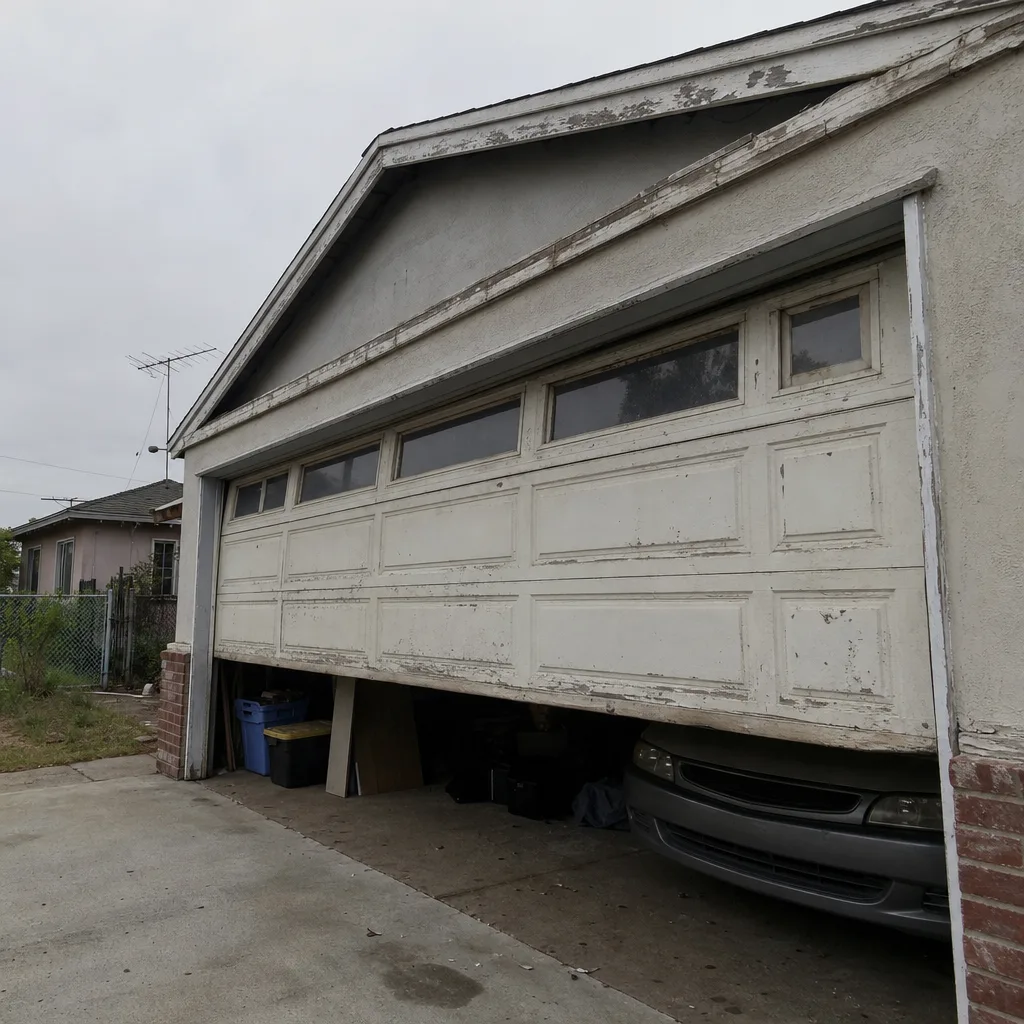 Before
 After
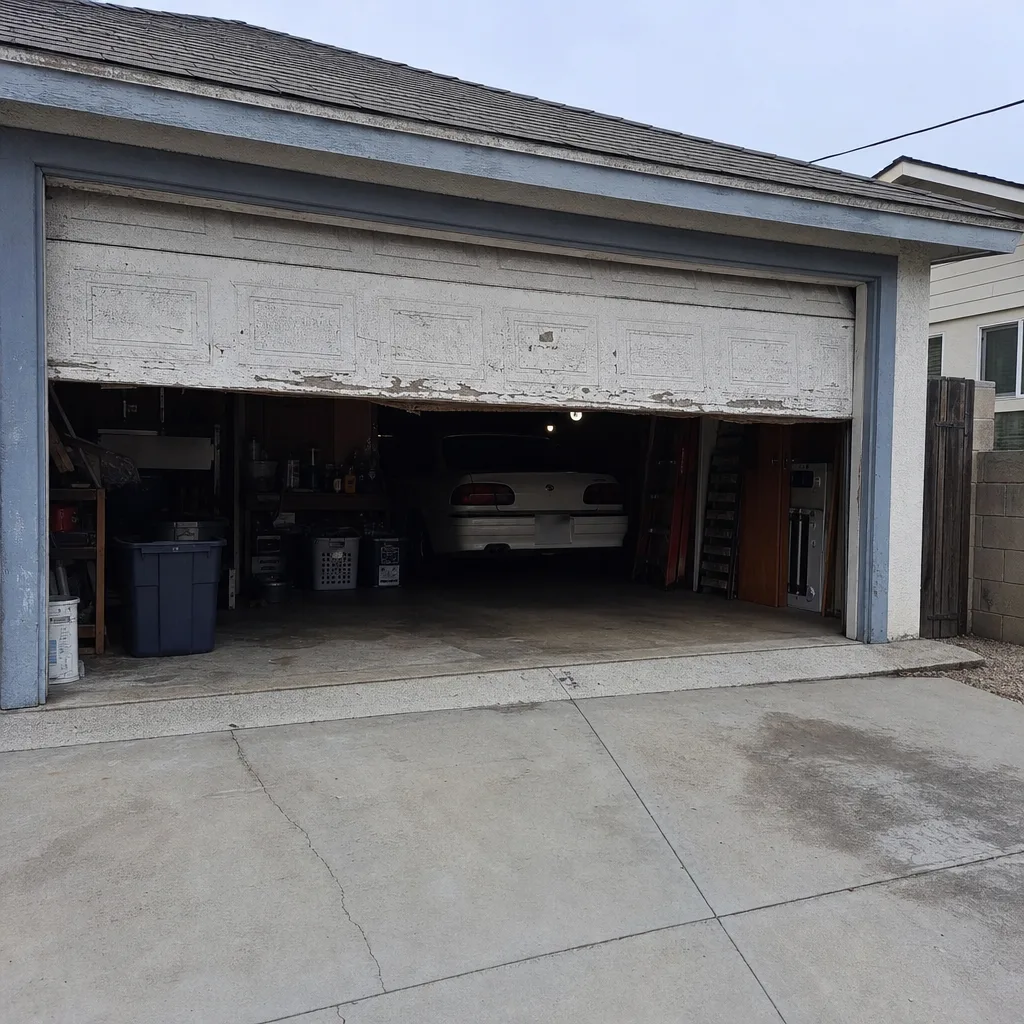 Before
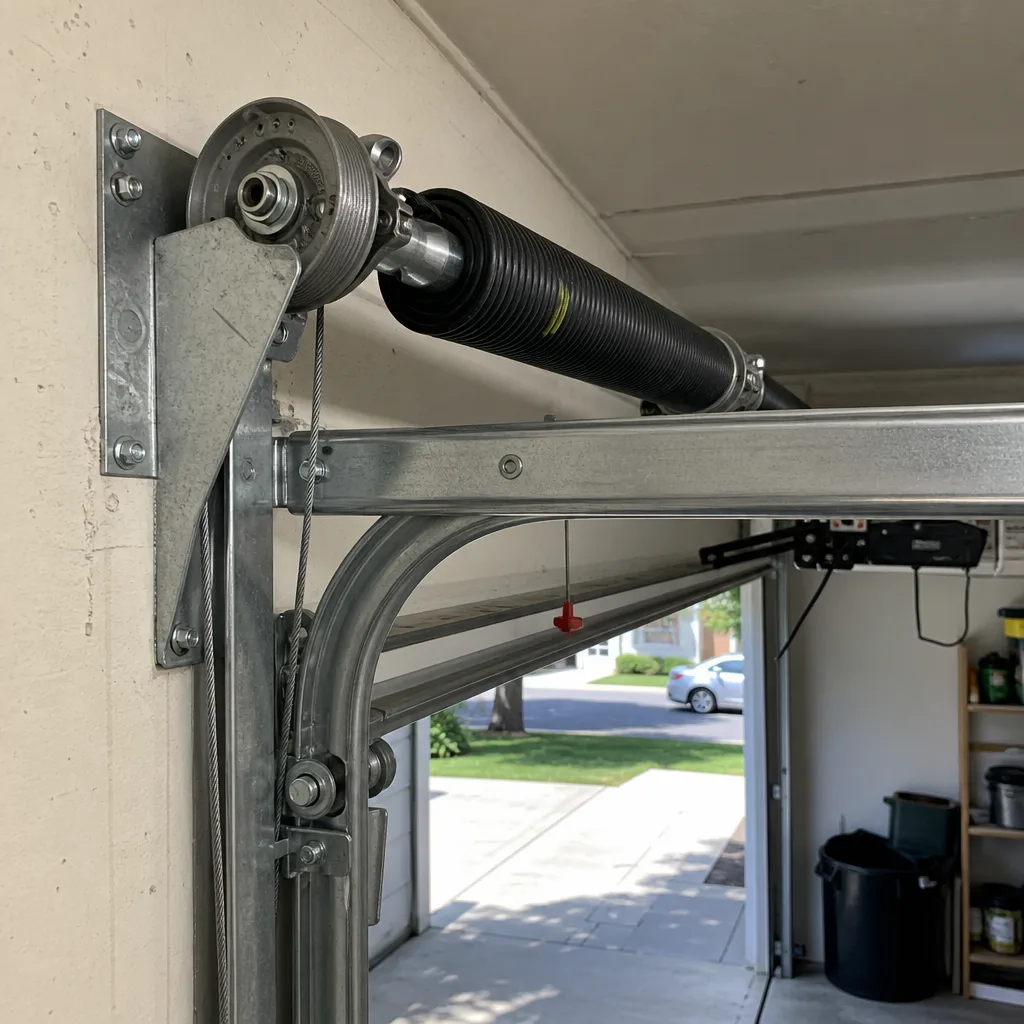 After
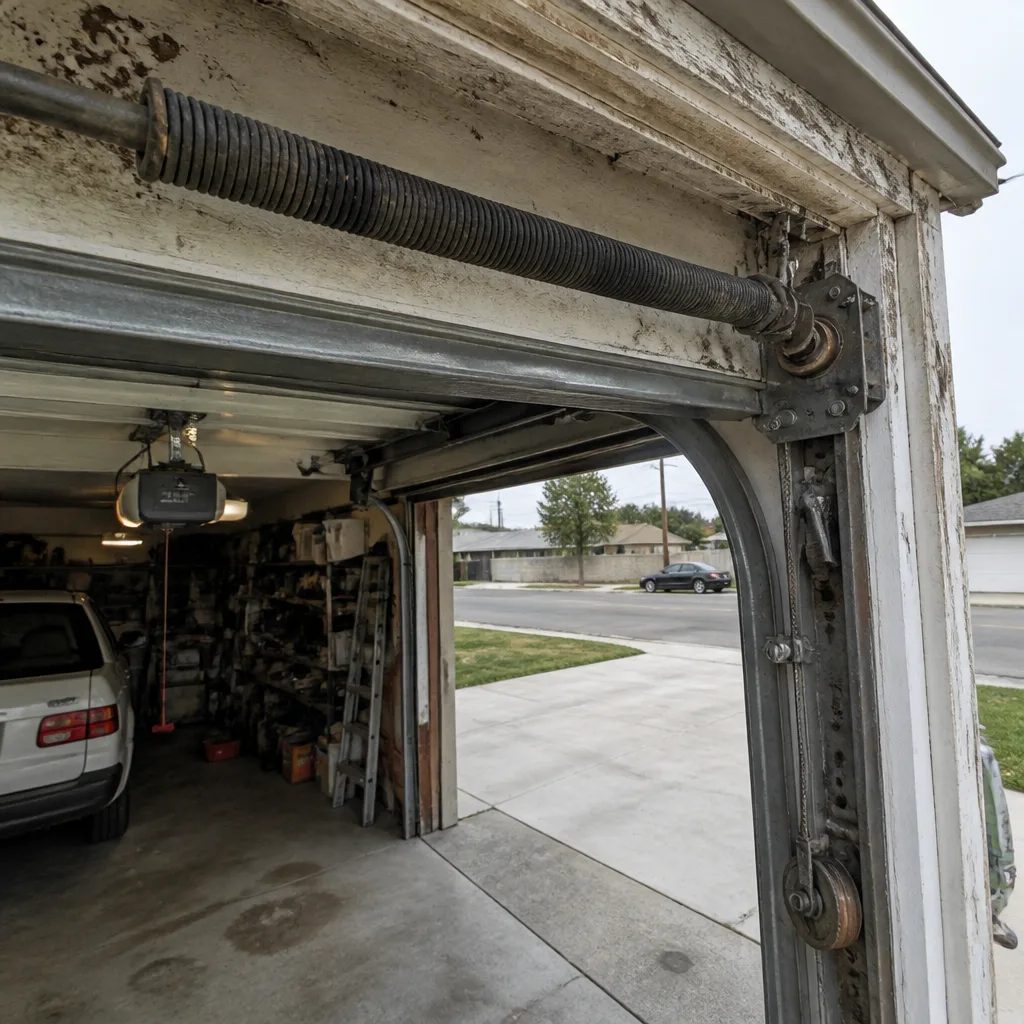 Before
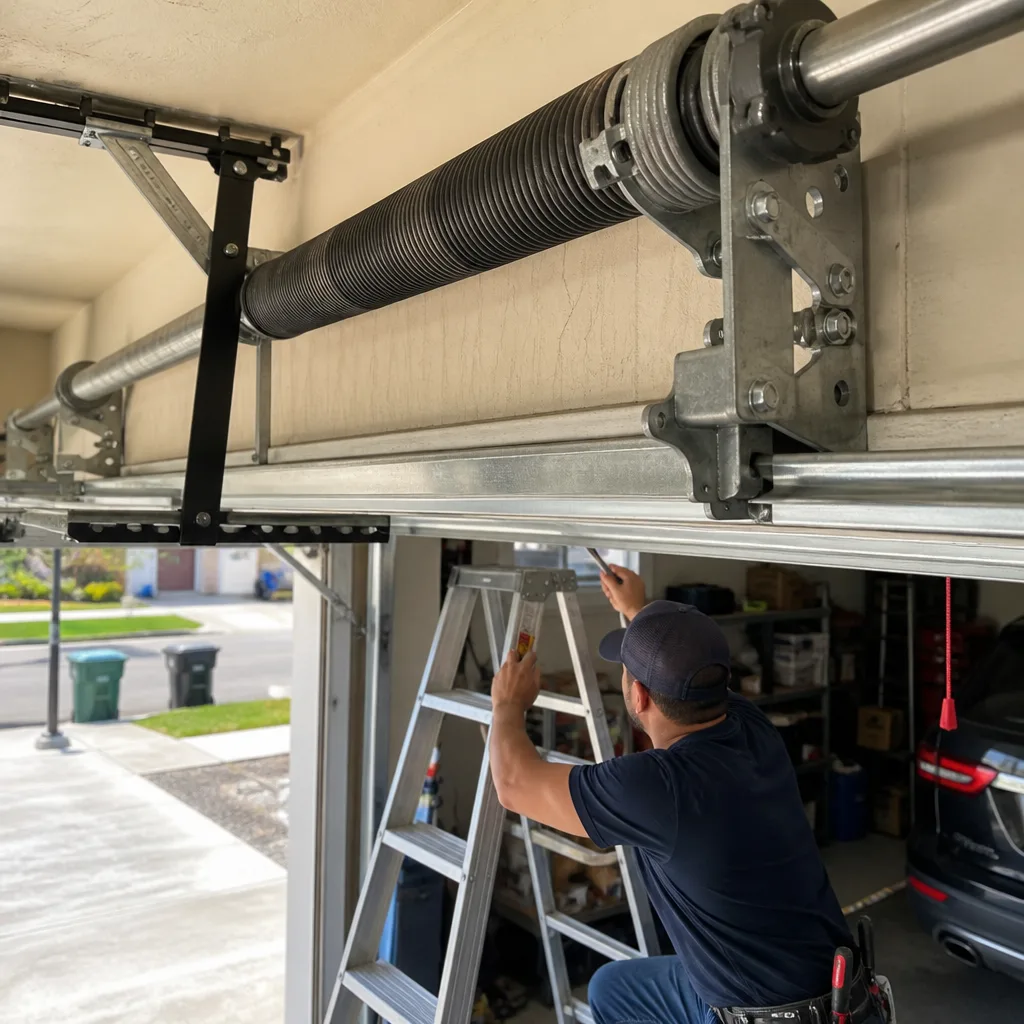 After