
Last updated October 31, 2026
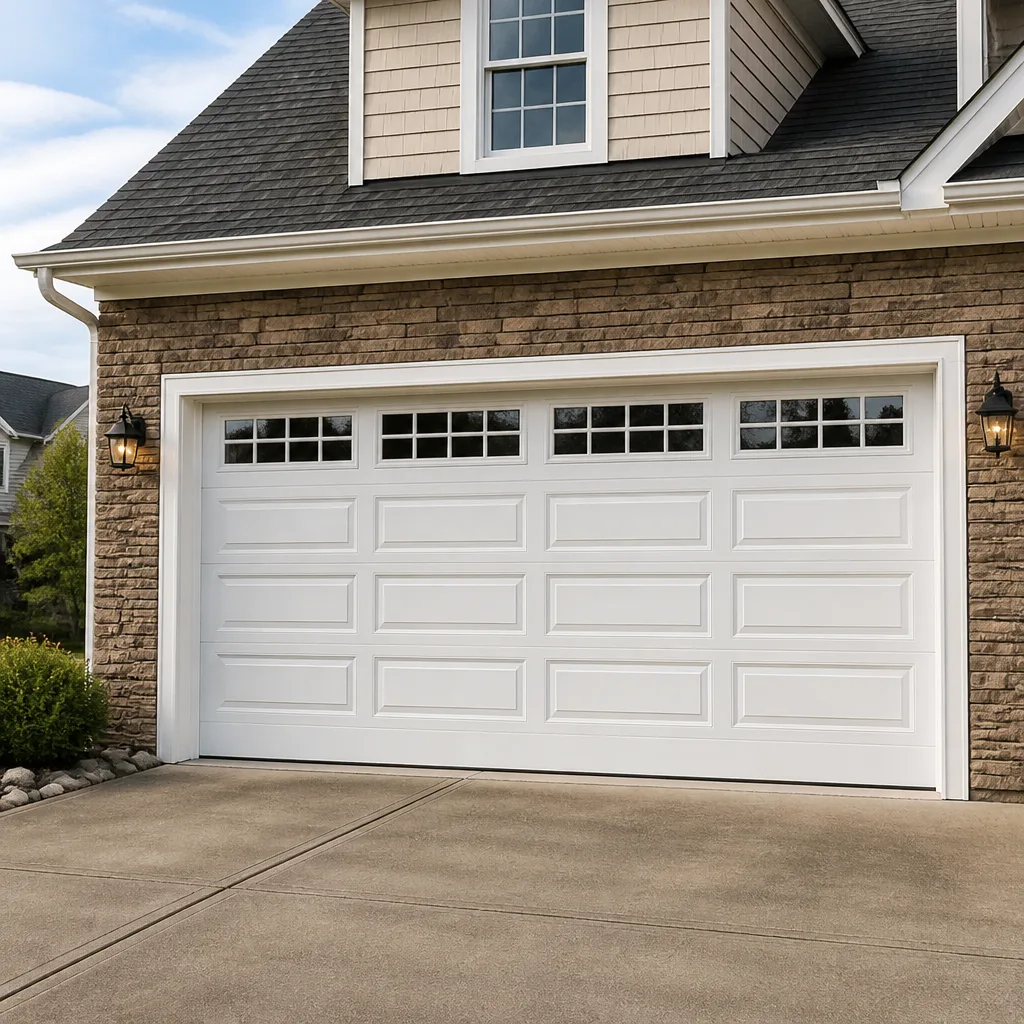 Raised-panel steel
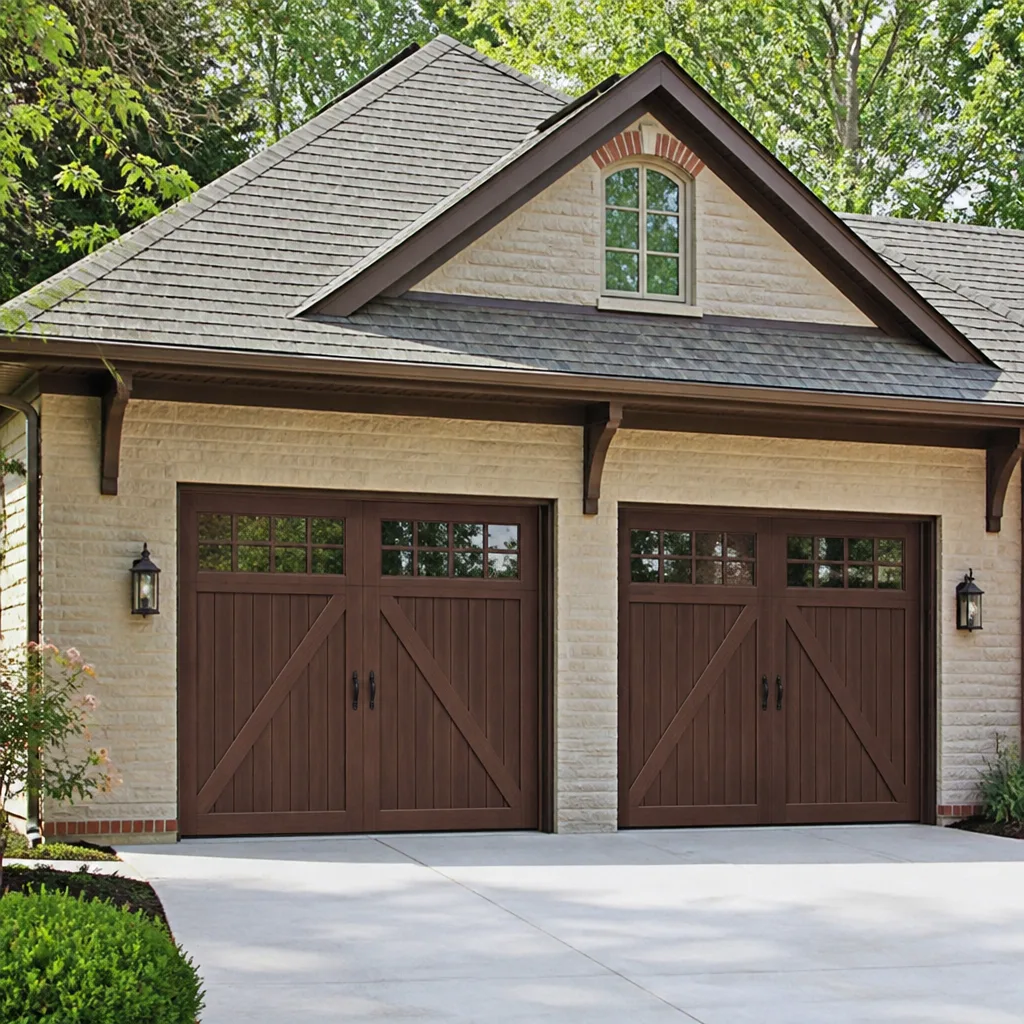 Carriage house
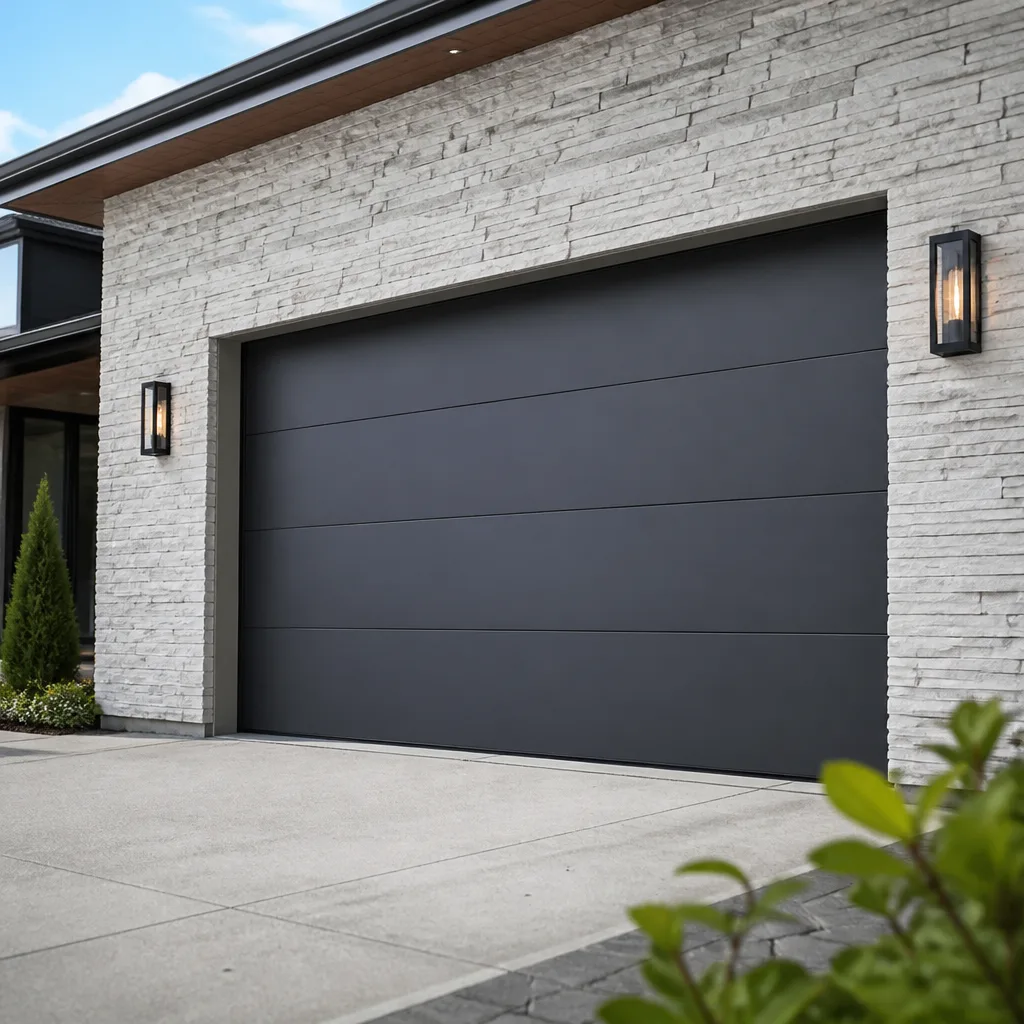 Modern flush
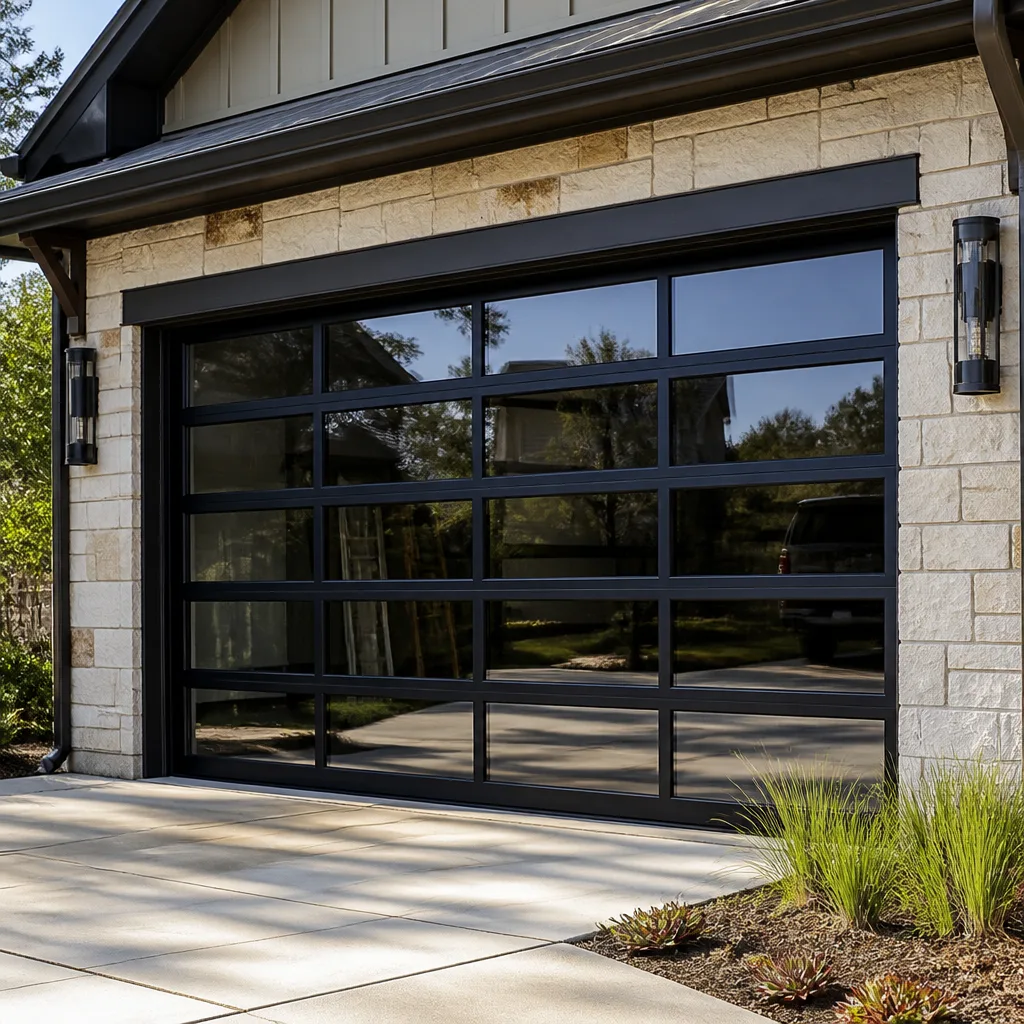 Full-view glass
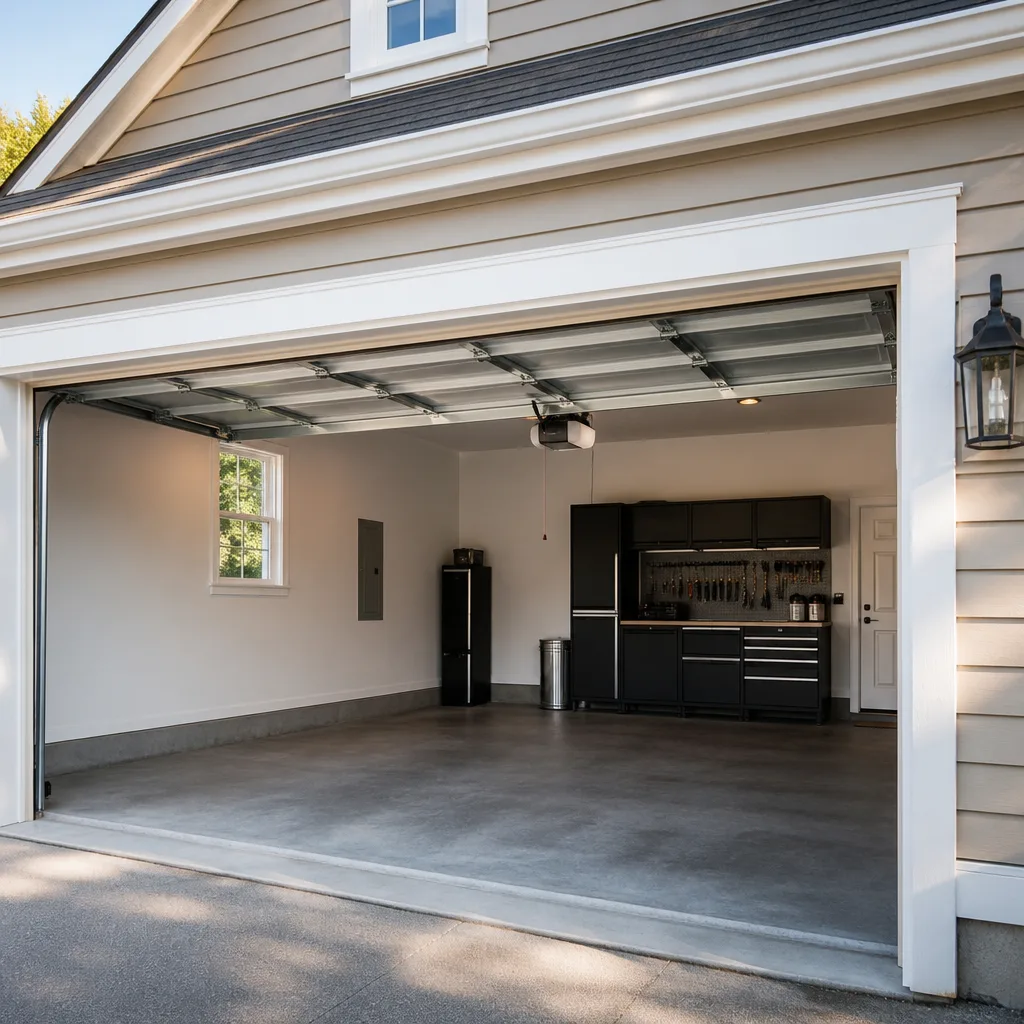 LiftMaster openers
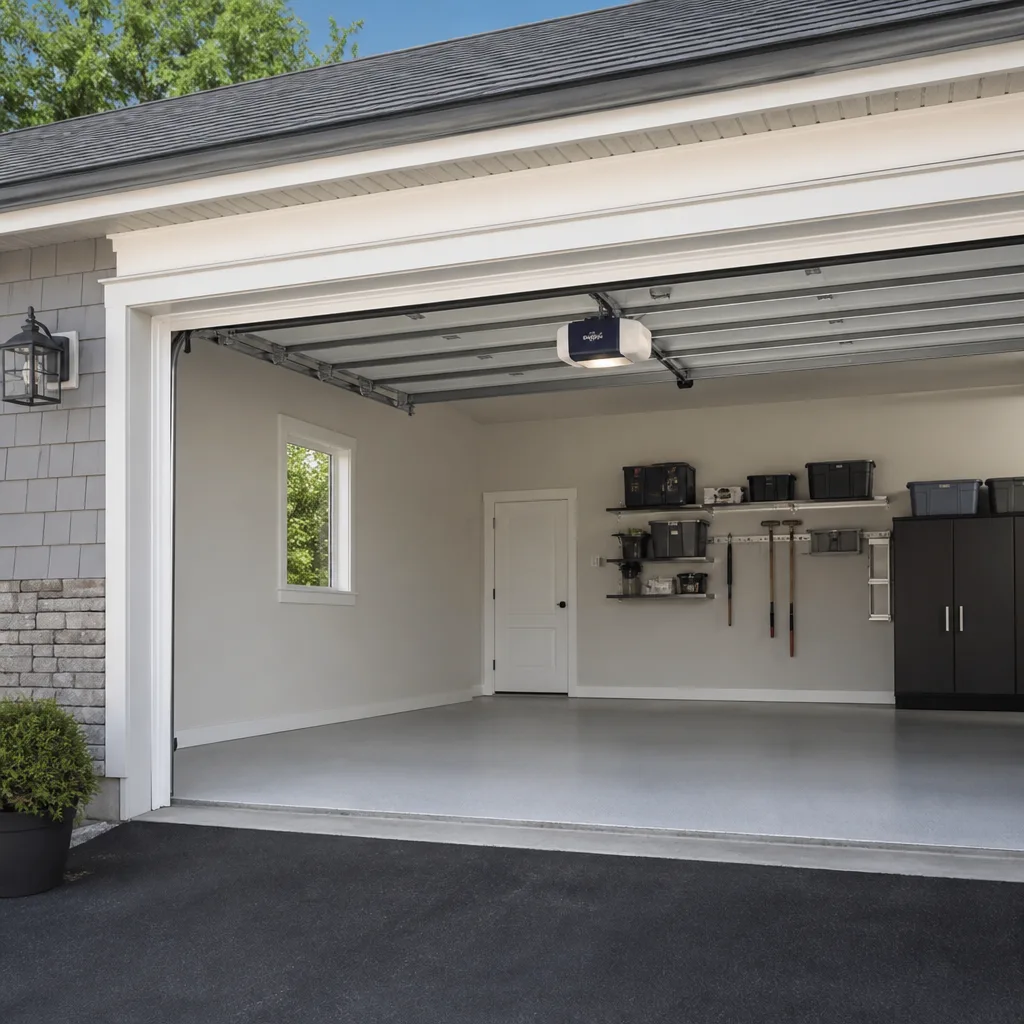 Chamberlain openers
Full 25-point door and opener safety check with every visit - springs, cables, rollers, tracks, and your LiftMaster or Chamberlain opener included
You get a price before we start. It does not change when the truck arrives.
Get your free estimateGarage Door Repair Troubleshooting: Common Problems and How to Fix Them
A garage door that reverses before hitting the floor isn’t always a sensor problem. Sometimes it’s a broken torsion spring putting uneven tension on the cable drum, which makes the door think it hit an obstruction. Misread that symptom, replace the wrong part, and you’ve spent $150 on a sensor you didn’t need while the actual spring failure gets worse. In Long Beach, where salt air accelerates metal fatigue on springs and hardware, that kind of misdiagnosis costs homeowners hundreds of dollars every month. This guide teaches you to read your door the way a technician does: not by memorizing symptoms, but by tracing them to their root cause.
Quick Answer
Most garage door problems fall into one of three categories: opener faults (electrical), mechanical faults (springs, cables, rollers, tracks), or structural faults (door panels, frame, mounting hardware). The first step in any troubleshooting sequence is a manual disconnect test: pull the red release cord, lift the door by hand, and observe how it behaves. That single test tells you whether the problem lives in the opener or in the door itself, which narrows the diagnosis by half before you touch a single component.
Styles & brands we work with
Table of Contents
- The Symptom-to-Cause Decision Tree: Opener, Mechanical, or Structural
- How to Perform the Manual Disconnect Test Safely
- The Five Most Commonly Misdiagnosed Garage Door Problems
- What Sounds Mean What: Grinding, Popping, Scraping, and Squealing
- The Balance Test and Force-Limit Check: What They Reveal
- Brand-Specific Fault Patterns: LiftMaster, Wayne Dalton, Craftsman, Raynor, and More
- When to Stop Troubleshooting Immediately
The Symptom-to-Cause Decision Tree: Opener, Mechanical, or Structural
Every garage door symptom traces back to one of three systems. The opener is the motor and its control logic. The mechanical system is everything that physically moves the door: springs, cables, rollers, hinges, and track. The structural system is the door panels themselves and the frame they ride on. Here’s how to sort a symptom into the right bucket before touching anything.
The three-system breakdown:
- Opener faults are electrical or electronic. The motor runs but the door doesn’t move. The remote works intermittently. The opener clicks but nothing happens. Safety sensors blink. The opener reverses for no reason. These symptoms involve the motor, circuit board, sensors, wall button, remote, or wiring.
- Mechanical faults are physical. The door moves but binds, grinds, sags, or stops halfway. The spring breaks with a loud pop. A cable frayes or comes off the drum. A roller shatters or seizes. These symptoms involve anything that moves the door when the opener is disconnected.
- Structural faults involve the door and its mounting. A panel is dented, warped, or water-damaged. The door sags to one side while closed. The frame or header has shifted. The hinges are pulling out of the panels. These are the least common but the most expensive, because the fix usually means replacement rather than repair.
The reason this distinction matters is practical: opener faults are usually fixed by reprogramming, adjusting, or replacing an electronic component. Mechanical faults are usually fixed by checking and replacing springs, cables, or rollers, which is where the real long-term reliability comes from. Structural faults often mean the door has reached the end of its service life and the repair-versus-replace math has to be done honestly. In Long Beach we see all three patterns constantly, and the misdiagnosis that sends homeowners down the most expensive wrong path is treating a mechanical failure as an opener problem because the opener is the only part they can see moving.
How to Perform the Manual Disconnect Test Safely
The manual disconnect test is the single most informative diagnostic step you can do before calling anyone. It answers the first question every technician asks: is this an opener problem or a door problem? Here’s the sequence.
Step 1: Close the door first. Never pull the release cord when the door is open, because if a spring is broken or a cable has slipped, the door can drop under its full weight. Long Beach garages are often attached to the house with bedrooms above them, and a falling door section weighs hundreds of pounds.
Step 2: Pull the red emergency release cord. This is the handle hanging from the opener rail, usually red. Pull it straight down and back until you hear or feel it disengage. The door is no longer connected to the opener’s motor.
Step 3: Lift the door by hand. Grab the door at its bottom edge, not by the handle (the handle can pull out of a damaged panel). Lift the door halfway and let go. What happens next tells you where the fault lives:
- The door stays at the halfway point. Springs are doing their job. The door is balanced, and any problem you’re experiencing is almost certainly in the opener, remote, sensors, or wiring.
- The door drifts down. Springs are weak or broken. The door is heavy on the way up and will drop hard on the way down if the opener isn’t covering for the spring failure.
- The door shoots up. Springs are overtensioned, which can make the door rise on its own and slam into the opener rail. This is dangerous and needs professional attention.
- The door binds or shakes. Rollers, track, or hinges are worn or misaligned. The mechanical issue is in the rolling assembly, not the springs.
- The door is too heavy to lift at all. A spring has completely failed. Stop testing and call a garage door specialist. Forcing the door can pull mounting bolts out of the header.
Step 4: Re-engage the opener. Once you’ve completed the test, run the opener until the carriage reconnects with the release mechanism. Most openers re-engage automatically when the carriage passes over the catch. If it doesn’t, pull the release cord back toward the door and lift the door until it clicks back in.
We perform this exact test at the start of nearly every service call from Naples to Bixby Knolls, because it tells us in about 30 seconds whether we’re looking at an electronic issue or a mechanical one. It’s the same test you can do for free at home before picking up the phone.
The Five Most Commonly Misdiagnosed Garage Door Problems
These are the five misdiagnoses we see most often in the field around Long Beach. Each one costs homeowners money because the wrong part gets replaced while the real failure keeps getting worse.
1. “The sensors are misaligned” (when it’s actually a broken spring)
A door that reverses before contacting the floor is almost always blamed on photo-eye sensors. Sometimes that’s correct: a sensor’s lens gets dirty, a bracket gets kicked out of alignment, or sunlight blinds the eye. But if the door reverses at the same spot every time, even after you’ve wiped the lenses and checked the alignment, the more likely culprit is uneven spring tension. When one torsion spring breaks, the remaining spring pulls harder on one side, the cable spool unevenly, and the door tilts slightly as it descends. The opener’s force sensor interprets that tilt as an obstruction and reverses the direction. Homeowners replace the sensors, the door still reverses, and the broken spring keeps slowly degrading the other spring. The test: disconnect the door and check whether it sits level. If one corner is lower, you have a spring problem, not a sensor problem.
2. “The remote needs new batteries” (when it’s actually a logic-board capacitor)
Remote range that shrinks from 30 feet to 3 feet is usually not the remote. It’s the receiver capacitor in the opener’s logic board, which degrades over time, especially in coastal humidity like we get in Long Beach. You can confirm by checking whether the wall button still operates the door reliably. If the wall button works fine but remotes only work from close range, the board’s receiver is weakening. Replacing batteries is cheap and worth trying once, but if range doesn’t improve, the fix is a new control board, not a new remote.
3. “The track is bent” (when it’s actually a worn roller)
Garage doors that shake and rattle while moving are often diagnosed as bent track. In reality, a single shattered or seized roller can cause the same rough ride. LiftMaster and Chamberlain openers mounted on doors with nylon rollers typically need roller replacement every five to seven years in a salt-air climate. The track itself rarely bends unless the door was hit by a car or a falling object. The test: run the door and watch the rollers at each hinge point. A frozen roller slides instead of rolls on the track, dragging and vibrating the entire door. Those are the rollers to replace.
4. “The opener is worn out” (when it’s actually the travel limits needing recalibration)
An opener that stops short of fully opening, or slams the door hard into the floor, is often adjusted rather than replaced. The travel limit settings tell the opener how far to run the motor before it stops. Over time, especially after a spring replacement changes the door’s balance, those limits drift. A technician recalibrates the limits and the force sensitivity in about ten minutes. A homeowner who concludes the opener is “worn out” can spend $450 replacing a motor that still has years of life left.
5. “The door needs a new panel” (when it’s actually a hinge pulling out)
Panels with visible separation at the horizontal seams are sometimes misread as structural failure. Often the real issue is a hinge that is pulling out of the wood or composite backing, which widens the seam and lets water and salt air into the panel core. Replacing the hinge and remounting it with through-bolts stops the separation. The panel only needs replacement if the backing itself has rotted or cracked, which we see more often on older Raynor and Wayne Dalton doors in Long Beach that were installed before modern moisture-barrier backing was standard.
What Sounds Mean What: Grinding, Popping, Scraping, and Squealing
Sound is the most reliable early-warning diagnostic tool you have, because every component in a garage door system fails with a distinct noise. Here is what each one tells a technician.
Grinding
A metallic grinding that happens every time the door moves is almost always the opener’s drive gear. The gear is plastic on most LiftMaster, Chamberlain, and Craftsman chain-drive units, and it eventually strips after years of use. The gear teeth shear off gradually, producing a grind as the motor spins against the remains of the gear. This is not a door problem: it’s an opener-apron problem. The fix is a gear replacement kit, and it requires taking the opener case apart. If the grind is accompanied by a door that jolts and then stops, the gear has stripped completely and the opener needs internal repair. Long Beach’s damp winter mornings tend to accelerate this because the plastic gear gets brittle in cool, humid conditions.
Popping
A single loud pop, like a gunshot coming from the garage, is the sound of a torsion spring snapping. This is the most dangerous and unmistakable sound in the system. The spring is under 100 to 300 pounds of tension depending on the door, and when it breaks, the release of that tension is what you hear. After the pop, the door will not open by motor, and if you’re in the garage, you will often find the spring in two pieces with a visible gap. This is a stop-everything moment. Broken torsion springs are not a DIY job: the unwinding procedure for the surviving spring requires specialty winding bars, and in a residential setting a mistake can throw a steel bar with lethal force. Call a professional who carries the correct replacement springs for your door’s weight and brand. We see spring failures every week in Long Beach across all brands, and the most common trigger is age combined with salt air corroding the coil surface, which creates a stress fracture point.
Scraping
Scraping is metal on metal where there should be clearance. It will localize to one side of the door if you stand under the track and listen. The usual causes are a bent track section, a roller with a seized bearing, or a hinge pin that has worked its way out and is dragging against the track web. The diagnostic sequence for scraping is visual: run the door halfway and look for shiny wear marks on the inside surface of both vertical tracks. The shiny stripe tells you exactly where the contact point is. If the mark is at a roller height, it’s the roller. If the mark is at a hinge height, it’s the hinge. If the mark runs the length of the track, the track is bent and pulling the door out of plane.
Squealing
A high-pitched squeal that follows the door’s movement is a dry bearing. Roller bearings are either sealed or unsealed, and unsealed bearings lose their factory lubrication within a few years, especially in coastal air. The squeal doesn’t mean the roller is failed yet, but it will fail if you let it run dry. The short-term fix is to lubricate the roller bearings with a spray lube, not the track itself, because oil on the track makes the door bind in the other direction. The long-term fix is bearing replacement. Wayne Dalton doors with their factory nylon rollers are particularly prone to this after five to seven years in Long Beach, and we recommend replacing the rollers with sealed-bearing nylon, which is quieter and needs no lubrication.
The Balance Test and Force-Limit Check: What They Reveal
Two more tests complete the picture after the disconnect test. Both are simple, both are safe if done correctly, and both tell a technician more than any remote-control diagnosis ever will.
The Balance Test
Disconnect the door as described above. Lift it by hand to knee height, waist height, chest height, and overhead. At each position, the door should hold its position without moving. A door that drifts down at any of the four stopping points has weak springs. A door that rises from any point has over tightened springs. Both conditions force the opener to work harder than it should, shortening its motor life, and both can only be corrected by adjusting the spring tension. The balance test is worth doing once a year as a maintenance check, and it’s especially important after a spring replacement, because the new springs need to be matched exactly to the door’s weight.
The Force-Limit Check
The force limit is the setting inside the opener that tells it how much resistance to expect before reversing. If the setting is too high, the opener will keep pushing when the door hits an obstruction, which can damage the door, bend the track, or worse. If the setting is too low, the opener reverses when there’s no obstruction, which is the classic “door won’t close” symptom. You can test this by placing a 2×4 flat on the floor under the door’s path and closing the door. The door should contact the wood, reverse, and open fully. If it doesn’t reverse, the force limit is set too high and needs to be lowered by a technician. This test is standard diagnostic practice for every opener service call we run from the Port of Long Beach to Signal Hill.
Brand-Specific Fault Patterns: LiftMaster, Wayne Dalton, Craftsman, Raynor, and More
Every brand has its own failure fingerprint. A technician who has worked on one door has seen one failure pattern. A technician who has worked on the same models across hundreds of homes knows what to look for before the door even opens. Here are the patterns we see most across the brands we service in Long Beach.
LiftMaster and Chamberlain share the same parent company and the same DNA. The failures we see on openers from both lines are the plastic drive gear stripping, the logic-board receiver capacitor degrading, and, on belt-drive units, the belt stretching and slipping on the pulley. LiftMaster’s higher-end models have metal-reinforced chassis rails, but the gear and board are the same parts as the budget Chamberlain lines. The difference between the two is not durability at the gear level: it’s the warranty and the smart-home features.
Craftsman was built by Chamberlain for decades, which means a Craftsman opener from most model years is a Chamberlain with a red faceplate. The same drive gear and logic board failures apply. The one difference we see with Craftsman is the older units from the 1990s and 2000s that are still in garages throughout Long Beach’s older neighborhoods, where the remotes fail from metal fatigue in the battery clips, and the wall button terminals corrode from garage humidity. Those are easy fixes when you know the pattern and expensive red herrings when you don’t.
Wayne Dalton and Raynor are the two brands most sensitive to salt air. Wayne Dalton’s TorqueMaster spring system, which encloses the springs inside a tube, is quieter and safer than exposed torsion springs, but when the internal spring breaks, the whole tube assembly has to be replaced. We see TorqueMaster failures on Wayne Dalton doors in Long Beach almost exclusively as internal spring breaks and cable spool wear. Raynor doors with their honeycomb-pattern panels hold up well structurally, but the exposed torsion springs on Raynor models need more frequent inspection in coastal environments, because surface corrosion on the coil leads to premature fracture. Any exposed spring on a garage within a mile of the ocean should be inspected for rust blooming at least twice a year.
Across all brands, the common factor in Long Beach is the environment: salt air, marine-layer moisture, and large daily temperature swings. These three factors accelerate spring corrosion, roller bearing wear, and logic-board component failure compared to inland markets. A garage door in Long Beach that has never been inspected is typically three to five years closer to a major failure than the same door in Riverside or Irvine. That’s not brand-snobbery; it’s local environmental reality.
When to Stop Troubleshooting Immediately
There are clear lines where homeowner troubleshooting should stop and a specialist should take over. Crossing those lines doesn’t make you less capable; it makes you sensible about risk, because the consequences on the wrong side of the line are serious injury or property damage. Here are the lines.
Any torsion spring work. The springs over your head are under enough tension to break bones or kill. The unwinding and winding procedures require specialist tools and physical technique drilled into muscle memory. If the spring is broken, popping, or visibly rusted through, stop and call. If the door is too heavy to lift by hand, the springs are the cause, and releasing them is not something to learn from a video.
Any cable repair. The cables are the fail-safe that keep the spring’s energy contained to the shaft. When a cable comes off the drum or frays, the remaining cable is holding the entire load. Touching the cable assembly without fully releasing spring tension is like unclipping a bowstring under tension. The same warning applies to any bottom-bracket work, because the bottom brackets are where the cables anchor.
Any door that has come off its track. A door that has jumped a track section is not held by its rollers anymore. It is held by gravity and whatever friction remains. Attempting to force it back on can drop a panel into your car or onto you. The door needs to be lifted, straightened, and re-seated with the springs de-tensioned.
Any opener repair that requires opening the case. The opener case contains a capacitor that stores charge even after the unit is unplugged. The drive gear replacement and logic-board replacement are both internal jobs. Unless you’re familiar with capacitor discharge procedures, you’re working on a component that can deliver a shock. The safe middle ground is reprogramming remotes and cleaning sensors. Anything past the faceplate should go to a professional.
In all of these situations, the philosophy that guides us at Viking Garage Door Repair home is simple: a garage door is the largest moving object in your house, and it moves over the spaces where you park your cars, store your belongings, and sometimes walk beneath. The risk of a spring or cable failure is not theoretical. It’s mechanical, it’s predictable, and it’s avoidable when the work is done by someone who has seen the failure pattern before.
Common Mistakes to Avoid
- Replacing parts before diagnosing. The disconnect test costs nothing and takes 30 seconds. Replacing a sensor because the door reversed, without checking the spring, is the most expensive $40 mistake in garage door repair.
- Lubricating the track. The track does not need lubrication. Greasing the track just causes the rollers to slip and the door to bind. The lubrication goes in the roller bearings, hinges, and spring coils, not on the track itself.
- Ignoring a popped spring. A broken torsion spring doesn’t heal, and the surviving spring now carries double the load. Every week that passes shortens the remaining spring’s life, which turns a $200 repair into a $350 double-spring replacement.
- Continuing to use the opener after a spring breaks. The opener motor will try to lift the door without spring assistance. It can’t. It wasn’t designed to, and the strain will burn out the motor. Disconnect the door and stop using the opener until the spring is replaced.
- Mismatching spring or cable parts from the hardware store. Springs are sized to the exact weight and height of your specific door. The universal spring from a big-box store will not match, and an overly strong spring turns your door into a catapult. The same goes for cables: the right cable is sized to your door’s drum and bottom bracket.
- Resetting the opener’s force limit to “fix” a reversing door. Raising the force limit so the door pushes through the resistance means the door will keep closing on whatever is in the way, including a person. The real fix is finding and correcting the mechanical drag that triggered the reversal.
- Putting off a balance test because the door “still works.” A door that works with weak springs is working on borrowed time from the opener motor. The opener is picking up the slack every cycle, and one day it won’t. A $150 spring adjustment is cheaper than a $500 opener replacement, and in Long Beach’s salt air, the clock runs faster than inland.
See the difference
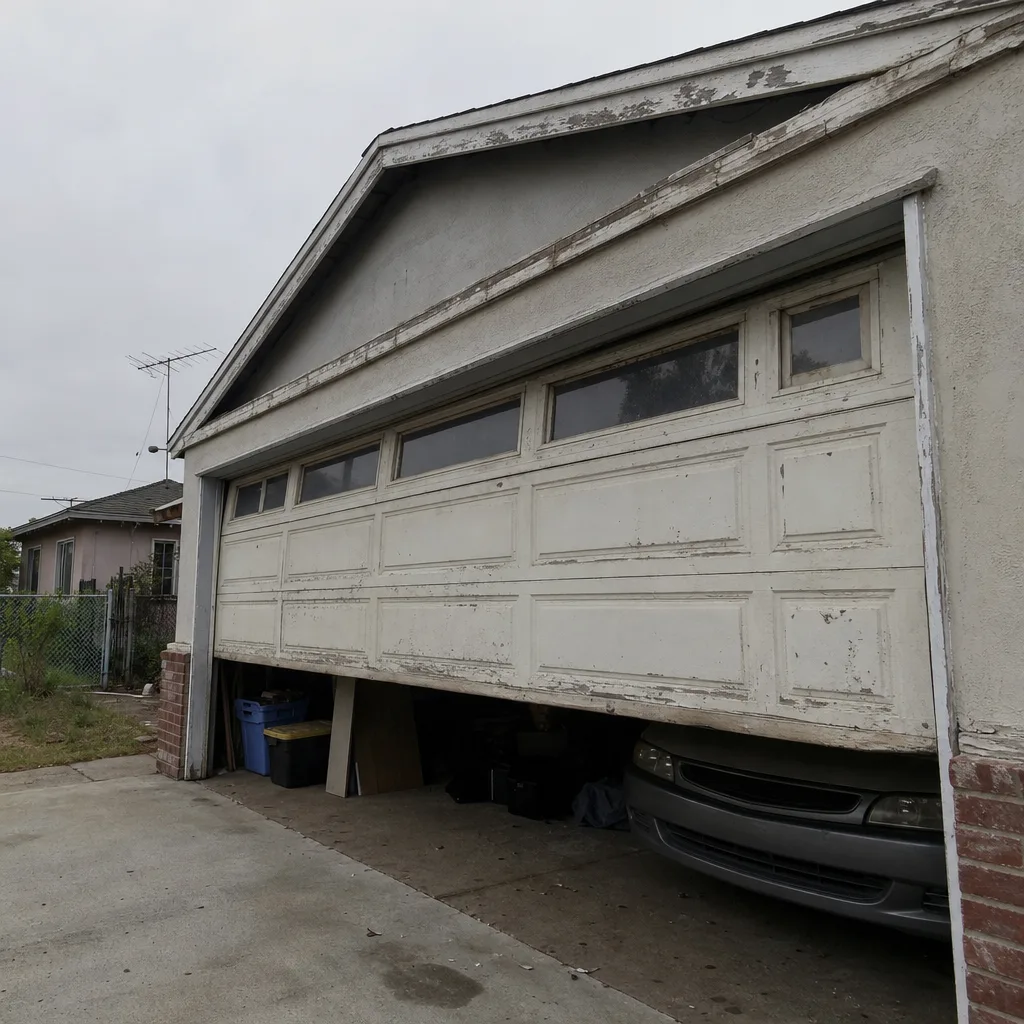 Before
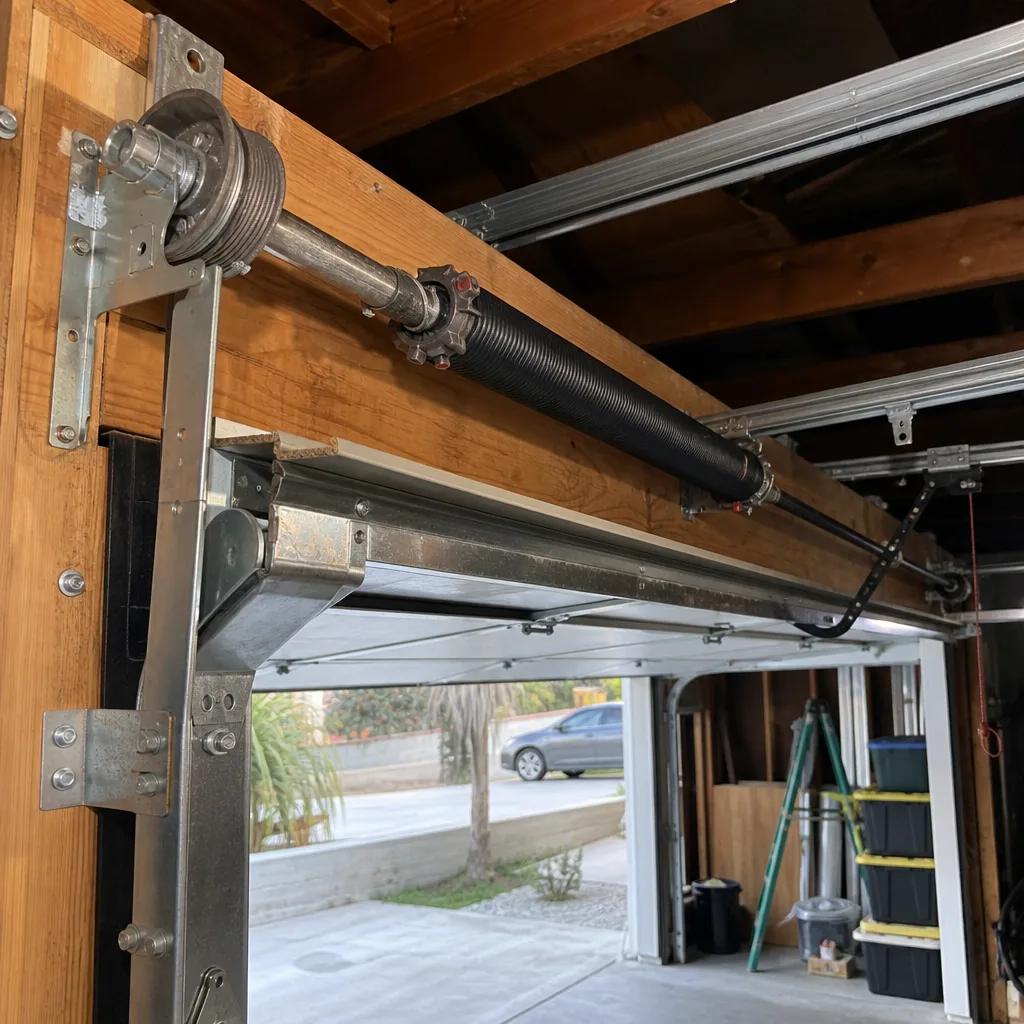 After
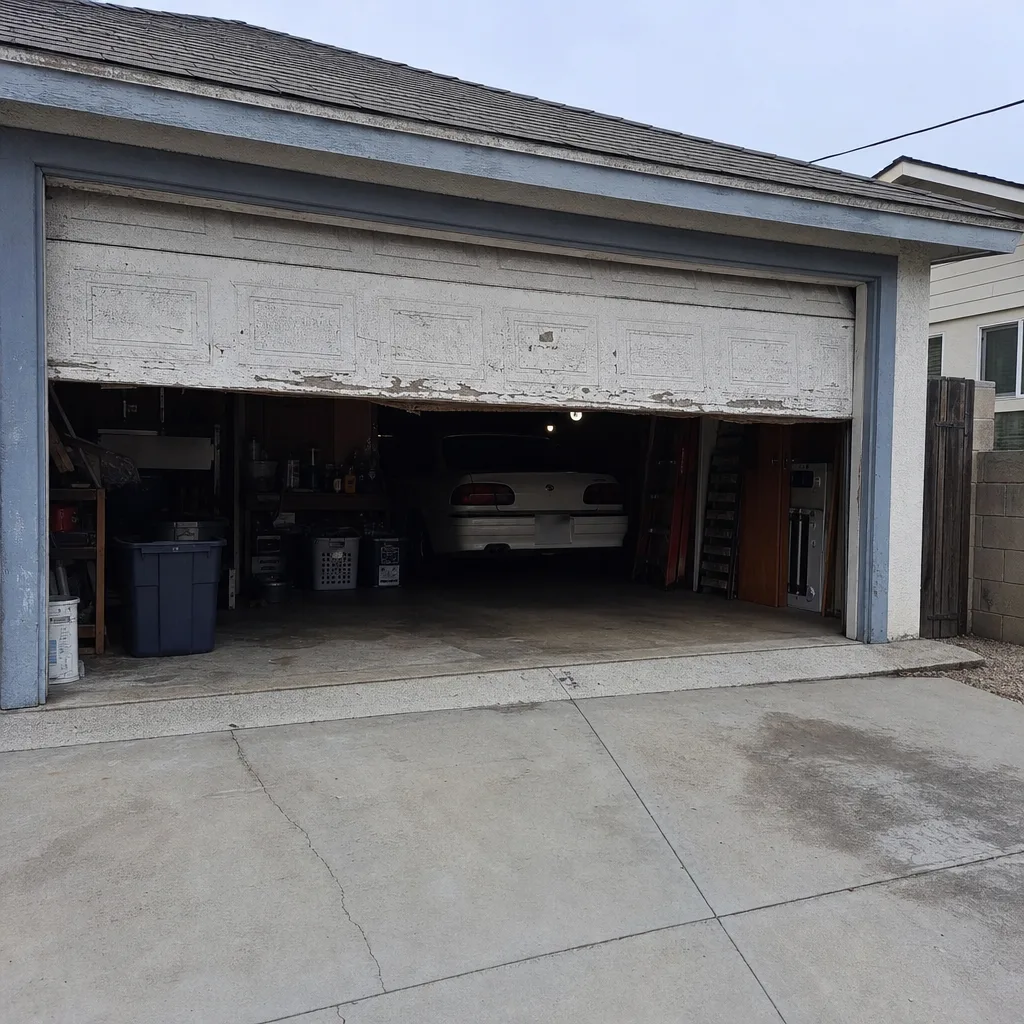 Before
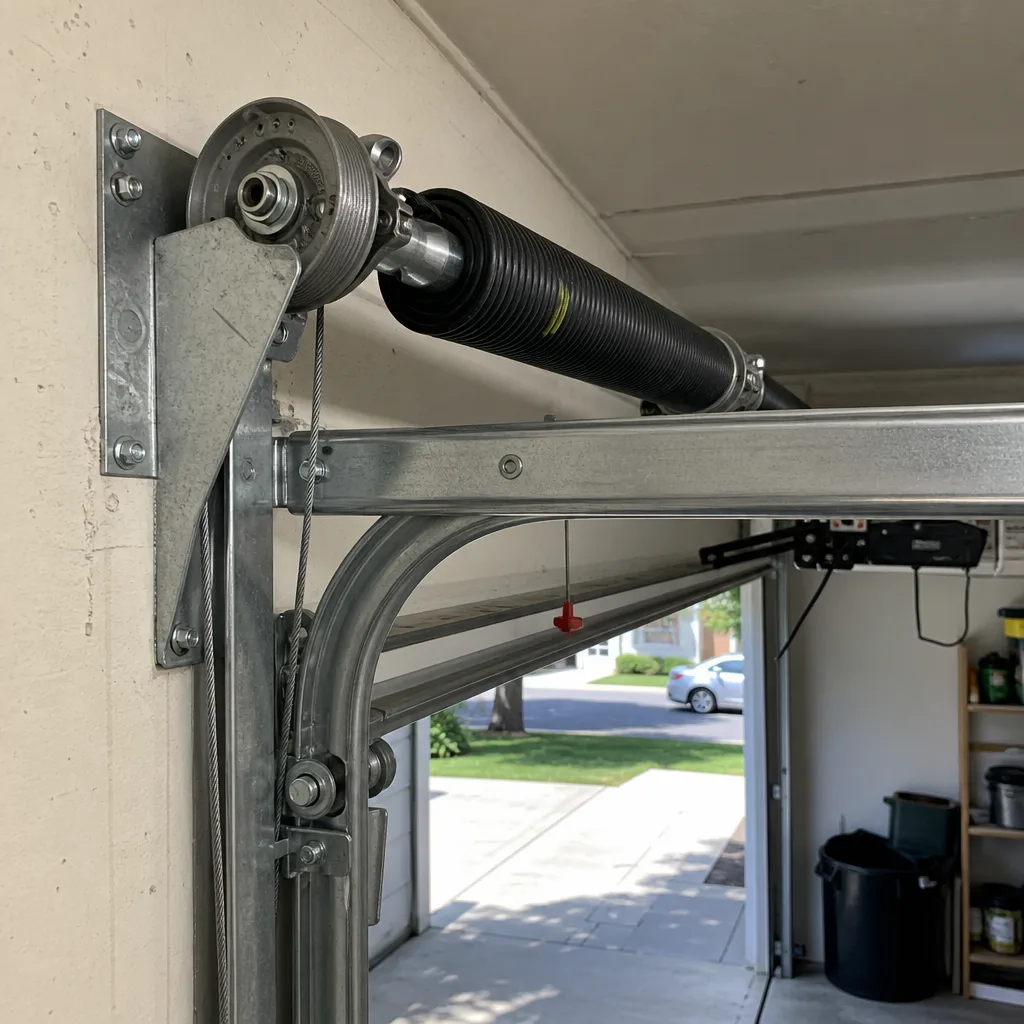 After
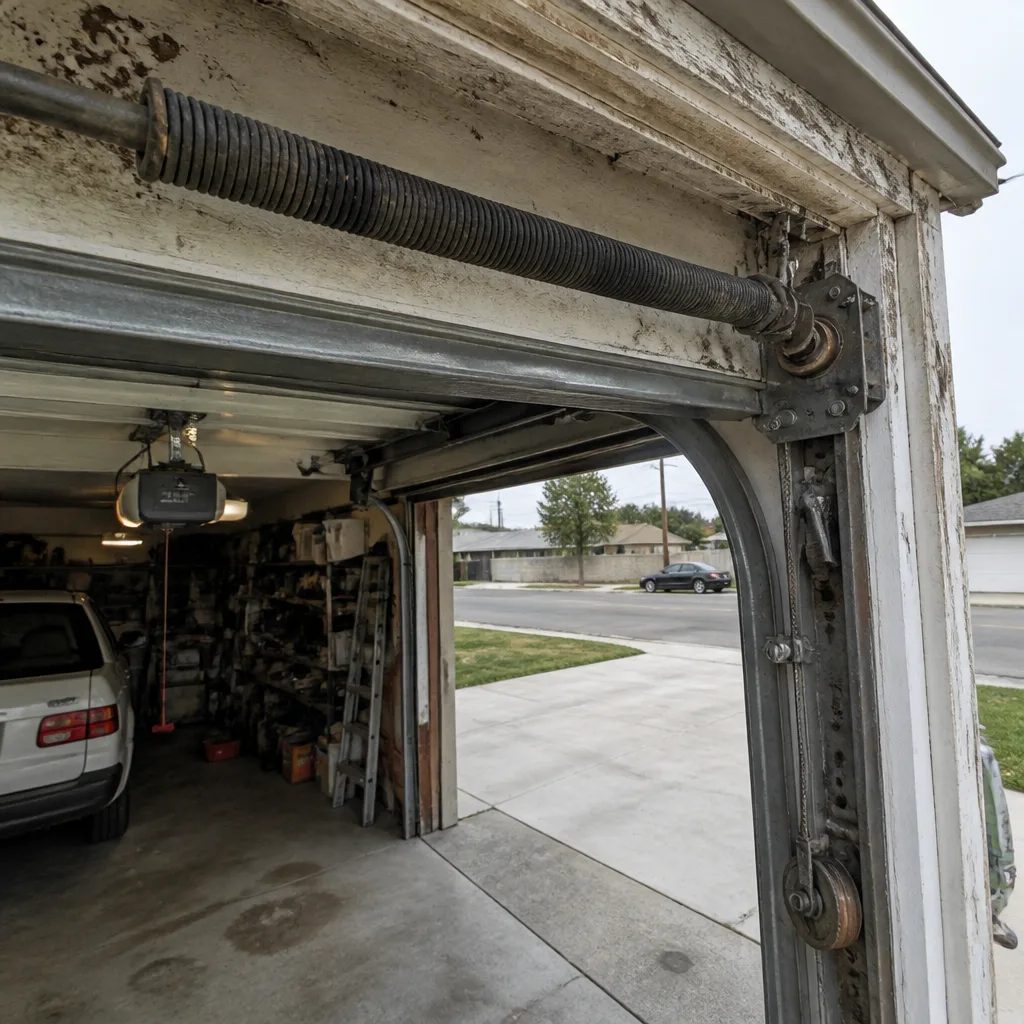 Before
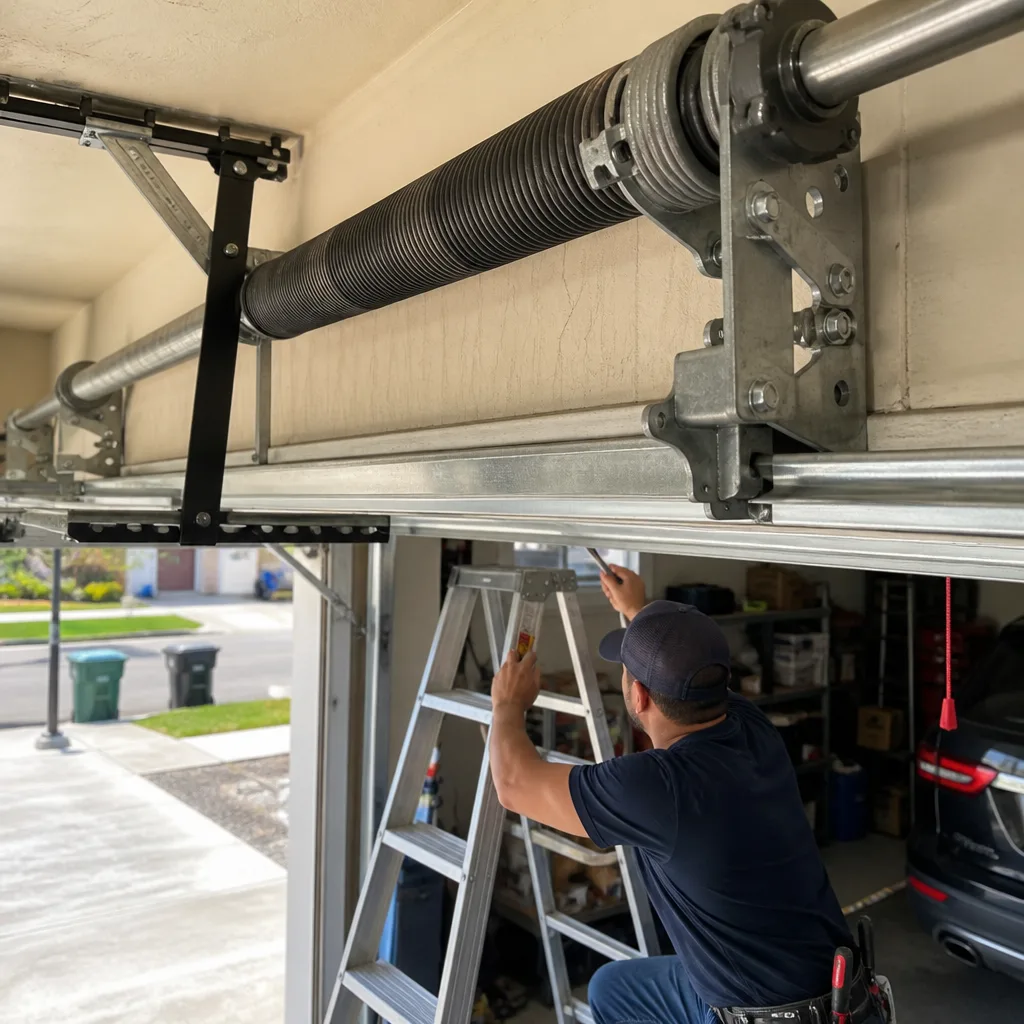 After
When to Call a Professional
You should call a garage door specialist the moment you confirm any of these conditions: a broken or popping torsion spring, a frayed or slipped cable, a door off its track, a grinding opener gear, a door too heavy to lift by hand, or a door that reverses no matter how many times you clean the sensors. None of these are tuning issues. Each one is a load-bearing component failure, and each one gets more expensive the longer it runs. Garage door repair in Long Beach is what we do every day, and our techs arrive with the right springs, cables, roller sets, and opener parts for the specific brand you own. Garage door opener repair in Long Beach is a regular part of our service mix, and if your door is beyond reasonable repair, we also handle garage door installation in Long Beach with the same brand-specific expertise. Viking Garage Door Repair offers free estimates in Long Beach, and you can call (855) 341-7943 to schedule one.
Frequently Asked Questions
The two most common causes are misaligned or obstructed photo-eye sensors and uneven spring tension caused by a broken torsion spring. If the door reverses at the same spot every time even after cleaning the sensors, disconnect the door and check whether it sits level. A tilted door points to a spring problem, not a sensor problem. Call (855) 341-7943 if the door still won’t close after sensor alignment, and we’ll diagnose it in one visit.
Spring replacement in Long Beach typically runs between $180 and $340 depending on the spring type, door weight, and whether one or both springs are replaced. We quote the exact price before any work starts, and the quote includes the parts, the labor, and the balance adjustment after the spring goes in. Call (855) 341-7943 for a free exact quote, not a range.
No. Torsion springs and extension springs are under enough tension to cause serious or fatal injury, and the winding procedure requires tools and technique that come from training, not a YouTube video. We’ll say it plainly: if the spring is broken, stop using the door and call a professional. It’s the one repair where the cost of a mistake is not measured in dollars.
The remote is usually not the problem. Long Beach’s coastal humidity degrades the logic-board receiver capacitor over time, which shrinks the effective range until the remote only works from close up. Try fresh batteries once, but if the wall button still works fine while the remote range is poor, the board needs replacement. Call (855) 341-7943 and we’ll confirm it in ten minutes.
In Long Beach’s salt-air environment, we recommend an inspection and lubrication every 12 months, and more often if your garage is within a mile of the ocean. The inspection catches spring corrosion, roller bearing wear, and cable fraying before they become failures. It’s the cheapest insurance you’ll buy for a door that moves every day.
We stock replacement parts for the brands we specialize in: LiftMaster, Chamberlain, Genie, Clopay, Amarr, Wayne Dalton, Craftsman, and Raynor. Your garage door’s brand isn’t a problem for us, it’s our specialty. When we arrive, the parts for your specific door and opener are on the truck, not on order.
The Bottom Line
Garage door troubleshooting is not about memorizing symptoms. It’s about tracing each symptom to the system that produces it: opener, mechanical, or structural. The manual disconnect test separates opener faults from door faults. The balance test and force-limit check reveal what the opener is compensating for. Sounds have meanings: grinding is a stripped gear, popping is a broken spring, scraping is a seized roller or bent track, and squealing is a dry bearing. Most manual fixes are simple: clean a sensor, replace a remote battery, lubricate a roller. The dangerous ones are the load-bearing components: springs, cables, and brackets. When those are in play, stop and call a garage door specialist. We work on the door you have, not just the brands we prefer. One call covers it: repair, opener, or a full new door. Call (855) 341-7943 for a free estimate.
Written by the team at Viking Garage Door Repair, serving Long Beach since 2015.